
There is a stretch of road we drove every week that had exactly one grocery store on it. Not a Walmart. Not a Costco. One small store with extremely high prices and a parking lot full of tourists. The real grocery run (the one where you actually stock up) was three hours away.
I got real about my pantry fast.
Not because I had to be extreme about it. Just because when you are that far from a store and you run out of something you need at 5pm on a Tuesday, you either figure out how to make it or you go without. And I did not feel like going without.
So one thing at a time, the store-bought stuff stopped making the cut. The boxed mixes, the single-use packets, the canned soups I kept buying even though I had duplicates already going bad in the back of the cabinet. I replaced them with ingredients. Real ones. The kind that can do more than one job and actually last.
This is the pantry staples list I use every week. Not an aspirational stockpile. The real one.
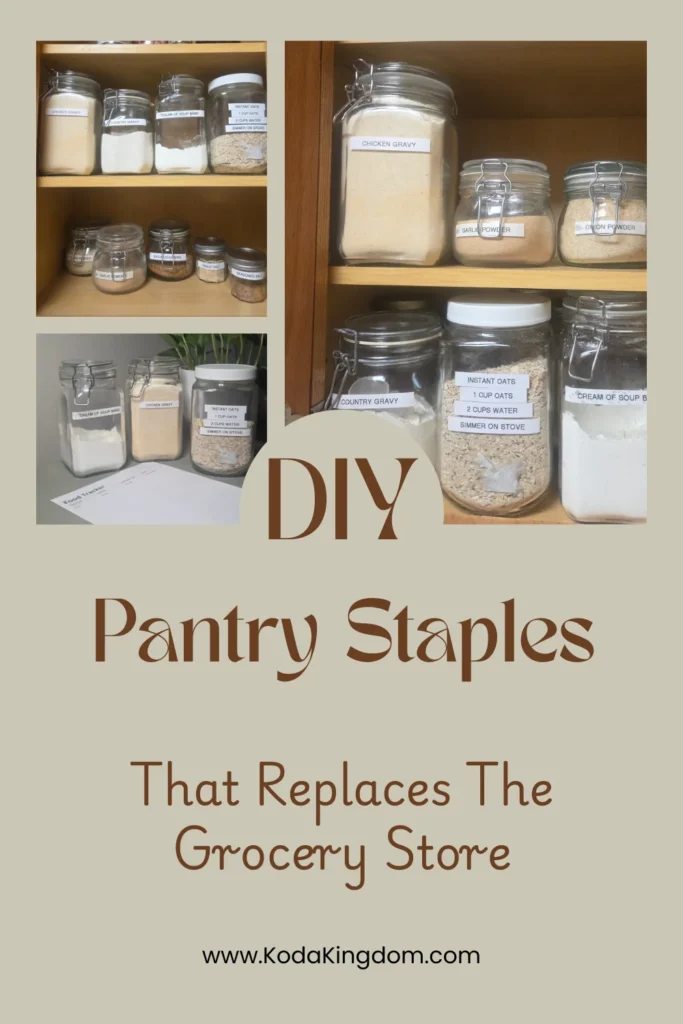
The real pantry staples list in a nutshell: Skip single-use grocery items in favor of multipurpose dry mixes, gravies, seasonings, and baking basics that each replace 3-4 store-bought products. Build the list slowly, swap items as they run out, not all at once, and use vacuum-sealed jars to keep bulk batches fresh for 6-12 months.
What I Learned From Never Being Sure Where We’d Be Next
The problem with most grocery store pantry items is not that they are bad. It is that they are single-use.
A box of cream of mushroom soup does one thing. A packet of onion soup mix does one thing. A store-bought pancake mix has its own expiration date, its own storage issues, and takes up a full shelf of space for a product you could make in thirty seconds from four ingredients you already own.
When your kitchen has moved as much as ours has (a homemade school bus, national park housing, small apartments with no real pantry space, a cabin on top of a mountain) you stop tolerating that. Every ingredient needs to earn its spot. And the ones that earn it are the ones that can become ten different things depending on what you need that day.
The Pantry Staples I Make Instead of Buy
These are the things I actually keep on hand. Most of them replace something I used to buy from the store. All of them have done it better.
Dry Mix Staples
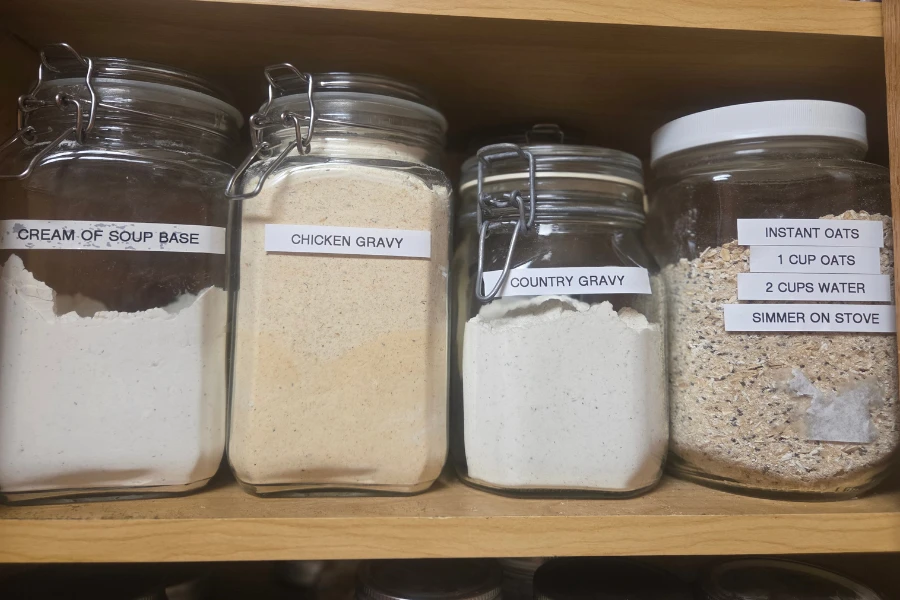
Cream of Soup Dry Mix – One jar of this replaces canned cream of mushroom, cream of chicken, cream of broccoli, and anything else you have been buying in bulk. Same base mix, customize it with whatever you have on hand. This one alone cleared an entire shelf in my pantry. Cream of Soup Dry Mix Recipe
Chicken Gravy Mix – My go-to for chicken, beef, or vegetable gravy. Takes minutes to make, stores easily, no refrigeration needed. This is one of the mixes I batch every few months so it is always there when I need it. Chicken Gravy Mix Recipe
Country Gravy Mix – Biscuits and gravy on a Tuesday morning with no effort. This mix makes that possible. I used to think country gravy was complicated. It is not. Country Gravy Dry Mix
Pancake and Waffle Mix Quick breakfast with no box required. Once you have this in the pantry, the store mix never makes sense again. Homemade Pancake Mix
Seasonings and Spice Blends
Taco Seasoning This is the one that started it all for me. The packets from the store have ingredients I cannot pronounce and cost two dollars each. I make a bulk batch, keep it in a sealed jar, and use it for months. Two tablespoons equals one packet and it tastes better. Taco Seasoning Recipe
Burger Seasoning I make this in bulk and keep it next to the grill. Works on everything — not just burgers. Burger Seasoning Recipe
Seasoned Salt Once you make your own, the Lawry’s can stays at the store. Control the salt level, control the quality, and it takes five minutes. Homemade Seasoned Salt
Homemade Ranch Seasoning The packet is convenient. The homemade version is better. I keep a jar of this in the pantry at all times for dressings, dips, and anything that needs a little something. Ranch Seasoning Mix
Garlic Salt Three tablespoons of salt, a tablespoon of garlic powder, and a little parsley. That is all it is. Once you realize this you will never buy it again. Homemade Garlic Salt
Fajita Seasoning Same idea as the taco seasoning. Make it once, use it for weeks. Homemade Fajita Seasoning
Baking and Pantry Basics
Baking Powder Two ingredients, aluminum-free, and you always have it on hand as long as you have cream of tartar and baking soda. Homemade Baking Powder
Oat Flour I make this from rolled oats as I need it. Same ingredient, different form, no extra storage or extra cost. Homemade Oat Flour
Powdered Sugar I cannot explain how long it took me to realize I had been buying this my entire life when it is just blended sugar. Blend it yourself in thirty seconds. Homemade Powdered Sugar
Brown Sugar Bulk brown sugar always dried out on me. I hated opening it and finding a brick. Now I make it from white sugar and molasses in small batches, and when I need to make a bigger amount I vacuum seal it in jars so I can open one at a time and keep the rest sealed and soft. No more dried out bricks. Homemade Brown Sugar
Quick Oats I keep rolled oats and process them when I need quick oats. One ingredient, two uses, half the pantry space. Homemade Quick Oats
Instant Oatmeal My favorite make-ahead breakfast. Customize the flavor, just add hot water, and you are done. I make this in bulk for camping trips too. Homemade Instant Oatmeal
Cornmeal One bag of whole corn becomes cornmeal, grits, and popcorn depending on how you process it. One ingredient, three products, a lot less cabinet space. Homemade Cornmeal
Oatmeal Chocolate Chip Cookie Mix This one is a little different… it is a ready-to-go mix you pre-batch and add wet ingredients to later. Homemade cookies without pulling out every ingredient every time. Oatmeal Cookie Mix
If you want to be the kind of woman who can cook a full meal from a stocked pantry with no last-minute grocery store trips, you are exactly who I write for. The From-Scratch Pantry Starter Guide walks you through where to start, even if your kitchen is tiny, rented, or on wheels
How to Make These Mixes Last Longer (The Vacuum Sealing Method)
Most of these dry mixes store 6 to 12 months in an airtight glass jar in a cool, dark place. That is already good. But if you want to make bulk batching actually worth your time without worrying about things going stale before you get to them, vacuum sealing is the upgrade that makes the whole system work better.
I started vacuum sealing my jars after I got tired of making small batches constantly. Now I batch big, seal the jars with a vacuum sealer, and open one at a time. When I use some from a jar and I am not going to finish it that week, I reseal it and put it back.
The vacuum sealer I use is this one. It has a jar attachment which is what you need for sealing mason jars. Regular vacuum sealers are for bags. Make sure you get one that does jars.
The brown sugar trick is the best example of how well this works. Instead of making small batches and watching it dry out, I make a bigger batch, seal it in a few jars, and open one at a time. When I crack the seal, I use it and reseal it. When it starts to get low, I make more. No more brown sugar bricks.
For longer-term storage, Mylar bags with oxygen absorbers get you closer to a year or more. But for everyday pantry use, vacuum sealed mason jars are the practical middle ground that does not require a whole system to manage.
If You Want to Take Your Pantry a Step Further
Everything above works in any kitchen, any size, any location. This part is for if you ever want to go further.
A freeze dryer changes what is possible.
I am not talking about freeze drying your dry mixes. You do not need to do that. What a freeze dryer does is let you preserve full cooked meals, proteins, fruits, and vegetables with a shelf life measured in decades. It is how I have been able to freeze dry a whole pot of beef stew and have it sitting on a shelf ready to take anywhere.
When we are somewhere remote, that shelf of preserved food is a completely different kind of peace of mind than a well-stocked pantry of dry mixes. Both matter. But the freeze dryer is what makes the pantry essentially unlimited.
If you are curious about what freeze drying actually looks like in practice, I have written about it here: How to Make Freeze Dried Camping Meals at Home.
The Harvest Right freeze dryer is what I use and what I recommend. It is an investment. But if you are serious about food security and you move a lot or cook for your family, it is the kind of investment that pays for itself.
You Do Not Replace Everything at Once
I replaced things as they ran out.
That is the whole strategy. When the cream of mushroom can was gone, I made the dry mix, when the taco packet ran out, I made a bulk batch of seasoning, when the brown sugar hardened into a brick for the last time, I figured out the vacuum seal method and never looked back.
The pantry does not have to be rebuilt in a weekend. It gets built one swap at a time until one day you look at your shelves and realize you cannot remember the last time you needed something that was not already there.
That is what pantry staples you can always count on actually looks like.
What is the first swap you are going to make? Drop it in the comments. I want to know which one makes it to your pantry.
With love and adventure,
Mindy
📌Pin For Later