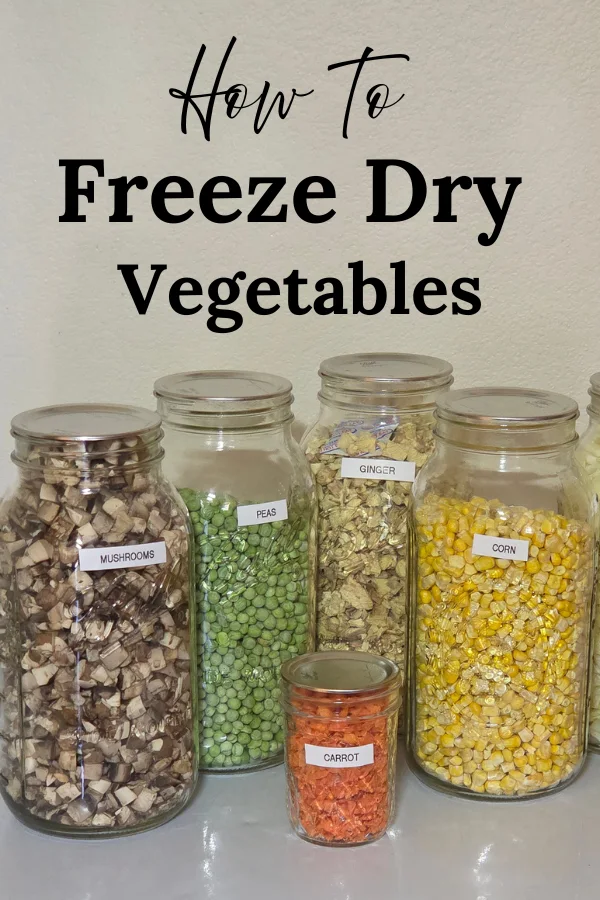

I opened the freezer this morning to grab something and just stood there for a second, annoyed. It is packed full. Carrots I blanched and froze myself. Bags of broccoli, peas, green beans, corn and cauliflower from the store. Fresh zucchini and bell peppers I chopped and froze so they would be ready to go. Also, a few containers of meals I made ahead. None of it has made it into the Harvest Right yet.
Here is the part that actually bugs me. I like to prep meals ahead and pre-freeze them before they go into the Harvest Right, since the freeze dryer can only run one batch at a time and I do not want food sitting in the fridge waiting its turn. But the freezer is so full of vegetables right now that there is barely room for the meals I actually want frozen and ready to go.
This is exactly the problem freeze drying solves and for a life like ours, there’s a bigger reason. A freezer full of food can’t come with us when we move. Freeze dried vegetables can, and they go right into a pot at camp with nothing but hot water.
Once those vegetables are freeze dried, they take up a fraction of the space, they last for years instead of months, and my freezer goes back to being useful for what I actually need it for. Vegetables are one of the easiest things to freeze dry, and depending on where they came from, you might be able to skip a step entirely.
Right now I have three different kinds of vegetables sitting in my freezer, and each one tells you something different about the process. Broccoli, peas, green beans, corn and cauliflower I bought already frozen from the store. Carrots I blanched and froze myself a while back. Zucchini and bell peppers I chopped fresh and tossed straight in the freezer with no blanching at all, since those two do not need it.
Here is exactly how I handle all three.
How to Freeze Dry Vegetables at Home: The Short Version
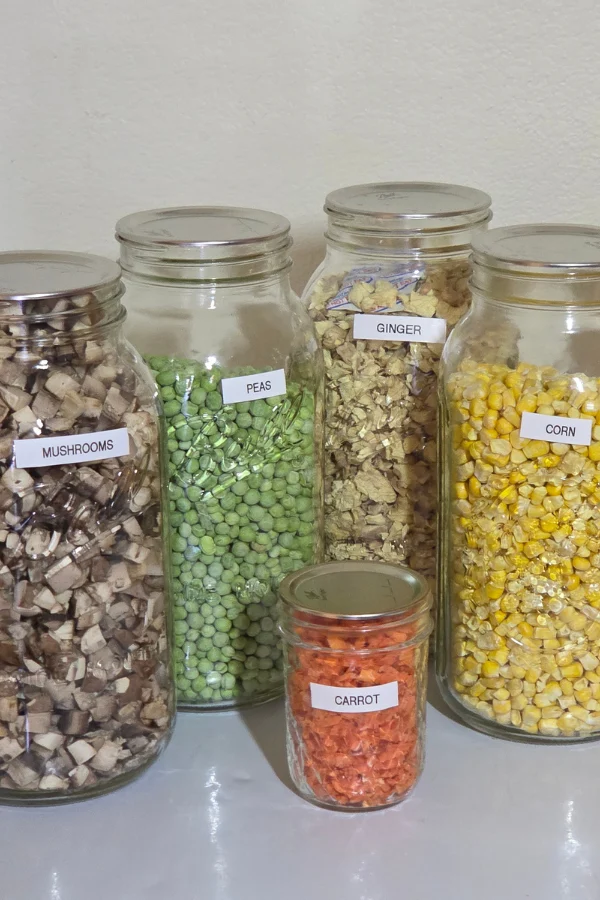
You can freeze dry frozen vegetables straight from the bag. Almost all store-bought frozen vegetables are blanched before they’re frozen, so they go right onto the trays with no prep. Fresh vegetables generally need blanching first to keep their color, texture, and flavor. Harvest Right says properly stored freeze dried food can last up to 25 years.
Quick answer:
- Store-bought frozen vegetables: already blanched, no prep needed, straight onto the trays
- Vegetables you blanched and froze yourself: also ready to go straight onto the trays
- Zucchini, bell peppers, onions, and tomatoes: skip blanching entirely, fresh or frozen
- Most other fresh vegetables: blanch first for best texture and color
- Average cycle time is 24 to 36 hours depending on the vegetable and how much is loaded
- Properly sealed in Mylar with oxygen absorbers, freeze dried vegetables last up to 25 years
The Shortcut Nobody Tells You About
Most freeze drying guides walk you through washing, trimming, blanching, ice bathing, and drying vegetables before they ever touch a freeze dryer tray. That is the right process if you are working with fresh produce that has not been frozen yet.
But if you buy a bag of frozen broccoli or cauliflower from the store, that vegetable has already been blanched before it was frozen. The blanching step that everyone treats as mandatory is already done. All you have to do is open the bag and spread it on the trays.
My store-bought frozen broccoli, peas, green beans, corn and cauliflower go in exactly this way, no extra prep beyond opening the bag.
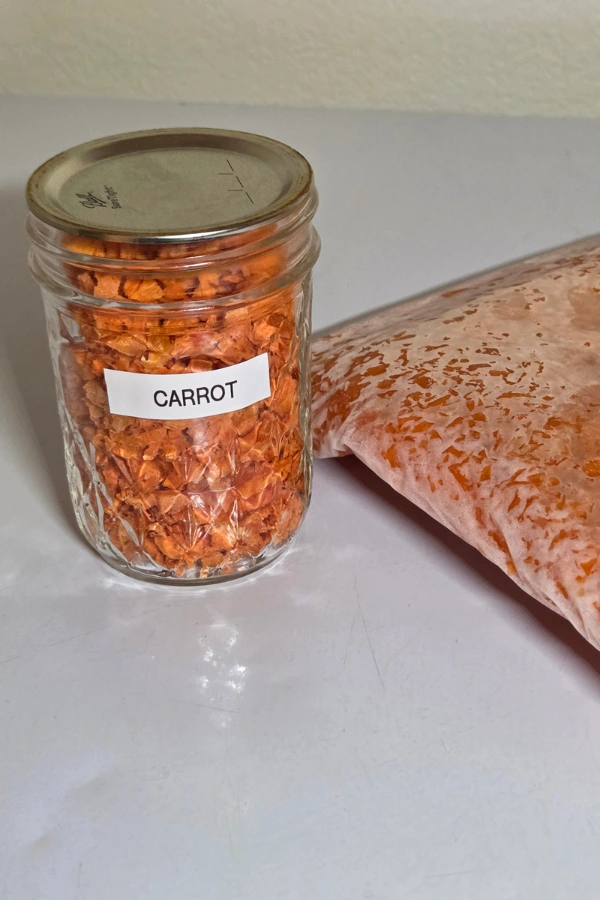
My carrots are a slightly different case. I blanched and froze those myself a while back, so the blanching is already done, just like the store-bought bags. They go in the same way.
Then there is zucchini and bell peppers. I chopped both fresh and froze them without blanching, because those two hold up fine without it. That means when they go into the freeze dryer, they skip blanching entirely, both in the freezer and again here.
Can You Freeze Dry Frozen Vegetables Without Blanching First?
Yes. Vegetables sold frozen at the grocery store are blanched during processing before they are frozen, so the blanching step is already complete. You can pour them directly from the bag onto your freeze dryer trays with no additional prep. The same is true for anything you blanched and froze yourself, like carrots. A handful of vegetables, including zucchini, peppers, onions, and tomatoes prepared for cooking, freeze fine without blanching at all, whether you are freezing them for later or freeze drying them directly.
How to Freeze Dry Frozen Vegetables (The Easy Way)
This covers anything already blanched and frozen, whether it came from the store like my broccoli, peas, green beans, corn and cauliflower, or whether you blanched and froze it yourself like I did with my carrots.
Step 1: Open the bag or container. That is genuinely most of the prep. No washing, no chopping, no boiling pots of water. Although, the bigger the pieces the longer it will take to dry. Chopping them a little smaller will speed up the drying process.
Step 2: Spread evenly on the trays. Pour the frozen vegetables directly onto your freeze dryer trays in a single, even layer. Do not pile them too thick or the middle will not dry as evenly as the edges.
Step 3: Load and run. Since the vegetables are already frozen, you can load them straight into the machine without a separate pre-freeze step. Run a standard cycle. Most vegetables take 24 to 36 hours depending on water content and how full the trays are.
Step 4: Check for full dryness. When the cycle finishes, break a piece in half. It should snap cleanly with no cool or damp spot in the center. If anything feels soft or cool, run it again for a few more hours.
Step 5: Seal immediately. Freeze dried vegetables absorb moisture from the air fast. Get them into Mylar bags with oxygen absorbers or an airtight jar right away.
How to Freeze Dry Fresh Vegetables That Need Blanching
If you are working with a garden harvest or fresh produce that needs blanching, like broccoli, green beans, or carrots straight off the stalk, here is the full process.
Step 1: Wash and prep. Rinse the vegetables, trim any stems or bad spots, and cut into uniform pieces so everything dries at the same rate.
Step 2: Blanch. Bring a pot of water to a boil and drop the vegetables in for a short window, usually usually 2 to 5 minutes depending on the vegetable and the size of the pieces. I use the blanching chart from Michigan State University Extension so I’m not guessing. Blanching deactivates the enzymes that would otherwise cause the vegetable to lose color, flavor, and texture over time, even in long-term storage.
Step 3: Ice bath. Immediately transfer the vegetables to a bowl of ice water for about the same amount of time you blanched them. This stops the cooking process so they do not turn mushy.
Step 4: Dry and pre-freeze. Pat the vegetables dry and spread them on the freeze dryer trays. Pre-freezing in a regular freezer for a few hours before running the cycle is not required but it does shorten the total freeze drying time. This is exactly what I did with my carrots, blanched, frozen, and now ready to go straight into the Harvest Right whenever it is their turn.
Step 5: Load and run. Run a standard cycle, typically 24 to 36 hours for fresh vegetables.
Step 6: Check and seal. Same as above. Snap test for dryness, then seal immediately in Mylar with an oxygen absorber using an impulse sealer.
Do You Need to Blanch Vegetables Before Freeze Drying?
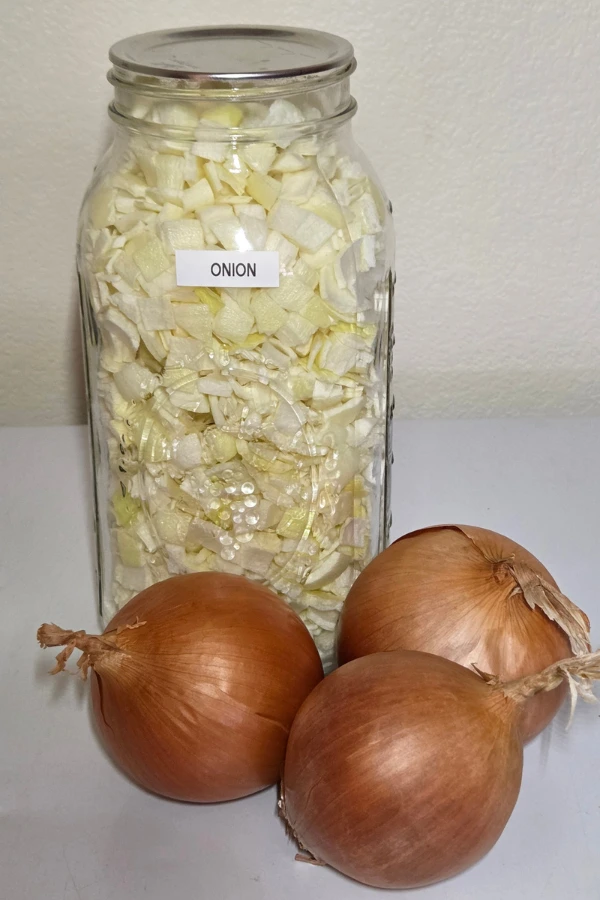
It depends on the vegetable. Most fresh vegetables benefit from blanching first, since it preserves color, flavor, and texture during long-term storage by stopping enzyme activity. A handful of vegetables freeze dry fine without it, including zucchini, bell peppers, onions, and tomatoes prepared for cooking. That is exactly why my zucchini and bell peppers went straight into the freezer chopped and raw, no blanching step at all, and they will go into the freeze dryer the same way. If you are starting with vegetables that are already frozen, whether store-bought or blanched and frozen by you, this step is already behind you either way.
Vegetables That Need Blanching vs. Vegetables That Don’t
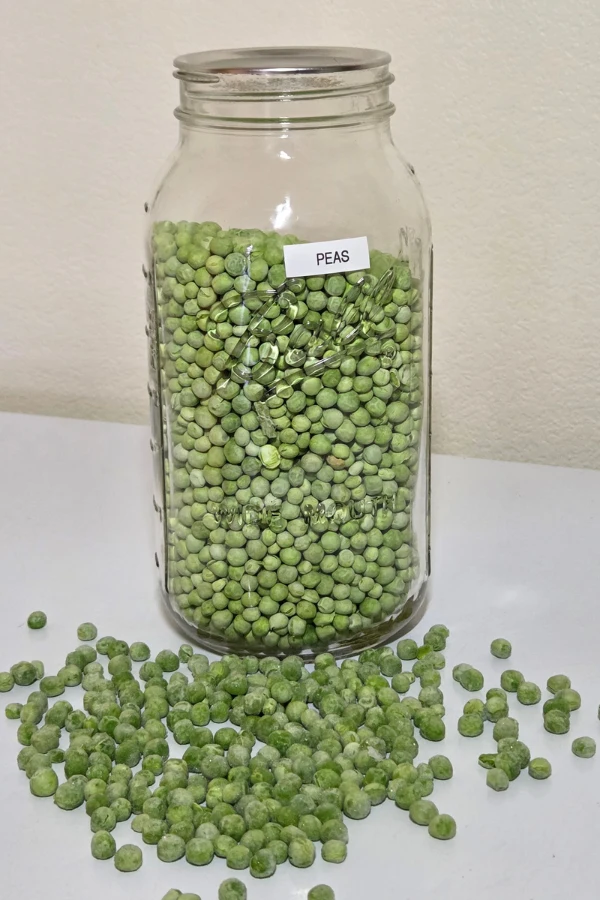
If you are working entirely from fresh produce and want a quick way to know which vegetables need that extra step, here is the breakdown. This applies whether you are blanching before freezing the vegetable for later, or blanching right before it goes into the freeze dryer.
| Needs Blanching | Skip Blanching |
|---|---|
| Broccoli | Zucchini |
| Cauliflower | Bell peppers (sweet or hot) |
| Carrots | Onions |
| Green beans | Garlic |
| Corn | Ginger root |
| Peas | Raw tomatoes (for cooking) |
| Asparagus | Fresh herbs (basil, chives, dill) |
| Brussels sprouts | Green onions |
| Spinach and leafy greens | |
A quick honest note on zucchini: university extension guides do recommend blanching it for the best color and texture over long storage. I skip it because it holds up fine for how we use it, mostly in soups and baking. If you want it looking its best years from now, blanch it.
A few vegetables fall outside both columns because they need to be fully cooked first instead of blanched, including sweet potatoes, pumpkin, spaghetti squash, and other winter squash varieties. Cook these through, cool completely, then freeze or freeze dry as usual.
This list lines up with what I have in my own freezer right now. The broccoli, peas, green beans, corn and cauliflower I bought already frozen were blanched during processing before I ever touched them. My carrots needed blanching, so I did that myself before freezing them. My zucchini and bell peppers landed in the skip column, which is why I chopped them fresh and froze them raw with no extra step.
Why I’d Rather Freeze Dry Than Fill the Freezer
If you read my post on how to freeze dry eggs at home, you already know I have been slowly working through what I keep in the freezer versus what gets freeze dried. Vegetables were next on that list, mostly out of necessity. The freezer fills up fast when you are buying in bulk and prepping vegetables ahead of time.
The Harvest Right itself is something I talk about in freeze drying for beginners if you are still deciding whether one is worth it. For me, it was never really a question once I saw how much freezer space it gave back. If you are ready to look at one, this is the freeze dryer I use.
The whole reason I started building a pantry that goes anywhere with me was because I was tired of starting over every time we moved. I mapped out the system that finally worked: what to stock, how much, and how to keep it shelf-stable without relying on a freezer. It’s all in my free From-Scratch Pantry Starter Guide, and you can grab it right below.
How Long Do Freeze Dried Vegetables Last?
Freeze dried vegetables stored properly in Mylar bags with oxygen absorbers last up to 25 years. In a half gallon jar with a vacuum sealer for everyday use, expect a year or two before quality starts to drop, which is still far longer than anything sitting in a freezer.
How Do You Rehydrate Freeze Dried Vegetables?
Add the vegetables directly to soups, stews, or any dish with liquid and they will rehydrate as it cooks. For a side dish on their own, cover with warm water and let sit for 10 to 15 minutes, then drain.
How to Store This Long-Term
Freeze dried vegetables stay shelf stable in a cool, dark, dry place. Mylar bags with oxygen absorbers, sealed with an impulse sealer, are the right choice if you want them to last for years. A half gallon jar with a mason jar vacuum sealer works fine if you are using them up within a season or two and want easy access.
Label every bag with the vegetable and the date. Once vegetables are powdered or dried down, a lot of them start to look similar, especially anything from the squash or root vegetable family. I also log every batch in the food tracker in our Adventure Inspired Recipes app, so I always know what I have and when I made it.
What I Am Freeze Drying Next
Right now my freezer has broccoli, peas, green beans, corn and cauliflower from the store, carrots I blanched myself, and zucchini and bell peppers I chopped fresh with no blanching at all. That covers every category in this post, and only a portion of it has gone through the Harvest Right so far.
The freezer is still too full as I write this. But every bag of vegetables that goes through the Harvest Right instead of staying in the freezer is space back, and that matters more to me than having a complete pantry photo shoot ready to go.
If you are sitting on a full freezer too, you do not need to have it all figured out before you start. Pick one bag, run it through a cycle, and see what you think.
With love and adventure,
Mindy
What is sitting in your freezer right now that you keep meaning to deal with? Tell me in the comments. I might already have an answer for what to do with it.