

This sourdough sandwich bread is my absolute favorite recipe. It’s beginner friendly and I still use it to this day because it’s genuinely easy. Most sourdough recipes seem complicated, and if it’s complicated, I probably won’t make it, which is exactly why I’m sharing this one with you. It’s simple enough to fit into a busy schedule.
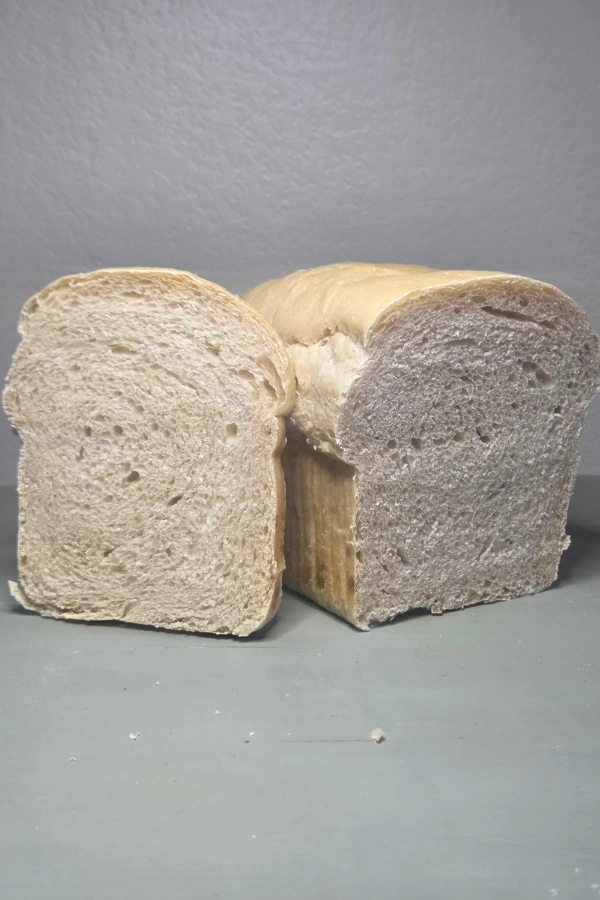
Soft sourdough sandwich bread in a nutshell: Mix water, active sourdough starter, oil, and honey, then add bread flour and salt to form a dough. Let it rise until doubled, shape it into a loaf, rise again, then bake at 375°F for about 30 minutes. The honey is what keeps this loaf from molding as fast as a sugar-based version would. Total time from start to finish is around 8-9 hours, or split it over two days.
Why I Made This Recipe
I started making sourdough about a year ago. A friend gave me some starter and I’ve been hooked ever since. In the beginning, it was genuinely confusing. I started by learning how to activate my starter, then began testing recipes. My first few attempts fell flat, literally, no rise at all, and the crust was so hard I could barely chew into it. I didn’t give up, though, and kept testing until I got it right.
This is the recipe that gave me my first successful loaf, and I’ve tweaked it over time since. My early loaves were also molding within a few days, which sent me down a rabbit hole of testing storage methods until I landed on something that actually keeps bread good for a couple of weeks.
Why a Sandwich Loaf, Not a Round Boule
I used to think round sourdough loaves were the only way to make it, until I realized that wasn’t true at all. I genuinely prefer a sandwich loaf, it’s what I grew up eating and it’s just more functional for how I actually use bread day to day.
Round loaves tend to develop a hard, crackly crust, which is great for some things, but I like a soft piece of buttered toast. A sandwich loaf works for sandwiches, French toast, buttered toast, sloppy joes, basically anything. A round loaf is mostly just good for dipping or toast. That’s just my take, but it’s why this shape wins in my kitchen.
Equipment Needed
- Kitchen scale that measures grams
- Medium size bowl
- A cover for bulk rise
- Loaf liners or parchment paper
- Loaf pans
The Recipe
Ingredients:
- 285g water, room temp or lukewarm
- 70g active sourdough starter
- 12g cooking oil (I use avocado oil)
- 16g honey
- 500g bread flour
- 13g salt
This can be done in one day, or split across two, whichever fits your schedule better.
Step 1: Activate Your Starter
Make sure your starter is active before starting. I usually feed mine the night before so it’s bubbly by morning, but you can also start it in the morning and let the dough bulk proof in the fridge overnight instead. Either way works.
Step 2: Make the Dough
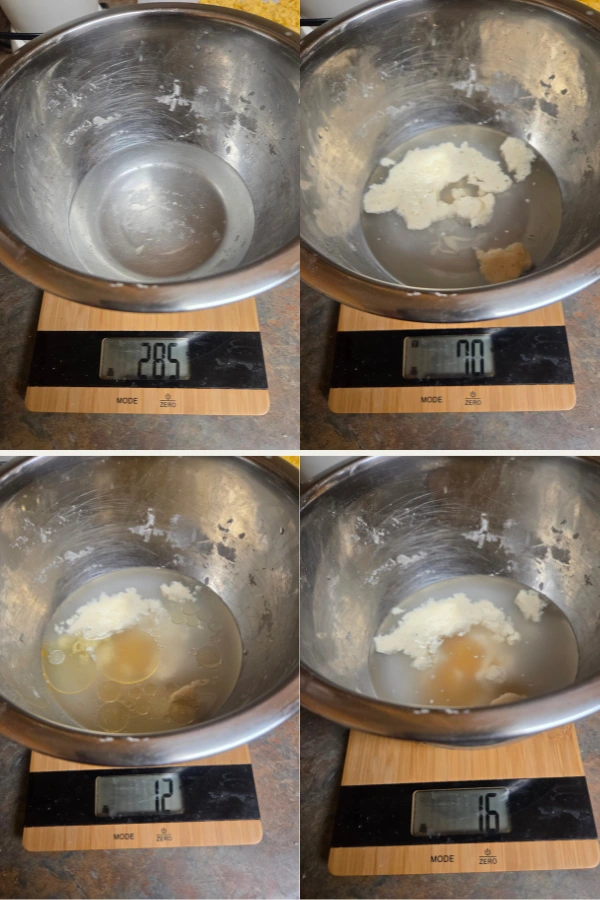
- Set your scale to grams, place your bowl on it, and zero it out.
- Add 285g water, zero the scale again.
- Add 70g active starter, zero again.
- Add 12g cooking oil, zero again.
- Add 16g honey.
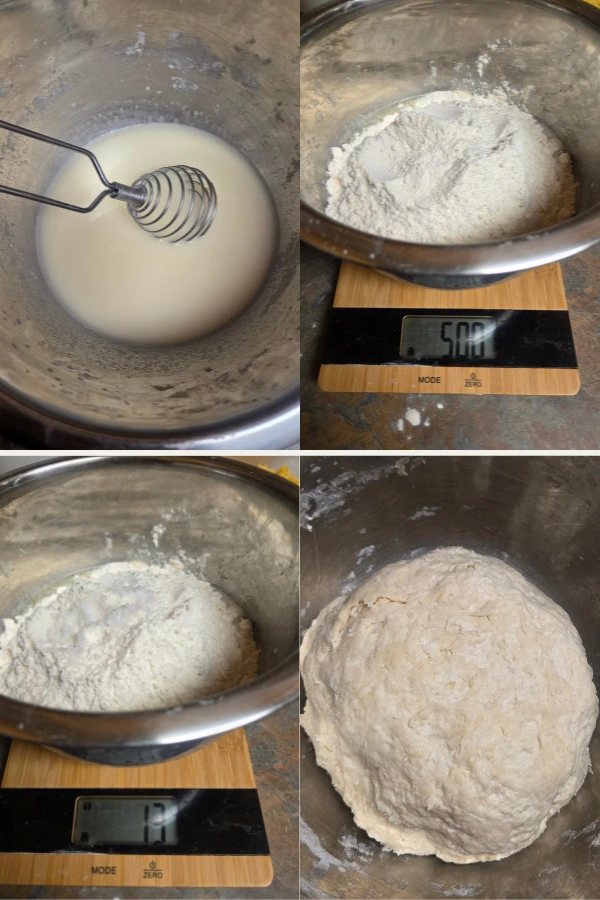
- Whisk together until fully combined and a milky white color.
- Zero the scale, add 500g bread flour.
- Zero again, add 13g salt.
- Mix until it forms a dough.
Step 3: First Rise
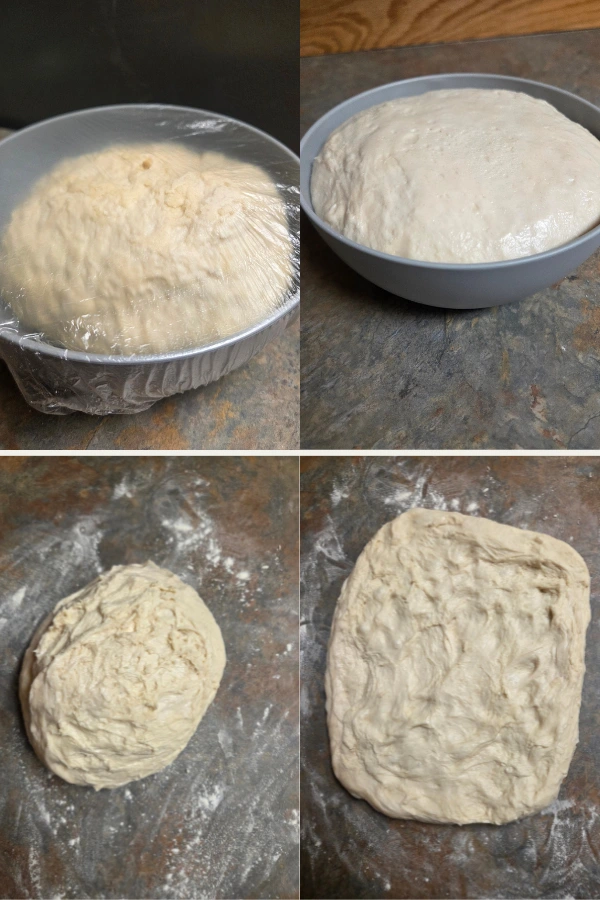
- Move the dough to a bowl slightly bigger than the dough itself, so you can watch it rise.
- Let it rest 15 minutes, then knead for a minute to make sure everything’s incorporated, and form it back into a ball.
- Cover the dough, a towel, plastic wrap, or anything that keeps air off works.
- Let it rise in a warm place until doubled. I use my oven with just the light on.
Step 4: Shape the Dough
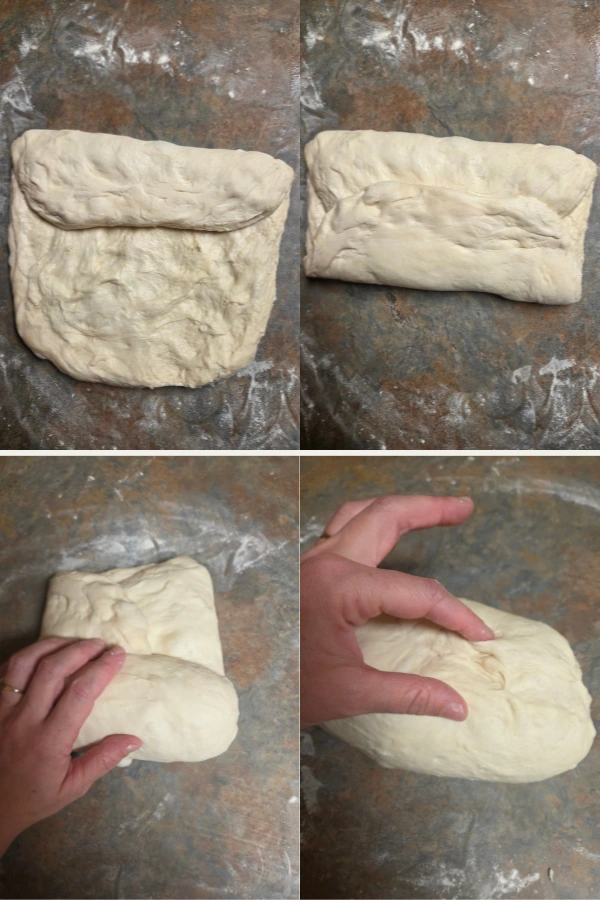
- Once doubled, stretch it out onto a lightly floured surface into a rough square or rectangle.
- Fold two sides toward the middle to make a hot-dog shape, then roll it lengthwise into a loaf shape.
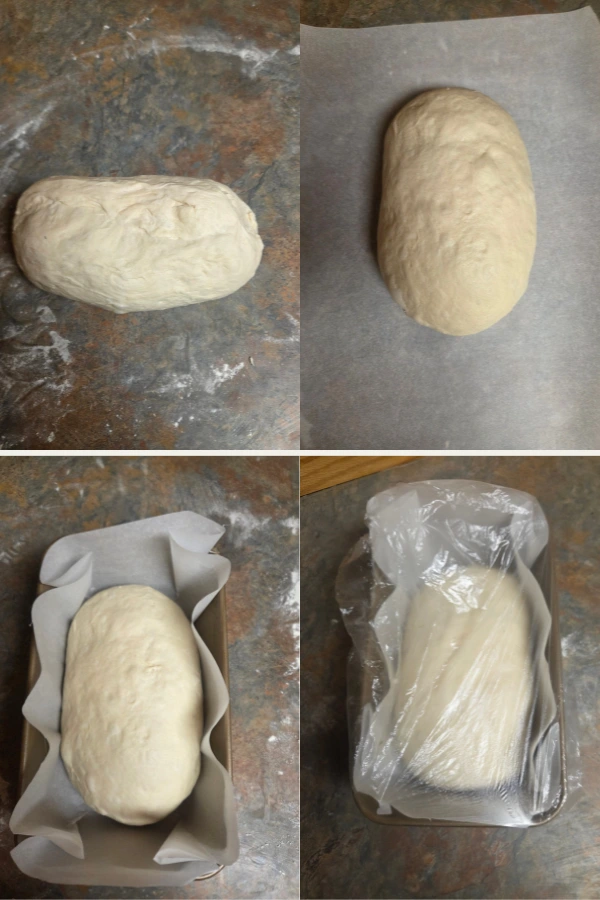
- Flip it over and pinch the seams and edges to seal it into a solid loaf with no loose flaps.
- Place seam-side down on parchment paper, then lower it into the loaf pan, the parchment keeps it from sticking.
- Cover the loaf pan.
At this point you can bake it right away or refrigerate it overnight and finish the next day.
Step 5: Second Rise
- If refrigerated, take it out and let it come to a warm spot.
- Let it rise, covered, in a warm place until the dough is about 1 inch above the edge of the pan.
Step 6: Bake
- Preheat the oven to 375°F.
- Uncover and bake for 30 minutes, rotating halfway through for even color.
- The top should be a deep golden brown.
The most reliable way to know it’s done isn’t color, it’s internal temperature. Use an instant-read thermometer and check the center of the loaf, it should read 190-200°F. Visual color can lie, especially if your oven runs hot or uneven, but internal temperature won’t.
- Remove from the oven and the pan, and cool completely on a rack, covered loosely with a towel.
- Don’t worry if the top feels hard right out of the oven, it softens as it cools under the towel.
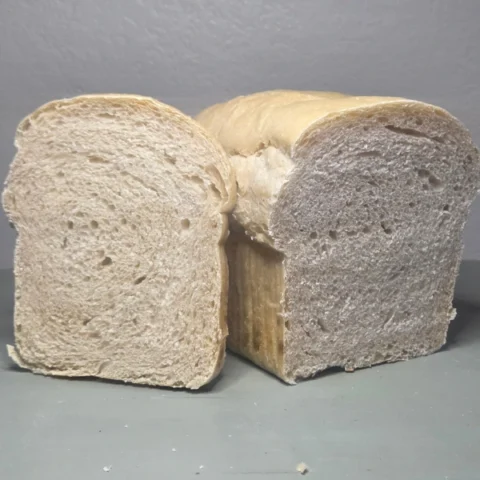
- Let it cool completely before slicing, cutting in too early leads to a gummy texture.
Visual Image of steps
Making Smaller Loaves
Cut the dough in half after mixing, before the first rise, and use a smaller loaf pan. This makes a mini loaf, great for kids or slider sandwiches. Keep an eye on the bake time, it may finish slightly faster than a full loaf, though not by much.
Storage
- Counter: about 1 week before it starts to mold
- Fridge: about 2 weeks
- Freezer, in a freezer bag: about a month
- Freezer, vacuum sealed: several months, vacuum sealing prevents freezer burn and extends life considerably
If a loaf over-proofs and falls flat before baking, you can still bake it, it’ll just come out denser than usual, still edible, just not as light.
If cooking from scratch still feels overwhelming, I put together a free step-by-step guide to help you get started even when life is busy. It’s called the From-Scratch Pantry Starter Guide, grab it below.
Frequently Asked Questions
Why did my loaf come out dense and flat? Almost always an under-active starter or an over-proofed dough. Make sure your starter is bubbly and has roughly doubled before using it, and don’t let the second rise go too far past the top of the pan.
Can I use all-purpose flour instead of bread flour? You can, but bread flour’s higher protein content gives a better structure and chew for a sandwich loaf specifically. All-purpose will work, just expect a slightly softer, less sturdy crumb.
Why is the crust so hard right out of the oven? That’s normal, it softens as it cools if you keep it covered with a towel. Don’t judge the final texture until it’s fully cooled.
Can I substitute the honey? Granulated sugar works, but the loaf will mold faster on the counter, within a few days instead of a full week. The honey is doing real preservation work here, not just adding flavor.
How do I know for sure it’s done baking? Check internal temperature with an instant-read thermometer, 190-200°F in the center. This is more reliable than color alone.
More Sourdough Recipes
Conclusion
This loaf taught me that sourdough doesn’t have to be complicated to be good. If your first attempt falls flat, literally, don’t give up, mine did too. This is the version that finally worked, and it’s still the one I make on repeat.
With love and adventure,
Mindy
📌Pin for Later!
Soft Sourdough Sandwich Bread (Beginner Friendly)
A beginner-friendly, soft sourdough sandwich bread. Simple enough for a busy schedule, no complicated techniques required.
Ingredients
Equipment
Ingredients
- 285g Water (Room Temp or Lukewarm)
- 70g Active Sourdough Starter
- 12g Cooking Oil (I use Avocado Oil)
- 16g Honey
- 500g Bread Flour
- 13g Salt
Instructions
- Combine water, starter, oil, and honey. Whisk until milky white.
- Add bread flour and salt, mix until a dough forms.
Make the Dough
First Rise
3. Rest 15 minutes, knead briefly, reform into a ball.
4. Cover and let rise in a warm place until doubled.
Shape
5. Stretch into a rectangle, fold and roll into a loaf shape.
6. Pinch seams, place seam-side down in a parchment-lined loaf pan.
Second Rise
7. Cover and let rise until dough is about 1 inch above the pan edge.
Bake
8. Preheat oven to 375°F. Bake uncovered for 30 minutes, rotating halfway.
9. Check internal temperature reaches 190-200°F, this is more reliable than color alone.
10. Cool completely on a rack, covered with a towel, before slicing.
Notes
- Make mini loaves by halving the dough before the first rise and using a smaller pan.
- Counter storage: about 1 week. Fridge: about 2 weeks. Freezer (bagged): about a month. Freezer (vacuum sealed): several months.
- Over-proofed dough can still be baked, it'll just be denser.
Nutrition Information:
Yield: 12 Serving Size: 1Amount Per Serving: Calories: 179Total Fat: 2gSaturated Fat: 0gUnsaturated Fat: 2gSodium: 453mgCarbohydrates: 35gFiber: 1gSugar: 1gProtein: 6g