

We loaded up everything we owned into our little 4×6 adventure trailer, threw our dog Koda in the back seat, and hit the road from Arizona with one goal… visit as many national parks as we possibly could before summer ended. Sixteen parks and monuments later, across most of the western side of the country, we had experienced some of the most breathtaking landscapes either of us had ever seen. We had also learned some hard lessons about what it actually means to bring your dog along for a national park road trip. If you are planning something similar, read this first. I wish someone had told us all of this before we pulled into Zion.
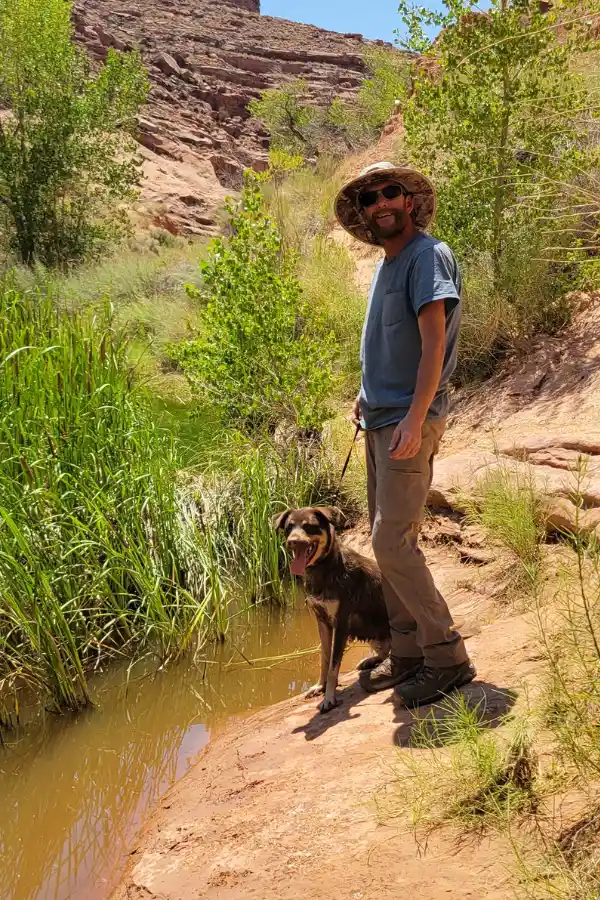
The Truth About Dogs in National Parks
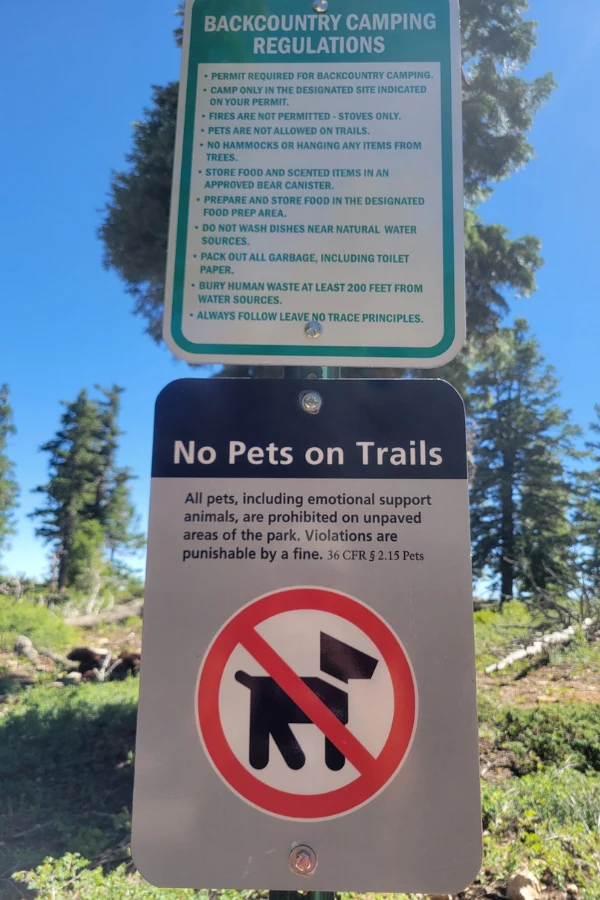
Here is the short version that nobody puts in the travel brochure. Dogs are allowed in national parks but barely. In most parks they are restricted to paved roads, parking areas, sidewalks, and developed campgrounds. That means no hiking trails, no shuttles, no backcountry, and no boardwalks in most cases. Dogs cannot enter public buildings, transportation, or beaches that are not designated as dog friendly.
The rules are not random. Dogs leave behind a predator scent that can linger and disrupt native animals. Their waste can transmit diseases to which wild animals have no immunity. When you understand why the rules exist it is a little easier to accept them, even when it is frustrating in the moment.
The one rule that applies everywhere without exception, keep your dog on a leash no longer than six feet at all times. Retractable leashes technically violate this rule if extended beyond six feet. Six feet. Every park. No exceptions.
Our Very First Stop – Zion
Zion was the first park on our route and honestly one of the most beautiful places I have ever seen in my life. I still wish we had gotten to experience more of it. We pulled into the parking lot in June and immediately realized we had a problem. It was already hot. We left the car running to keep Koda cool and went inside to ask questions at the information center.
That is when we found out that to actually see Zion, you have to get on a shuttle bus. The bus drops you at the hiking trails and scenic areas throughout the park. No dogs on the bus. No dogs on the trails. Dogs can only be on paved areas and we obviously could not leave the car running for hours while we hiked.
We were disappointed but we adjusted. We did the scenic drive which was absolutely gorgeous. If you are visiting Zion with a dog, the scenic drive is your best option and honestly it is worth doing.
My suggestion for anyone planning to visit Zion with a dog, either have a camper with an AC unit that will keep them comfortable while you explore or arrange a dog sitter for the day so you can actually see the park the way it deserves to be seen.
Every Park After Zion Had the Same Rules
After Zion we stopped hoping the next park would be different and just started planning around the reality. Paved areas, parking lots, developed campgrounds. That is what you have to work with in most western national parks.
It sounds limiting and it is. But we found ways to make it work and honestly some of the most memorable parts of our whole trip happened right from the car window or at the edge of a parking lot with Koda finally getting to stretch her legs.
Bryce Canyon has one of the most stunning scenic drives we experienced on the entire trip. We pulled over at every overlook, let Koda out on her leash to sniff around the parking areas, and took in those incredible orange and pink formations from spots that most people rush past to get to the trailheads. Sometimes slowing down because you have a dog with you forces you to actually see things.
The Moab Heat Was No Joke
The stretch around Moab Utah (Canyonlands and Arches) was the hottest part of our entire trip by far. I honestly cannot remember the exact temperature but there were nights where sleeping in a tent was completely out of the question. We ended up booking a hotel for a couple of nights just to survive it.
For Koda those days were rough. She was in the car for most of it. We made a point to stop at ponds, rivers, and lakes along the way to let her get in the water and cool down before and after going through the parks. That made a huge difference for her.
If you are traveling between June and September with a dog, plan water stops into your route. Not just a bowl of water at a picnic table but actual places where they can wade in and cool their whole body down. It matters more than you think when the temperatures are that high.
Are you the kind of woman who brings her dog on every adventure and figures the rest out as she goes? You are exactly who I write for. Join the Koda Kingdom community for real stories, honest tips, and adventure content made for women who do not leave their dogs behind.
Yellowstone Is a Different Animal Entirely
Yellowstone deserves its own category because it is just so much bigger than everything else. National parks welcome pets in developed areas, on many trails and campgrounds, and in some lodging facilities. Yellowstone leans toward the developed areas side of that equation but because the park is so massive and the boardwalks are relatively short, we actually managed pretty well.
We now live inside Yellowstone so I can tell you from a year of experience that the boardwalks are short enough that leaving Koda in the car for a few minutes while you walk around is very manageable. We were able to see Old Faithful, the hot springs, and several other geothermal features without leaving her for long stretches.
The longer backcountry hikes are a different story. We saved those for a future trip. If you are planning to do any serious hiking in Yellowstone, arrange a dog sitter ahead of time. It is worth it.
One thing I want to stress about Yellowstone, specifically if you are doing any of the longer hikes without your dog, get your bear spray before you go. Bear spray sold inside the park is significantly more expensive than what you can find ahead of time. [New blog post coming Soon: what to pack for national park hiking] Do not skip it. Bears are real and they are out there.
What Actually Helps When You Are Traveling With a Dog
Here is everything we learned the hard way so you do not have to.
Find somewhere outside the park for your dog to actually run and hike. On our trip we discovered a hike near Bryce Canyon just outside the park boundary that had all the same red rock formations and structures as the park itself, but dogs were completely welcome. Koda got to actually experience something close to what we were seeing inside, and it was one of her favorite days of the whole trip. I need to track down the exact name of that trail to share with you all, but the point is, look for national forests, BLM land, and state parks nearby. They almost always allow dogs on trails, and they are often just as beautiful.
Take real water breaks. Not just a bowl in the parking lot. Find water Koda can get into. Rivers, lakes, ponds. Let them cool down completely.
A collapsible water bowl is one of those things you will use every single day on a trip like this. Ours lived in the front seat and came out at every stop. [new blog post coming soon: camping gear we never leave home without]
If you are a backpacker at heart and the no dogs on backcountry trails is genuinely going to ruin the trip for you, find a dog sitter or doggy daycare near the park ahead of time. Some parks even have kennel services on site. I personally could not stomach the idea of leaving Koda in a kennel all day every day but that is just me. You know your dog and your own comfort level.
The BARK Ranger Program – A Fun Bonus
The National Park Service has a special program called BARK Ranger. BARK stands for Bag your pet’s waste, Always wear a leash, Respect wildlife, and Know where you can go. Ask about it at the visitor center at each park. Some parks give out actual badges for your dog’s collar. Koda is still waiting on her full collection.
Was It Worth It Bringing Koda?
Every single time. Without question.
Yes, she spent more time in the car than any of us wanted. Yes, there were moments of frustration when we realized we could not do a trail we had been looking forward to. But watching her run at a river’s edge in the middle of nowhere or stick her head out the window as we drove through landscapes that looked like another planet, or curl up next to us at the campsite after a long day, that is the whole point.
She has been on every adventure since the beginning. She is not a dog we leave behind. She is Koda, and the whole kingdom belongs to her too.
If you are heading out on a national park road trip with your dog this summer, go. Just go prepared. Know the rules before you arrive at each park, plan your water stops, find the nearby trails that welcome dogs, and let go of the expectation that everything will go exactly as planned. The best parts of our trip were the ones we did not plan at all.
With love and adventure,
Mindy
Have you traveled to national parks with your dog? Tell me which ones were your favorites and any tips I missed in the comments below.