

If you have ever looked at a box of dry pasta and thought “I could probably make that myself,” you are absolutely right, and it is so much better than you think. Homemade pasta from scratch is one of those kitchen skills that sounds fancy but is genuinely simple once you try it. No fancy equipment required. No culinary degree. Just flour, eggs, and a little elbow grease.
Whether you are cooking in a tiny house kitchen, a school bus, a campsite with a camp stove, or just your regular home kitchen, this recipe works. It is budget friendly, satisfying to make with your hands, and the kind of skill that makes you feel like a total kitchen queen.
Let me show you exactly how to do it.
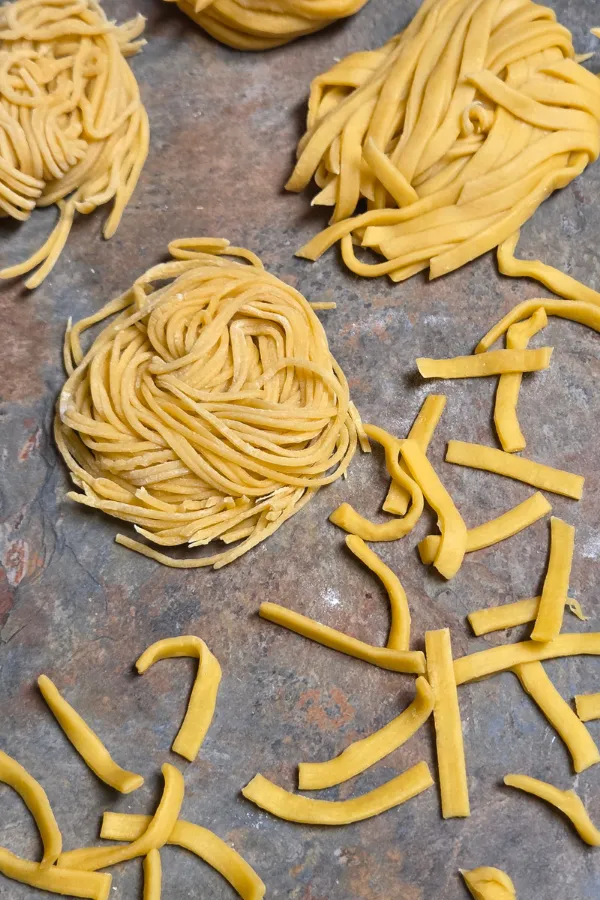
What Is Homemade Pasta From Scratch?
Homemade pasta from scratch is fresh pasta made from just flour and eggs, mixed and kneaded by hand into a smooth dough, then rolled out and cut into your favorite shape. No preservatives, no weird additives, just real food made by you.
Quick answer: To make homemade pasta from scratch, combine 1 cup of all-purpose flour with 2 eggs (and an optional pinch of salt), mix into a dough, knead for 8 to 10 minutes until smooth, let it rest for 30 minutes, then roll thin and cut into noodles. Cook in boiling water for 2 to 3 minutes.
What You Need to Make Homemade Pasta From Scratch
Ingredients (per serving, scales easily)
- 1 cup all-purpose flour
- 2 eggs
- 1 tsp salt (optional, but recommended for flavor)
That is it. Seriously. Three ingredients, and one of them is optional.
Tools
- A clean flat surface or large bowl for mixing
- A rolling pin (or wine bottle in a pinch!)
- A sharp knife or pizza cutter for cutting noodles
- A large pot for boiling
Want to make pasta rolling even easier? A good pasta roller is a total game changer, especially if you make this regularly. I use and love the Stand Mixer Pasta Machine because it rolls dough evenly every time and is built to last for years. It is the kind of tool you buy once and keep forever.
How to Make Homemade Pasta From Scratch (Step by Step)
Step 1: Make Your Dough
Mound your flour on a clean surface or in a large bowl and make a well in the center. Crack your 2 eggs into the well. If you are using salt, add it now.
Using a fork, gently beat the eggs and slowly start pulling flour from the inner walls of the well into the egg mixture. Keep going until it becomes too thick to use the fork, then switch to your hands.
Step 2: Knead the Dough
Here is where the magic happens. Knead the dough by pushing it away from you with the heel of your hand, folding it back, turning it, and repeating. Do this for 8 to 10 minutes until the dough is smooth, elastic, and just slightly tacky but not sticky.
If the dough feels too dry, wet your fingers slightly. If it feels too sticky, add a tiny pinch of flour. You will get a feel for it quickly.
Step 3: Rest the Dough
Wrap the dough in plastic wrap or place it in a covered bowl and let it rest at room temperature for 30 minutes. This step is not optional! Resting allows the gluten to relax, which makes rolling so much easier.
Step 4: Roll It Out
Divide the rested dough into 2 to 4 smaller pieces so it is easier to work with. Using a rolling pin, roll each piece out as thin as you can get it, aiming for about 1 to 2 mm thickness. Thinner is better for silky noodles.
If you have a pasta machine, run each piece through from the widest setting down to your preferred thinness.
Step 5: Cut Your Noodles
Lightly flour the sheet of dough so it does not stick, cut into strips with a sharp knife.
- For fettuccine, aim for about 1/4 inch wide.
- For tagliatelle, a little wider.
- For lasagna sheets, skip the cutting altogether.
Lay them flat or twirl into little nests on a floured surface while you finish the rest.
Step 6: Cook and Enjoy
Bring a large pot of water to a rolling boil. Salt the water generously. Add your fresh pasta and cook for just 2 to 3 minutes. Fresh pasta cooks fast, so watch it closely. Taste test at the 2 minute mark.
Drain and toss immediately with your sauce of choice.
Tips for Perfect Homemade Pasta From Scratch
Use room temperature eggs. Cold eggs make stiffer dough that is harder to knead. Set them out 30 minutes before you start.
Do not skip the rest. I know 30 minutes feels long when you are hungry, but the dough really does need it. Use the time to make your sauce.
Flour your surface generously when rolling. Sticky dough tears. A well-floured surface keeps things smooth.
Fresh pasta cooks fast. Two to three minutes is usually all it needs. Do not walk away!
Make a big batch and freeze it. Lay the cut noodles in nests on a baking sheet, freeze until solid, then transfer to a bag. Cook straight from frozen, adding just a minute or two to cook time.
Storing Homemade Pasta Long-Term
If you are not wanting to cool the pasta right away, you can still store it long term. There are a couple different ways to do this.
- You can lay them out on a counter or hang them from a drying rack. Here is a drying rack you can check out if you need to see what it looks like –> Pasta Drying Rack.
- You can also Dehydrate them. This is the dehydrator I use –> Dehydrator.
- You can Freeze Dry your homemade pasta –> This is the freeze dryer I use and LOVE! –> Freeze Dryer.
- You can freeze you homemade pasta too! Just twirl your pasta into a ball. Lay it on a parchment lined baking sheet and freeze. Once it is frozen you can vacuum seal it in an airtight bag or mason jar.
Once you are ready to cook your pasta, just add a few more minutes of cook time onto the original 2-3 minutes and you have ready to eat pasta!
Why Making Pasta From Scratch. Is Worth It?
Beyond the obvious (it tastes incredible), making pasta from scratch is a genuinely practical skill. It costs almost nothing, uses pantry staples you probably already have, and is deeply satisfying in a way that opening a box never is.
For those of us living unconventionally, whether that is on the road, off-grid, or just trying to eat more real food on a tight budget, this is the kind of recipe that becomes a cornerstone. You learn it once, and you never forget it.
What I Actually Use
If you want to take your homemade pasta game up a notch, a good pasta machine is a worthwhile investment. I recommend the Stand Mixer Pasta Machine. It is sturdy and easy to use. Perfect for small kitchens or anyone who makes pasta regularly.
Check it out on Amazon here and tell me what shape you make first!
Make This Recipe Your Own
Have you tried making homemade pasta from scratch before? Drop a comment below and tell me how it went! Did you add anything fun to the dough? Try a different flour? I love hearing how you make these recipes your own.
And if you share it on Instagram or Pinterest, tag me so I can see your beautiful noodles!
📌Pin For Later!
Homemade Pasta
Homemade pasta from scratch is one of those kitchen skills that sounds fancy but is genuinely simple once you try it. No fancy equipment required. No culinary degree. Just flour, eggs, and a little elbow grease.
Ingredients
- 1 cup all-purpose flour
- 2 eggs
- 1 tsp salt , (Optional, but recommended for flavor)
Instructions
- Mound your flour on a clean surface or in a large bowl and make a well in the center. Crack your 2 eggs into the well. If you are using salt, add it now.
- Using a fork, gently beat the eggs and slowly start pulling flour from the inner walls of the well into the egg mixture. Keep going until it becomes too thick to use the fork, then switch to your hands.
- Here is where the magic happens. Knead the dough by pushing it away from you with the heel of your hand, folding it back, turning it, and repeating. Do this for 8 to 10 minutes until the dough is smooth, elastic, and just slightly tacky but not sticky.
- If the dough feels too dry, wet your fingers slightly. If it feels too sticky, add a tiny pinch of flour. You will get a feel for it quickly.
Make You Dough
Knead the Dough
- Wrap the dough in plastic wrap or place it in a covered bowl and let it rest at room temperature for 30 minutes. This step is not optional! Resting allows the gluten to relax, which makes rolling so much easier.
- Divide the rested dough into 2 to 4 smaller pieces so it is easier to work with. Using a rolling pin, roll each piece out as thin as you can get it, aiming for about 1 to 2 mm thickness. Thinner is better for silky noodles.
- If you have a pasta machine, run each piece through from the widest setting down to your preferred thinness.
- Lightly flour the sheet of dough so it does not stick, cut into strips with a sharp knife.
Rest the Dough
Roll It Out
Cut Your Noodles
- For fettuccine, aim for about 1/4 inch wide.
- For tagliatelle, a little wider.
- For lasagna sheets, skip the cutting altogether.
- Store Them or Cook Them
- You can lay them out on the counter to dry, dehydrate them or freeze dry them for long term pantry storage.
- You can aslo twirl them in a ball and freeze them if you prefer to keep them in the freezer.
- You can also cook them immediately. Bring water to a boil, toss in your noodles and cook for 2-3 minutes.
Notes
To Scale This Recipe
- Make sure you are always using 2 eggs per cup of flour or 1 egg per half cup of flour. If you are using 4 cups of flour you will need 8 eggs. If you are using 1 1/2 Cups of flour, use 3 eggs. Super Simple!
Helpful Tips
- Use room temperature eggs. Cold eggs make stiffer dough that is harder to knead. Set them out 30 minutes before you start.
- Do not skip the rest. I know 30 minutes feels long when you are hungry, but the dough really does need it. Use the time to make your sauce.
- Flour your surface generously when rolling. Sticky dough tears. A well-floured surface keeps things smooth.
- Make a big batch and freeze it. Lay the cut noodles in nests on a baking sheet, freeze until solid, then transfer to a bag. Cook straight from frozen, adding just a minute or two to cook time.
- Want to make this process go faster? This is the pasta making machine I use. Check it out on Amazon here and tell me what shape you make first!
Want to build a self-sufficient Kitchen?
Grab My Free 'From Scratch' Pantry Guide to help you get started without feeling overwhelmed