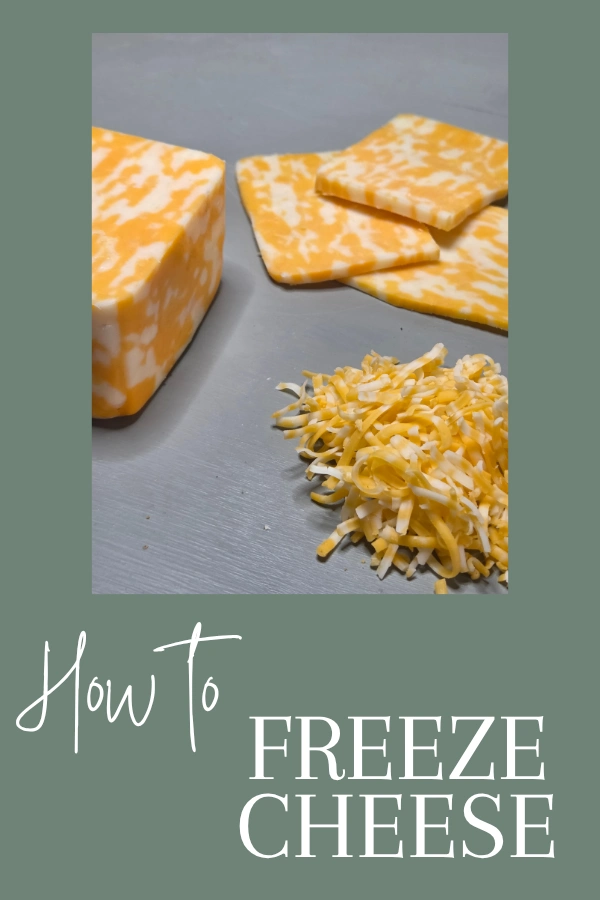

I am going to show you how to freeze cheese the right way, which cheeses freeze better than others and how freezing it can preserve cheese long-term. I discuss everything from hard cheeses to cottage cheese, how to process them for the best results and which cheeses to not freeze at all. Once you know the basics you will be able to store cheese in bulk, confidently!
How I Got Started
There was one summer where my husband got a job offer to work for Yellowstone National Park. It was one of his dream jobs so of course we said yes and headed towards Yellowstone. During those summer months we were told that winter will be quite different then we were used to.
We were told that we will have to take our vehicles completely off property (an hour drive) and we won’t be able to bring them back into the park until Spring. We were told that there is a snow coach that would be able to bring us to our vehicle but anything we purchase would have to be loaded onto the bus and then unloaded when we got to our apartment.
At that point, I knew we needed to stock up for the winter. I started buying everything in bulk! There were a lot of successful trials but there were also a lot of errors, too. I did the testing for you and now, you don’t have to try and figure it out on your own.
If you are wanting to build a self-sufficient kitchen but you don’t know how you will ever get there, don’t worry. It does take time and honestly, a lot of learning. However, the good news is you don’t have to figure it all out on your own. I am here to help. Grab this FREE ‘From Scratch’ Pantry Guide to help you get started without getting overwhelmed.
How Freezing Affects Cheese
There are so many different types of cheeses and each one will freeze a little bit differently. There are also some cheeses that don’t freeze well at all, and I’ll tell you why in just a moment. First, let’s break it down so you can fully understand what happens during the freezing process.
Cheese is made up of fat, protein, and water. When cheese freezes, the water inside forms ice crystals. When it thaws, those ice crystals break down the protein structure, which causes the cheese to become:
- Crumbly
- Grainy
- Drier than before
This is why frozen cheese is almost always better used as an ingredient (melted in recipes) rather than eaten on its own after freezing. I have eaten thawed cheese, and it actually doesn’t taste bad, it just has a different texture then normal. After it has been melted into a recipe, you won’t even be able to tell that it was previously frozen.
Cheeses That Freeze Well
These are your “safe to freeze” cheeses. The rule of thumb is: harder cheeses freeze better because they have less moisture to begin with.
- Cheddar
- Mozzarella
- Parmesan
- Colby
- Monterey Jack
- Gouda
- Provalone
- Swiss
- Pepper Jack
- Asiago
- Romano
Cheeses That Do Not Freeze Well
These cheeses have a very high moisture content or a delicate creamy texture that gets completely ruined in the freezer.
- Fresh Mozzarella
- Ricotta
- Cottage Cheese
- Brie
- Camembert
- Buratta
- Mascarpone
- Queso Fresco
- Feta
- Fresh Goat Cheese
- Cream Cheese (can be frozen if using in cooked Recipes)
Storing Cheese Long-Term
The trick to storing cheese long-term is to get all the air out of the storage container your are going to be freezing the cheese in. This can be a freeze-jar, a vacuum sealed bag, or a zip lock freezer bag with all the air squished out of it. The zip lock bag should be your last resort. It doesn’t get all the air out and can still get freezer burn if not used in time.
Here are the tools we use, plus links on where to get it and helps if you are a visual person.
- Wide Mouth Mason Jar and Mason Jar Vacuum Sealer – I love this combination for things like shredded cheese because it won’t squish your shredded cheese, but it will get all the air out so that it lasts long-term. Make sure you are using a wide mouth mason jar because that is the only style that can be frozen safely.
- Vacuum Sealer for Bags – This isn’t the vacuum sealer we use, only because ours is really only and outdated but this is a really good one. This is perfect for freezing things like cheese slices. You can also use this method for shredded cheese it will just be a little more squished.
- Ziplock Bags – This is the option that I do NOT recommend. For short term storage this is a good option but not a good one for long term storage. If you are needing to use Ziplock bags in a pinch, make sure you are squeezing as much air out as you possibly can.
Labeling For Long-Term Storage
Make sure you are always labeling the items you are storing in the freezer. Label it with what type of cheese is being stored and when you processed it. Example: Sharp Cheddar 6/12/25… Don’t rely on memory because it is likely that you will forget what type of cheese it is or how long it has been in the freezer. The process date is very important because that lets you know which one needs to be used up first. Always use up the oldest one first so the freshest ones are the ones left in the freezer.
The Different Form of Cheeses and How to Freeze Each On
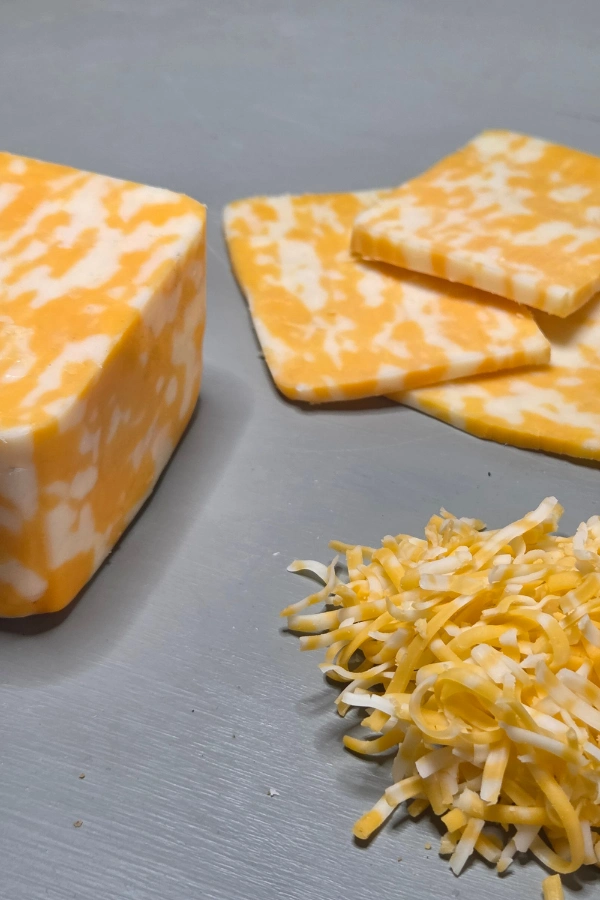
You can Freeze cheese as a block, shredded, sliced cheese, pre-shredded cheese and freshly grated cheese. How you freeze it is completely up to you but there are some ways that are better than others. However, they are work great, so which ever one you prefer is a wonderful option.
Block Cheese
- Cut the block into smaller portions (no more than ½ pound per piece)
- Choose your preferred storing option and vacuum seal the air out of it.
- Label with the type of cheese and the date you processed.
- Place flat in the freezer
Why smaller pieces? The smaller the piece, the less time it needs to thaw, and the less texture damage occurs. The smaller pieces also freeze and thaw more evenly. I have frozen entire blocks of cheese before when I was in a hurry but remember it does get crumbly. You likely will not be able to slice it after it has thawed.
Shredded Cheese
This is actually The Best form to freeze cheese in. Shredded cheese has more surface area, thaws quickly, and you can pull out exactly how much you need without thawing the entire bag.
- If you are using pre-shredded cheese from the grocery store, you can freeze the entire unopened bag (Short-Term Option) or take it out of the original bag and vacuum seal it in your preferred storage container.
- If you are shredding your own cheese or repackaging pre-shredded cheese, vacuum seal it in your preferred storage container.
- If you are going to vacuum seal it in bags make sure you pre-freeze the shredded cheese first so it doesn’t all squish together when you put it through the vacuum sealer.
- If you are vacuum sealing it in jars, there is no need to pre-freeze it.
- Make sure you are labeling your shredded cheese container with the type of cheese and the date you processed it.
Sliced Cheese
If you are going to freeze sliced cheese, you will need to put parchment paper between each slice. Without parchment between slices, they will freeze together into one solid block, and you’ll tear them trying to separate them.
- Place a small piece of parchment paper or wax paper between each slice
- Stack the slices together
- Vacuum seal them into your preferred container.
- Label and freeze
How Long Does Frozen Cheese Last?
This is the recommended time frame if you are storing your cheese in Zip Lock Bags. If you are storing your cheese properly in an airtight container, it could last much longer. I have honestly never had cheese go bad on me as long as I stored it properly and used the oldest ones first.
- Hard Cheese (Parmesan, Romano) – 12 Months
- Semi Hard Cheese (Cheddar, Gouda) – 6 to 8 Months
- Shredded Cheese – 6 Months
- Sliced cheese – 3 to 6 months
- Soft Cheese (if you must freeze) – 1 to 2 Months
How to Thaw Frozen Cheese Correctly
Thawing is just as important as freezing! Many people ruin their cheese by thawing it wrong.
The Right Way
- Always thaw in the refrigerator – move it from the freezer to the fridge and let it thaw slowly overnight or for 24 hours
- Never thaw at room temperature – this can cause bacteria growth
- Never thaw in the microwave – this changes the texture even further
How Long Does Thawing Take?
- Shredded cheese: A few hours to overnight in the fridge
- Block cheese: 24 hours in the fridge
- Sliced cheese: Several hours in the fridge
After Thawing
Remember that the texture will be slightly different when eaten raw. It will be a little bit crumblier, and you won’t be able to slice it like you did when it was fresh. However, it still gets that ooey, gooey goodness after it’s been melted.
The Best Uses for Frozen (Then Thawed) Cheese
Because texture changes after freezing, thawed cheese works best in:
- ✅ Melted dishes – pizza, grilled cheese, quesadillas
- ✅ Casseroles – mac and cheese, lasagna, enchiladas
- ✅ Soups and chili – shredded cheddar on top melts perfectly
- ✅ Baked dishes – stuffed peppers, baked pasta
- ✅ Omelets and scrambled eggs
- ✅ Tacos and nachos
- ❌ Charcuterie boards – texture won’t look or feel right
- ❌ Eating plain as a snack – texture is too crumbly
Tips for Buying Cheese to Freeze
- Buy cheese in bulk at warehouse stores (like Costco or Sam’s Club) and freeze portions
- Stock up when cheese is on sale at the grocery store
- Shred a large block yourself and freeze it – much cheaper than buying pre-shredded bags
- Freeze cheese before it expires – if you notice you won’t use it in time, freeze it that day, not when it’s already going bad
Common Mistakes to Avoid
- Not wrapping tightly enough – air is the enemy; it causes freezer burn
- Freezing large blocks – always portion first
- Not labeling – you WILL forget what it is and when you froze it
- Thawing at room temperature – food safety risk
- Refreezing after thawing – ruins texture completely and is a food safety concern
- Expecting it to taste exactly the same – It will taste similar but not exactly the same
- Freezing fresh/soft cheeses – These do not freeze well at all
FAQ
- Can you freeze cream cheese? – Technically yes but only use it in cooked recipes afterward. The texture becomes grainy.
- Can you freeze shredded cheese? – Yes! This is actually the best form to freeze cheese in.
- How long can you freeze cheese? – Most cheeses last 6-8 months in the freezer.
- Can you freeze fresh mozzarella? – No, the high water content destroys the texture.
- Does freezing cheese change the taste? – Slightly, but most people don’t notice when it’s melted in a recipe.
- Can you freeze a block of cheese? – Yes, but cut it into smaller portions first.
- Can you refreeze cheese? – No. Once thawed, never refreeze.
- Is frozen cheese safe to eat? – Yes, as long as it was frozen properly and thawed in the refrigerator.
Want Help Building Your Pantry
Building a self-sustaining kitchen can be exhausting. I know because I too had no idea where to start or how to keep up with it all. I am here to tell you don’t have to figure it out on your own. Grab my FREE ‘From Scratch’ Pantry Guide to help you get started today.
Other Posts You May Like
- Freeze Drying For Beginners
- Why I Stopped Buying Convenience Foods
- How to Start a Self-Sustaining Pantry When Money Is Tight
📌Pin For Later