

Dehydrating Basics isn’t about panic prepping. It’s about being able to store more in small spaces, not have to rely on freezers, saves money on electricity, and builds a sustainable, long-term pantry that gives you peace of mind. Dehydrating allows you to travel, move often or live small without sacrificing the amount of food you can store.
If you have ever looked at a dehydrator and thought “where do I even start?“ Trust me, I’ve been there!
When I first started, I didn’t have a guide, a mentor, or even a helpful Pinterest post to walk me through the process. I googled every tiny question I had. It was very time consuming, confusing, frustrating, and honestly, intimidating.
That’s why I created this guide… to save you from all the guesswork and help you build confidence from day one. Once you understand the basics, dehydrating becomes fun, addicting, and one of the best ways to build an off-grid pantry, prep for camping trips, and reduce food waste.
Let’s get you started the right way, with everything I wish I knew.
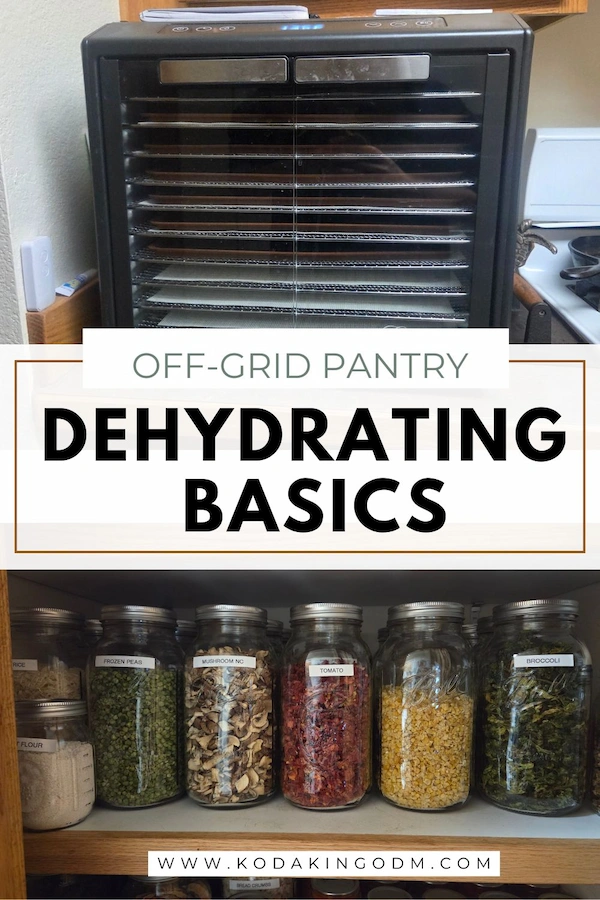
Dehydrating in a nutshell: Remove moisture from food using a dehydrator or a low oven, and it becomes lightweight, shelf-stable, and ready to store for months or years. Slice thin, spread in a single layer with no overlap, dry until it snaps rather than bends, then condition in a jar for a few days to catch any remaining moisture before sealing for long-term storage.
What Is Dehydrating?
Dehydrating is the process of removing moisture from food so it becomes lightweight, shelf-stable, and long-lasting. When done properly, dehydrated foods can last months or even years and take up very little space.
You can dehydrate:
- vegetables
- fruits
- herbs
- spices
- sauces
- cooked meals
- leftovers
- pantry staples
It’s one of the simplest ways to build a fully stocked pantry without relying on a freezer or electricity.
Who dehydrating is best for
- Frequent Travelers
- Small Spaces
- Off-grid lifestyle
- No Permanent Home
- Apartments
Want a pantry system that actually works for your lifestyle? I put together a free guide for exactly that, it’s called the From-Scratch Pantry Starter Guide.
Why Dehydrating Is Perfect for Beginners
When I started, I needed something that didn’t require special skills, exact measurements, or gadgets I didn’t have. Dehydrating is exactly that:
- Low-effort: Slice, spread, start.
- Low-energy: Uses way less electricity than freezing or canning.
- Forgiving: Most mistakes can be fixed by drying longer.
- Budget-friendly: Preserve food you already bought before it spoils.
- Customizable: Make your own mixes, powders, meal kits, and camping staples.
And unlike canning, it’s almost impossible to mess up as long as you dry food fully and store it properly.
Essential Tools You Need
A Dehydrator
You don’t need anything fancy. Start with whatever you have or can afford. My first one had no timer, no temperature control… and it STILL worked.
If you don’t have one or looking for a new one, look for:
- adjustable temperature (95–165°F is ideal)
- stackable or slide-out trays
- A fan motor that is on the top (it circulates the air best)
Here are my recommendations! I have both and love them! This dehydrator is great if you are just getting started and this dehydrator is great if you are wanting to do a bigger volume of dehydrating.
Something to Store Your Food In
You can use:
- Mason jars
- Mylar bags
- Airtight containers
- Spice jars
- zip-top bags (short term)
Don’t overthink it. Airtight is the main requirement.
Ps… Oxygen absorbers can help extend shelf life as well
What Dehydrating Replaces in My Pantry
- Store-bought snacks
- Freezer bulk storage
- Expensive freeze-dried items
The Basics: How to Dehydrate Almost Anything
This is the simple process I wish someone had explained to me right away.
- Prep Your Food – Wash, peel (if desired), and slice.
- Tip: Thin, even slices = faster, better drying.
- Spread in a Single Layer – Never overlap! Overlapped food traps moisture and dries unevenly.
- Set the Temperature – Temperature depends on what you are dehydrating. More on this later.
- Dry Time – This varies A LOT depending on the humidity, sliced thickness, water content, dehydrator, etc. Number 6 is a quick tip I have learned.
- The “Snap Test” – Food is done when it snaps cleanly, crumbles, or feels hard with zero squish or moisture left. If your food bends, feels tacky or sticks to your fingers, it needs more time.
- Conditioning (For Long-Term Storage) – This step is rarely explained but it’s important! Put it in a jar, with the lid loosely tightened. Give the jar a shake every 24 hours for a few days and check it for moisture. If it’s clumping together, dehydrate it longer. Moisture leads to mold.
Good Rule of Thumb
There are some foods that need a bit more prep work than others. A good rule of thumb is… food is ready to dehydrate if you would eat it the way it is before it goes into the dehydrator.
I have heard so many people say they dehydrated raw potatoes… then when they rehydrate them, they can’t figure out why it tastes like it’s a raw potato or worse. The trick? Cook them BEFORE you dehydrate them!!
Things you should blanch or cooked before dehydrating:
- Potatoes
- Beets
- Fresh Broccoli
- Tomatoes (only if you want them peeled)
- Fresh asparagus
- Cabbage
- Carrots
- Squash
- Rice (Creates Minute Rice)
- Corn
Pro Tip: If you get frozen fruits or vegetables, they are already pre-prepped and ready for the dehydrator. Example: Fresh corn on the cob needs to be cooked and removed from the cob before rehydrating but frozen corn can go straight to the dehydrator.
Dehydrating Temperatures
The temperature you use depends on the foods you are dehydrating. If your temperature is too high, it will kill off all the nutrients in the food. If your temperature is too low, it will allow bad bacteria to grow, like mold.
Here are the basics:
- Nuts and Seeds (90-100 Degrees)
- Herbs and Live Cultures (95-110 Degrees)
- Vegetables (125 Degrees)
- Fruits (135 Degrees)
- Grains and Beans (145 Degrees)
- Meats (145 – 165 Degrees)
Live cultures are thinks like Greek Yogurt or Sourdough starter.
Foods You Should Start With
These are the easiest, fastest wins. They build confidence instantly:
- Onion Powder – Chop, Dry, Blend, Done! It’s that simple! Here is the full guide.
- Garlic Powder – Same process, even simpler. Here is the full guide.
Both are perfect beginner projects and can immediately be use in any dish.
Common Beginner Mistakes (I Made All of These)
- Slicing too thick – thick pieces take forever and often dry unevenly.
- Storing food before conditioning – This leads to moisture pockets, mold, and heartbreak.
- Not drying long enough – MOST beginners think food is done way before it actually is.
- Overloading trays – Airflow is everything.
- Expecting everything to dry at the same speed – It won’t.
Once you understand these, dehydrating becomes smooth and predictable.
How to Store Dehydrated Food
Storage depends on how long you want it to last.
- Short-term (1–6 months): Mason Jars, Zip-Lock bags, or Airtight Containers.
- Long-term (6–24+ months): Mylar Bags, Oxygen Absorbers, Vacuum Sealed Jars.
Tip: Keep away from heat, sunlight and Moisture.
What You Can Dehydrate Next
After garlic and onion powder, try:
- Tomato slices or sauce (powder them!)
- Bell peppers
- Celery
- Mushrooms
- Strawberries
- Watermelon
- Full meals like chili, rice bowls, or stews
These foods can go from fresh, straight to the dehydrator!
Avoid foods that have a lot of fat or don’t rehydrate well:
- Avocados
- Eggs
- Milk
- Chicken
- Butter
- Cheese
- Heavy Cream
- Meals with any of these ingredients (should not be dehydrated)
- Etc.
Final Thoughts
You don’t need to be an expert. You don’t need fancy equipment. And you definitely don’t need to learn everything the hard way like I did.
You just need:
And now? You’ve got the guide I wish I had.
📌Pin For Later

You May Also Like
If you want more easy dehydrating recipes, I have many coming soon… but in the meantime, get started with my beginner-friendly favorites:
- How to Make Homemade Onion Powder
- How to Make Homemade Garlic Powder
- How To Build a 6 month Pantry
- The From Scratch Pantry System
Happy dehydrating! Let me know if you get stumped or have any questions. I’m always here to help! Post how your dehydrating is going in the comments!