

For years, I tried to figure out how to make ready-to-eat meals without needing a cooler, whether we were camping, traveling, or just living somewhere without reliable fridge space. It felt like the only options were cooking everything from scratch on the spot, or grabbing something from the grocery store that was either loaded with sodium or full of ingredients I couldn’t pronounce.
I currently live three hours from the nearest grocery store, further still from any farms or markets. Over the years I’ve lived in campers, tents, apartments, and cabins, gardening wasn’t always possible, and buying fresh constantly wasn’t either. The only real answer was learning to prepare and preserve food myself, and after a lot of testing, I found three approaches that actually work.
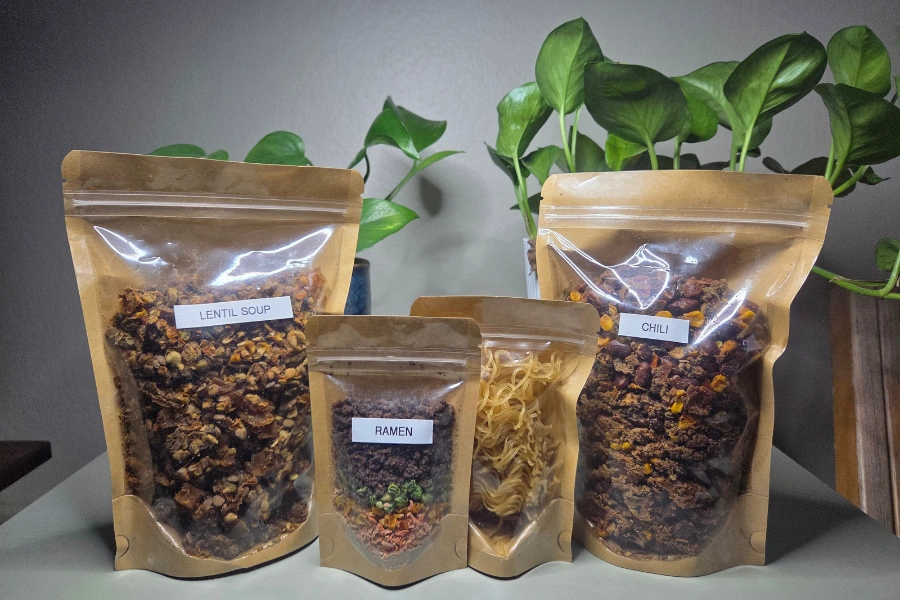
Ready-to-eat meals without a cooler in a nutshell: There are three real paths here: dehydrated full meals (affordable, but rehydration takes 15-45 minutes and texture can be a little chewy), freeze-dried full meals (faster, better texture, bigger upfront cost), and simple pantry mixes that never needed refrigeration to begin with, like instant oatmeal or dry gravy and soup bases. Most people end up using a mix of all three depending on the situation.
Why I Went Looking for This in the First Place
Only a small portion of what’s actually in a grocery store is fresh or minimally processed. Think about the path most boxed or instant food takes: harvested weeks or months before use, shipped to a processing facility, packaged with preservatives to survive transport, then sitting in a warehouse and on a shelf for who knows how long before it reaches you. That realization is what sent me looking for a better answer.
My options were canning, dehydrating, or freeze drying. Canning didn’t fit our lifestyle, glass jars and constant travel don’t mix well. So I started with dehydrating, since it was the lower-cost way to experiment, and added freeze drying later once I knew it was worth the investment. If you’re trying to decide between the two machines yourself, I’ve laid out the real cost and decision breakdown here, this post is about what you can actually make with each, not which one to buy.
Option 1: Dehydrated Full Meals
Instead of making separate test batches, I just cooked dinner as usual, made a little extra, dehydrated the leftovers, and rehydrated small portions later to test texture and flavor. If it worked, I wrote it down. If it didn’t, I adjusted or crossed it off.
Meals that genuinely worked well dehydrated:
- Potato soup
- Spaghetti
- Lentil soup
- Homemade ramen-style meals
The honest downside: rehydration takes 15 to 45 minutes depending on the meal and method, and texture is sometimes a little chewy, especially with meat and some vegetables. After a long day outside, I heard “is the food ready yet?” more nights than I’d like to admit. It works, hunger usually wins, but it’s not instant.
If you want the full how-to on dehydrating in general, Dehydrating Basics covers the process from the ground up.
Option 2: Freeze-Dried Full Meals
After a full summer of dehydrated meals, we wanted faster results, and freeze drying delivered. The difference was immediate: meals rehydrate in minutes instead of 30-45, work with hot or cold water, hold their original texture far better, and handle large batches well.
It’s a bigger upfront investment, but for a lifestyle built around travel and limited kitchen access, it earns its cost back in convenience alone.
Option 3: Meals That Never Needed a Cooler to Begin With
This is the option most guides skip entirely, you don’t always need a dehydrator or a freeze dryer at all. Some of the most reliable no-cooler meals in my own rotation are just smart, shelf-stable pantry mixes that were never going to spoil in the first place:
- Homemade instant oatmeal, just add hot water
- Overnight oats for camping, no cook, no fridge required in cool weather
- No-bake energy balls, a high-protein snack that holds up in heat without refrigeration
- Chicken gravy mix or country gravy mix, poured over rice or biscuits for a fast, filling meal
- Cream of anything soup mix, just add water and heat
None of these require any special equipment, just pantry staples mixed ahead of time. For a lot of situations, this is genuinely the easiest and cheapest path to a ready-to-eat meal without a cooler, no dehydrator or freeze dryer purchase required at all.
If you’re building a pantry that works no matter where you’re eating from, I put together a free guide on exactly that. It’s called the From-Scratch Pantry Starter Guide, grab it below.
Do I Still Use My Dehydrator?
Yes, constantly, for fruit leather, snacks, and pantry ingredients like onion and garlic powder. Dehydrating was the perfect entry point into food preservation, and it taught me fundamentals I still rely on even after adding a freeze dryer to the mix.
Which Approach Is Right for You?
There’s no single right answer, it depends on your budget, how much rehydration time you’re willing to wait out, and how much you’re already cooking from pantry staples versus wanting fully assembled meals ready to go. Most people who stick with this long-term end up using all three depending on the trip or the week. If you want the full equipment cost breakdown and buying guidance, that’s covered in detail here.
Final Thoughts
Ready-to-eat doesn’t have to mean a cooler full of ice or a box full of preservatives. Between dehydrating, freeze drying, and simple pantry mixes, there’s a real, healthy option for whatever your setup actually allows.
With love and adventure,