

Dehydrating food for long-term pantry storage felt intimidating when I first started, expensive equipment, complicated rules, a lot of room to mess it up. The reality turned out to be a lot simpler than that. It’s one of the cheapest, most flexible ways to preserve food, and once you understand what actually stores well for the long haul versus what needs to be eaten sooner, the rest falls into place.
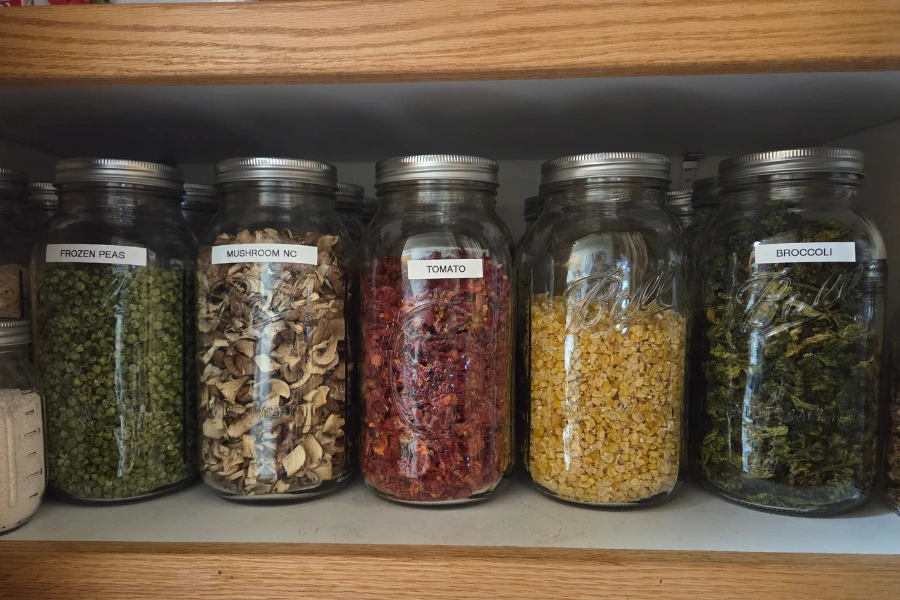
Long-term dehydrated storage in a nutshell: Vegetables and grains store 5 to 10+ years properly sealed, fruits closer to 5 years at best quality, and high-fat foods like jerky still need the freezer regardless of dehydrating. Store below 70°F, use mylar bags with oxygen absorbers for true long-term stock, and keep a smaller, rotating short-term supply separate from your deep storage.
(If you’re brand new to dehydrating and want the actual how-to, temperatures, prep steps, the snap test, I’ve got a full beginner’s guide here. This post picks up from there and focuses specifically on building a pantry meant to last.)
The First Foods I Dehydrated (And Why)
I started simple, with onions.
I dehydrated them two ways: finely chopped for rehydrating into meals, and fully blended into homemade onion powder. Garlic came right after, using the exact same approach. Both are far more flavorful than anything store-bought, since they haven’t spent months or years losing potency on a warehouse shelf, and together they knocked four separate items off my grocery list for good.
Starting with something you already buy constantly is the easiest way in. You’ll know almost immediately whether the results are worth the effort, because you already know what the store-bought version tastes like.
What Actually Stores Well for the Long Haul
This is the part most guides skip. Not everything that dehydrates well is a good candidate for long-term storage, some things are better dehydrated for near-term use and rotated through quickly instead.
Genuinely long-term (5+ years properly stored): onion powder, garlic powder, most dried vegetables (carrots, corn, peas, potatoes, green beans, bell peppers), mushrooms, and grains.
Good for shorter-term rotation (closer to 1-2 years): most dried fruits. They still have more natural sugar and residual moisture than vegetables do, so they fade in flavor and texture faster, still very usable, just not something to seal away for a decade untouched.
Needs the freezer, not the pantry, even after dehydrating: anything with real fat content, like jerky or dehydrated ground beef. Fat goes rancid over time regardless of moisture removal, dehydrating extends its life, but it doesn’t solve the fat problem the way it solves the moisture problem.
Don’t dehydrate at all for storage purposes: heavy cream, cheese, milk, avocados, eggs, and butter. High-fat, high-dairy foods don’t dehydrate safely for long-term storage, no amount of drying time fixes that.
A gray area: chicken. It’s possible to dehydrate, but I’ve never been satisfied with how it rehydrates, it stays tough. There are techniques that improve this, but I don’t personally rely on dehydrated chicken for pantry cooking. Some refrigeration and freezing is still part of a realistic pantry, even a heavily dehydrated one. The goal is reduction, not total elimination.
How Long Does Dehydrated Food Actually Last?
Real numbers, not vague reassurance:
- Vegetables: 5-10+ years, properly dried and sealed
- Fruits: roughly 5 years at best quality, though they’ll technically still be edible longer
- Onion and garlic powder: 1-2 years at full potency, powders have more exposed surface area than whole pieces, so they fade faster than you’d expect even when sealed well
- Grains: 10+ years, among the most stable things you can store
Temperature matters more than most people realize. Storage below 70°F significantly slows the breakdown that shortens shelf life, and every bit cooler than that helps further. A hot garage or an attic will cut those numbers down fast, regardless of how well you sealed everything.
How to Rehydrate It (The Right Way)
Rehydration is simple, but temperature matters just as much here.
At home: add the dehydrated food to a pot, cover with water, bring to a simmer, and cover with a lid to prevent evaporation. If the water evaporates before the food is fully rehydrated, just add more hot water.
While camping: this is the method I actually use in the field. Bring water to a rolling boil, add the dehydrated food to an insulated thermos, pour the boiling water over it, seal, and let it sit about 30 minutes. Stir, taste, and add more water if needed. It works remarkably well for off-grid cooking, no simmering pot required, no fuel wasted keeping something on a flame.
Knowing what you have is just as important as preserving it. I put together a free guide for tracking and building a pantry that actually fits your life, it’s called the From-Scratch Pantry Starter Guide, grab it below.
Building a Rotation, Not Just a Stockpile
The real skill in long-term dehydrated storage isn’t sealing everything away and forgetting about it. It’s building a rotation, the same principle behind figuring out how much food to actually stock for 6 months in the first place.
Keep a portion of what you dehydrate as short-term, working pantry stock, things you’re actually cooking through and replacing regularly. Save the deep, multi-year storage (mylar bags, oxygen absorbers, the works) for the genuinely long-lasting categories: grains, dried vegetables, powders you don’t go through as fast. A pantry that’s all deep storage and nothing you actually rotate through isn’t really a working pantry, it’s a bunker you forgot about.
Best storage methods once fully dried:
- Vacuum-sealed jars or airtight containers for short-term, actively-used stock
- Mylar bags with oxygen absorbers for genuine long-term storage
Quick Reference
Long-term storage candidates (5+ years)
- Onion powder, garlic powder
- Dried carrots, corn, peas, potatoes, green beans, bell peppers
- Mushrooms
- Grains
Shorter-term rotation (1-2 years)
- Most dried fruits
- Onion and garlic powder specifically (fades faster than whole pieces despite good storage)
Freezer required even after dehydrating
- Jerky, dehydrated ground beef, anything high in fat
Skip dehydrating entirely for storage
- Heavy cream, cheese, milk, avocados, eggs, butter
Rehydration
- Camping: boiling water poured over food in a sealed thermos, 30 minutes, stir and adjust
- Home: cover with water, simmer, lid on, add more hot water if it evaporates first
Dehydrating for long-term storage isn’t about preserving everything the same way, it’s about knowing what actually earns a spot in deep storage and what’s better rotated through as you go. Start with what you already buy often, learn what stores well versus what doesn’t, and build from there.
With love and adventure,