

Fresh mushrooms go bad fast, slimy and unusable within a couple of days, which is a real problem if you don’t have reliable fridge space or you just bought more than you can use before they turn. Dehydrating solves that. A few hours in the dehydrator and they go from a two-day window to a multi-year pantry staple, no electricity to keep them cold, no ice, no waste.
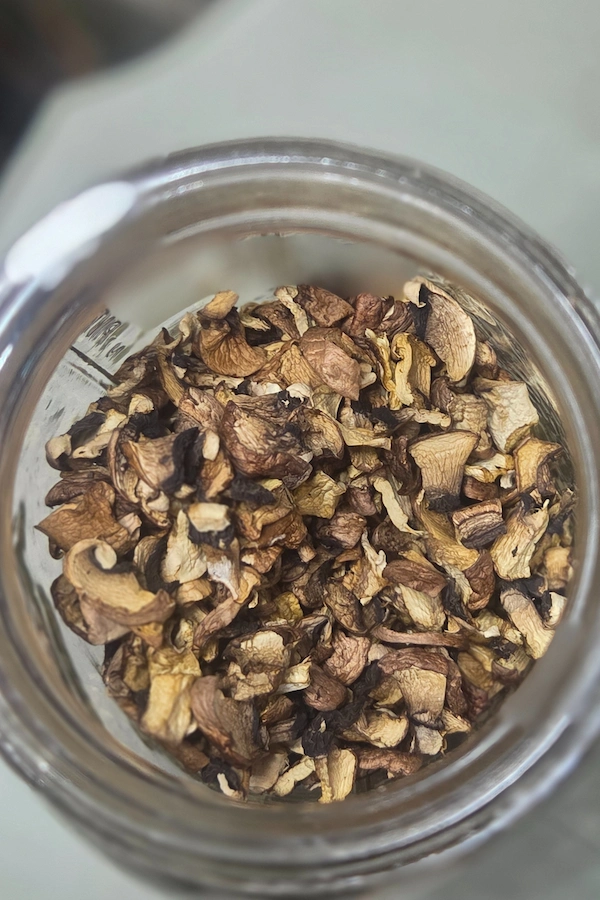
Dehydrating mushrooms in a nutshell: Slice mushrooms about 1/4 inch thick, clean them without water, and dehydrate at 125-135°F for 6-12 hours until brittle. They’re done when they snap cleanly with no bendy or leathery spots. Store airtight in a cool, dark place for years.
Choosing Mushrooms to Dehydrate
Nearly any edible mushroom variety works: button, cremini or baby bella, portobello, shiitake, and oyster.
A quick freshness check: snap the stem away from the cap. A fresh mushroom gives a clean snap. If it feels soft, rubbery, or doesn’t snap at all, it’s past its prime and won’t dry or store as well, it can even start to smell off partway through dehydrating. Start with the freshest mushrooms you can, dehydrating won’t improve a mushroom that’s already on its way out.
How to Prep Them
- Clean without water. Mushrooms absorb water like a sponge, which works against you here. Wipe with a damp towel or a soft brush instead. If they’re very dirty, a quick rinse followed by thorough patting dry is fine, just don’t let them soak.
- Slice evenly, about 1/4 inch thick. Even slices dry at the same rate. Whole mushrooms or uneven pieces dry inconsistently and take much longer.
How to Dehydrate Them
- Set your dehydrator to 125-135°F.
- Place mushroom slices in a single layer on the trays, no overlapping, no stacking. Crowded trays mean uneven drying and longer times.
- Dehydrate 6 to 12 hours, depending on your machine, slice thickness, and humidity.
- Check for doneness: mushrooms should be completely brittle and snap cleanly, no bendy or leathery spots anywhere.
A note on case hardening: if your dehydrator runs hot or you’re drying very thick slices, the outside can dry and harden before the inside finishes releasing moisture, trapping dampness inside a piece that looks done from the outside. If a piece feels dry on the surface but seems heavier than it should or doesn’t snap cleanly, give it more time rather than assuming it’s finished. When in doubt, dry it longer, you can’t really over-dry a mushroom, but trapped moisture is what leads to mold in storage.
No dehydrator? An oven on its lowest setting, with the door propped open slightly to let moisture escape, works too. It just takes more attention and monitoring than a dehydrator does.
Storage
For true long-term storage:
- Mason jars with oxygen absorbers
- Mylar bags with 2 absorbers
- Airtight jars with gasket lids
Keep them in a cool, dark place away from humidity. Properly dried and sealed, mushrooms can last for years, some people report a decade or more without noticeable quality loss.
If you’re building a pantry that’s lightweight and actually shelf-stable, I put together a free guide on exactly that. It’s called the From-Scratch Pantry Starter Guide, grab it below.
How to Use Dehydrated Mushrooms
Use them whole, sliced, or ground into a powder. They go straight into:
- Soups and stews
- Gravy
- Rice dishes
- Pasta sauce
- Stir-fries
- Skillet meals at camp
Anything simmered or cooked with liquid will rehydrate the mushrooms as it cooks, no separate step needed.
To rehydrate before cooking: soak in boiling water, covered, for 15-20 minutes. Don’t toss the soaking liquid, it picks up real mushroom flavor and works great as a base for broth or added straight into whatever you’re making.
Frequently Asked Questions
Can I dehydrate canned or frozen mushrooms? Canned works fine, just drain and pat dry thoroughly first. Frozen technically works but isn’t ideal, you already have the preservation benefit from freezing, so it’s usually better to just use them from frozen rather than dehydrate on top of that.
How long do dehydrated mushrooms actually last? Stored airtight in a cool, dark place, several years is realistic, and some people report a decade or more with proper storage and no noticeable loss in quality.
Can I grind them into powder? Yes, once fully dry, a spice grinder or blender turns them into a concentrated mushroom powder. I blend mine down and stir it right into my cream of anything soup mix to make a real cream of mushroom soup from scratch, no canned soup, no separate mushroom-hunting mid-recipe. It’s also great stirred into gravies or sprinkled over eggs for an umami boost without adding bulk.
Why do my dehydrated mushrooms smell off? This usually traces back to mushrooms that were already past their prime before drying, not a storage problem. Start with fresh mushrooms that pass the snap test, and this shouldn’t be an issue.
Final Thoughts
This is one of the easiest, fastest wins in a dehydrating pantry. A few hours of hands-off drying time turns something that spoils in days into something that lasts years, and it adds real depth of flavor to nearly everything you cook. If you’re building out a dehydrating routine, this pairs well with onion powder and garlic powder, the same basic process applies across all three, just a different vegetable each time.
With love and adventure,
Mindy

Dehydrated Mushrooms
Dehydrated mushrooms, lightweight and shelf-stable for years. Works with nearly any mushroom variety.
Instructions
- Clean mushrooms without water, wipe with a damp towel or soft brush.
- Slice evenly, about 1/4 inch thick.
- Place in a single layer on dehydrator trays, no overlapping.
- Dehydrate at 125-135°F for 6-12 hours.
- Mushrooms are done when completely brittle and they snap cleanly, no bendy spots.
- Store in an airtight container in a cool, dark place.
Notes
- A mandoline slicer speeds up prep significantly for larger batches.
- To rehydrate, soak in hot water 15-20 minutes, or add directly to a soup or stew and let it rehydrate while cooking.
- If a piece feels dry on the outside but heavier than expected, give it more time, trapped internal moisture leads to mold in storage.