

My first dehydrator cost me $2.50 at a thrift store. No temperature settings, no bells and whistles, just a fan and some trays. Onion powder was one of the first things I ever made with it, mostly because I had a bag of onions starting to soften and didn’t want to waste them.
I still make it the same way today, just with a real dehydrator now instead of a thrift store find. One ingredient, no preservatives, no anti-caking agents, nothing but actual onion. It’s one of the easiest ways to stretch a harvest or a bulk bag from the store instead of watching half of it go soft in the back of the fridge. If you’re brand new to dehydrating in general, here’s where I’d start before jumping into this one.
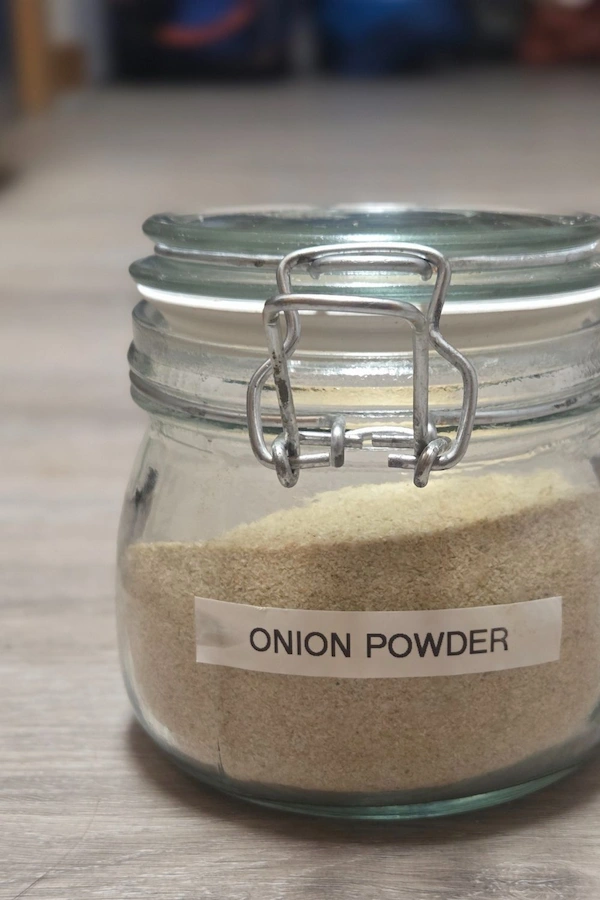
Homemade onion powder in a nutshell: Slice onions thin, dehydrate until brittle, then grind into a fine powder. A dehydrator takes 8 to 12 hours at 125°F, an oven on its lowest setting takes 6 to 10 hours. One medium onion makes about 1 tablespoon of powder, and it stores for over a year sealed properly.
Why Make This Instead of Buying It
Store-bought onion powder usually comes with anti-caking agents and preservatives added to survive years on a shelf. Making your own skips all of that, it’s just onion, dried and ground down.
It’s also one of the best ways to use onions that are about to turn. If you’ve got a harvest coming in faster than you can cook it, or a bag from the store starting to soften, dehydrating turns that into something shelf-stable instead of compost. And once it’s powder, it takes up a fraction of the space fresh onions do, which matters if you’re working with a small pantry, a camper, or anywhere space is limited.
One thing worth knowing before you start: dehydrating onions releases a strong smell that can linger in a house for a while. If you can, run your dehydrator in a garage, on a porch, or near an open window. Your onion powder will thank you, and so will anyone else living with you.
How to Make It
Ingredients:
- Fresh onions, any variety (yellow, white, red, or sweet all work)
Instructions:
- Prep: Peel and slice the onions thin, about 1/8 to 1/4 inch. Even slices dehydrate at the same rate, which matters more than it sounds like it should.
- Dehydrate:
- Dehydrator: 125°F for 8 to 12 hours
- Oven: lowest setting (usually around 170°F), spread on a parchment-lined tray, door propped slightly open for airflow, 6 to 10 hours
- Check for dryness: onions should be crisp and brittle. If a piece bends instead of snapping, it needs more time.
- Grind: use a spice grinder, coffee grinder, or high-speed blender until fine.
- Store: in an airtight glass jar, in a cool, dark spot.
A Few Ways to Change This Up
Make onion flakes instead of powder. Skip the grinding step and store the dried onion pieces as-is. They rehydrate well in soups and stews where you want texture, not just flavor, and it’s genuinely just as easy as making powder.
Save the skins for broth. Skip putting the papery outer skins into your powder, they don’t grind down cleanly and the texture carries through even once blended. But don’t toss them, they make a great addition to a vegetable broth pot instead.
Blend onion varieties. Mixing a sweet onion with a regular yellow one gives a slightly different, rounder flavor than using just one kind.
Once you’ve got the method down, it carries over almost exactly to homemade garlic powder too, same process, same equipment, just a different vegetable.
Storage
- Store in an airtight glass jar in a cool, dark pantry
- Add a food-grade silica packet for longer storage, it helps prevent clumping from residual moisture
- Store powder separately from any onion flakes or slices you’re keeping to rehydrate later, they behave differently and are easiest to use when kept apart
- Properly sealed, it lasts 12 to 18 months. Check for clumping or an off smell before using older batches.
To rehydrate flakes or slices: soak 1 part dried onion in 2 parts warm water for about 20 minutes before adding to your recipe.
If you like the idea of turning what you already have into something that lasts, I put together a free guide on building a pantry exactly that way. It’s called the From-Scratch Pantry Starter Guide, grab it below.
Frequently Asked Questions
How long does homemade onion powder last? Stored in an airtight jar in a cool, dry place, 12 to 18 months. Always check for clumping or an off smell before using it.
Do I need a dehydrator to make this? No, your oven on its lowest setting works too. A dehydrator gives more consistent results since the temperature stays steady, but both methods genuinely work.
Can I use onion skins or scraps? Skip the papery outer skins in the powder itself, they don’t grind down cleanly. Onion ends and smaller pieces are fine to dehydrate along with the rest. Save skins for broth instead.
How do I stop it from clumping? Keep it in an airtight container, add a food-grade silica packet for extra insurance, and avoid sprinkling it directly over a steaming pot, the rising moisture is what causes clumping fastest.
What can I use onion powder for? Soups, stews, spice rubs, marinades, dips, or as instant flavor in a backpacking meal where chopping a fresh onion isn’t an option.
Final Thoughts
This is one of those recipes that started because I didn’t want to waste a bag of soft onions, not because I set out to make a fancy pantry staple. Sometimes the most useful things come from just not wanting to throw something away.
If you make a batch, I’d love to hear whether you go the powder route, the flake route, or both like I do.
With love and adventure,
Mindy
📌Pin For Later
Homemade Onion Powder
Homemade onion powder made from fresh onions, no preservatives or anti-caking agents. Works with a dehydrator or an oven.
Ingredients
- Onions, any variety
Instructions
- Peel and slice onions thin, 1/8 to 1/4 inch, for even dehydrating.
- Dehydrate at 125°F for 8-12 hours, or in an oven on its lowest setting for 6-10 hours.
- Onions are done when crisp and brittle, if a piece bends, it needs more time.
- Grind using a spice grinder, coffee grinder, or high-speed blender until fine.
- Store in an airtight glass jar in a cool, dark pantry.
Notes
- Any onion variety works, use whatever you'd normally cook with.
- Thinner slices dehydrate faster and more evenly.
- Spread onions in a single layer on trays, don't pile them up, or drying time increases significantly.
- Dehydrating releases a strong smell, run your dehydrator somewhere ventilated if you can.
- Skip the papery skins in the powder itself, save them for broth instead.
This homemade onion powder makes me want to purchase a dehydrator! We are trying to cut out all the additive junk and use only wholesome ingredients in our home. This is a fantastic idea.
Yes!! This is one of the main reasons why I started creating my own homemade pantry products! I’ll link the dehydrator I use but you can totally start out small if you won’t be doing a lot of dehydrating in the beginning. My first dehydrator costed $2.50 because I found it at the thrift store. No matter what direction you go in, I suggest getting a dehydrator that has a temperature setting on it. That way you can do veggies at a low setting to preserve nutrients or meat at a higher setting to keep the bad bacteria at bay. If you need any advice, I’m always here to help! My Dehydrator link is https://amzn.to/4lWbdhV
This is awesome. I am harvesting onions right now, and don’t have ideal storage conditions for fresh onions. I ususally ferment a few jars, but this would work perfect for preserving the rest of them long-term, as slices or powder. Great idea. I usually vacuum pack my dried herbs in canning jars and they stay fresh, fragrant, and delicious for several years.
Thats awesome! I’ll have to try vacuum sealing some herbs. That is a good idea to have a fresh and dried option. When I dry onions, I do it in multiple forms like you said. I blend some into a powder and dice some to make onion flakes. Such a great way to preserve all your hard work!
When I tried this, it came out really good! I didn’t have grinder to get it fine like store bought so I used my food processor & a sieve (over & over again) til I couldn’t anymore. But why should I skip the papery pieces of the skin? I saved them for broth making though!
Good thinking! I have done that with my food processor as well. You can totally dehydrate them and use them in your powder. I choose not to because when you rehydrate it, it will turn back into that papery texture. (I prefer to use them to make vegetable broth.) However, when you blend it into powder it is so small that you won’t be able to taste the skins especially if it is mixed in with the onions. If you dehydrate just the skins you will definitely be able to taste that papery texture and it won’t dissolve into a flavor quite as well as the actual onion will.
Thank you for sharing this! I’ve been wanting to do this.
So cool! I really want a dehydrator!