

Building a self-sustaining pantry doesn’t require a homestead, acres of land, or a giant root cellar. If you live in a small kitchen, rent, or move frequently, this guide walks you through how to make your pantry work, even when money is tight. These are practical steps for real life, without relying on freezers or unrealistic storage space.
Most articles on building a self-sustaining pantry assume you have space, freezers, and storage rooms. But that’s not reality for most of us. This post is about being practical, how to stretch a budget and use limited space while still building long-term food security.
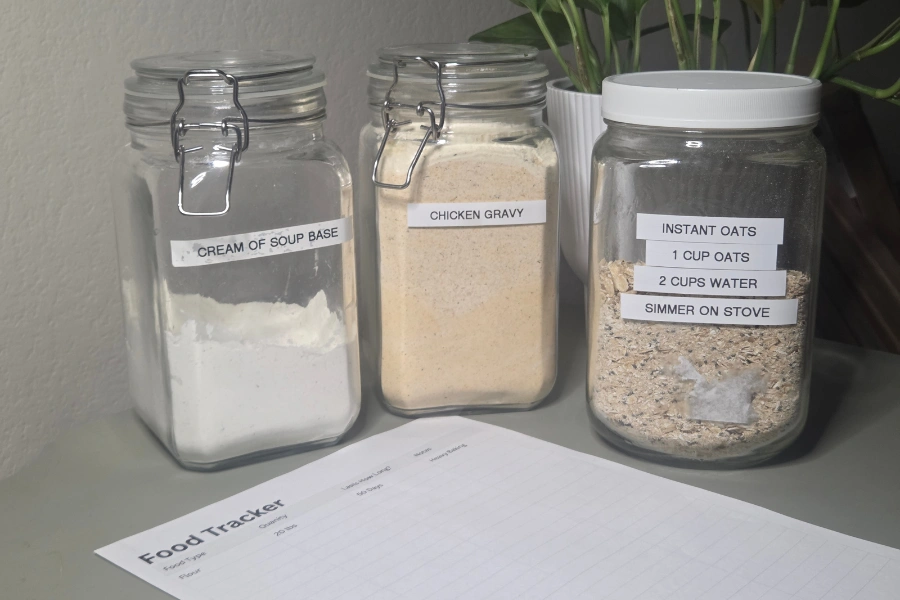
Starting a self-sustaining pantry on a tight budget in a nutshell: Trim wasted spending first, use what you already have before buying more, track what you actually go through, and start with multipurpose staples like flour that stretch across many meals. Add a little extra to each grocery trip instead of stocking everything at once. Small, consistent steps build real food security without needing space, money, or time you don’t have.
Why I Understand What “Tight Budget” Really Means
Growing up, my family barely had enough money to keep everything afloat. They were living paycheck to paycheck my entire life. As soon as I thought things were getting better, something would come up and we would be right back where we started again.
That cycle followed me into adulthood.
I chose to be with someone who spent every dollar we made and after going through a very necessary breakup with my ex, I knew my financial situation was a family cycle that I had to break. I started getting rid of anything that was costing me money that I didn’t need to spend. That was music and TV subscriptions, stopped buying unnecessary physical items, and only bought things I had to have like car insurance, registration, gas, etc. After the ex and I broke up, everything important to me fit in my car. That is when my financial situation started to change. I saved every penny I received and brought my bills down as low as I could possibly get them, so I didn’t have to make quite as much money to survive. I felt FREE!
This experience shapes how I approach pantry building. I don’t believe in advice that assumes unlimited money, space, or time.
Step 1: Trim the Fat Before You Stock the Pantry
Before buying more food, ask yourself: Where is my money leaking out?
When money is tight, convenience is expensive. Subscriptions, impulse grocery buys, and pre-made foods quietly drain your budget. You don’t need to be perfect here, just aware.
Every dollar you stop wasting is a dollar you can redirect toward food security.
Step 2: Use What You Already Have
Take inventory of your pantry, fridge, and freezer. Ask yourself:
- How Long has this been in here?
- Why hasn’t this been used?
- Do I not know how or what to cook with it?
- Is it expired or freezer burned?
If you don’t know how to use something, look it up. If it’s never going to be used, let it go. A functional pantry matters more than a full one. Having a pantry full of a bunch of things you will never use gives you a false sense of security because it looks full but there’s nothing to eat.
Step 3: Ask the Right Pantry Questions
Use these questions to guide your pantry strategy:
- How often do we grocery shop?
- What items do we buy every week?
- What ingredients repeat across meals?
- What meals do we cook most often?
Your pantry should reflect how you actually eat.
Step 4: Maximize Space (Even in Small Homes or Campers)
Do you have limited space? I’ve lived in a camper for many years, so I know what it’s like to have limited space. If this is the case for you, it’s important to maximize the space you do have. I put together a full breakdown of how I pantry in a small apartment specifically if that’s closer to your situation. Limited space requires creativity either way. Look beyond your kitchen…
- Cabinets holding unused items
- Closets
- Under-bed storage
- Outdoor storage (if climate allows)
Get creative with what you have! It does not have to be perfect right now. You will tweak your pantry multiple times to make it fit your needs, how you want it to flow, etc. I can’t even count how many times I have re-arranged my pantry.
Step 5: Track What You Actually Use (Not What You Think You Use)
How much you will need to stock depends on how fast you go through it. Most of us don’t actually know how much food we need to build a self-sufficient pantry because we don’t know how much we actually use on a daily basis.
I created a printable food inventory and usage tracker to help you:
- Track how long food lasts
- See what you use most often
- Set realistic stocking goals
This is how you are going to determine how much of each item you will need to survive a day, a week, a month or a year. Once you have a sense of your real usage, here’s how to translate that into an actual 6-month stock with real numbers instead of guessing.
When you start doing the math you may start thinking, that’s a lot of food, we are never going to be able to afford to stock up that much… DON’T DO IT! Just write it down, be aware of what you use so you know what your goal is.
Step 6: Start With Multipurpose Staples
Start with what you use most often or something that can be used multiple different ways.
For Example: Flour. Here are some of the things you can make:
- Bread
- Tortillas
- Pizza dough
- Gravy
- Pancakes
- Cookies
- Cakes
When you go to the store, add one extra bag of flour to your order. You DON’T have buy 100 pounds right out the gate. Start SMALL! Small steps compound overtime.
If you live in an apartment, RV, or simply don’t have extra storage space, these methods become even more important. The goal isn’t stockpiling for its own sake. It’s building pantry systems that move with you and fit your life, not overwhelm it.
Step 7: Stock Slowly and Refill Before You Run Out
Once you have a little extra of something, don’t wait until it’s gone to replace it. Next time you go to the store and have a little extra money, get a little more.
Refer back to your tracker:
- How long does one bag of flour last?
- How much do you use weekly or monthly?
The goal isn’t to stock a year’s worth overnight. The goal is to always stay one step ahead.
Step 8: Replace Convenience Foods with Simple Homemade Versions
If you’re buying things like gravy packets, cream-of-soup cans, or baking mixes, ask yourself: can I make this at home with ingredients I already have?
By making them at home, it’s saving you time and money! Often times we buy things for convenience which costs us a lot more money in the long run and when you don’t have much money, you should save the money you do have any chance you get.
Dehydrating is another way to stretch a tight budget further, turning bulk buys or a garden harvest into shelf-stable food instead of waste. If you’re deciding whether dehydrating or freeze drying fits your setup better, or want the specifics on what actually holds up in long-term dehydrated storage, both are worth a look once you’re ready to go beyond the basics.
This is another way to trim the fat.
Why a Stocked Pantry Changes Everything
After you have a good amount of food stocked up, your sense of security increases. You are no longer frantically stressing about how you’re going to put food on the table. You are calmer, more relaxed and find peace in knowing you can feed your family for however many days you have stocked up for. I will warn you though, if you are anything like me, keeping a well-stocked pantry is addicting in all the good ways.
Want Help Getting Started?
If you want the guesswork taken out of building your pantry, no matter your budget, I put together a free guide for exactly that. It’s called the From-Scratch Pantry Starter Guide, grab it below.
Building a self-sustaining pantry isn’t about having everything perfect… Every shelf you organize and every mix you make contributes to a pantry that supports you, your life, and your budget.
With love and adventure,
Mindy
📌Pin For Later

You May Also Like
- Small Apartment Pantry System
- How to Build a 6-Month Pantry on a Budget
- Dehydrating Basics for Long-Term Food Storage
- Dehydrating vs Freeze Drying: Which Is Right for You?
FAQ
- Do I need a big pantry to get started? No, you can start with shelf-stable basics in cabinets or small bins.
- How do I avoid food waste on a tight budget? Focus on items you actually use, rotate regularly, and use multi-purpose staples.
Building a self-sustaining pantry isn’t about having everything perfect. It’s about being practical, flexible, and intentional with what you already have. Every shelf you organize and every mix you make contributes to a pantry that supports you, your life, and your budget.