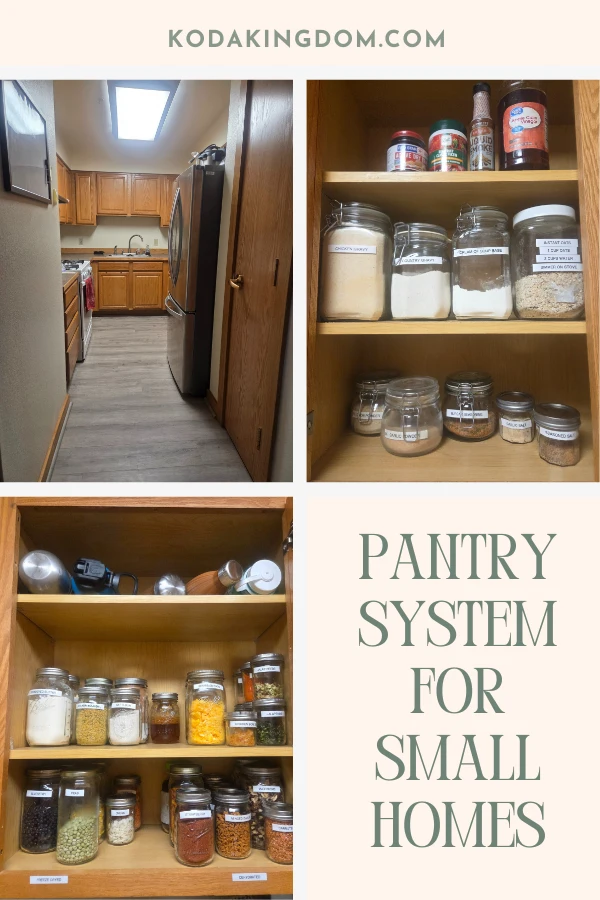

Let’s Be Honest About Small Apartments…
Small apartments don’t have to be frustrating or inconvenient. You don’t have to have a huge amount of space to store a realistic pantry system that flows with your lifestyle, grow a garden and raise chickens to eat healthy. You also don’t need to have a massive amount of freezer space to store food for long-term. However, you can still have food security and simplicity while having limited storage space.
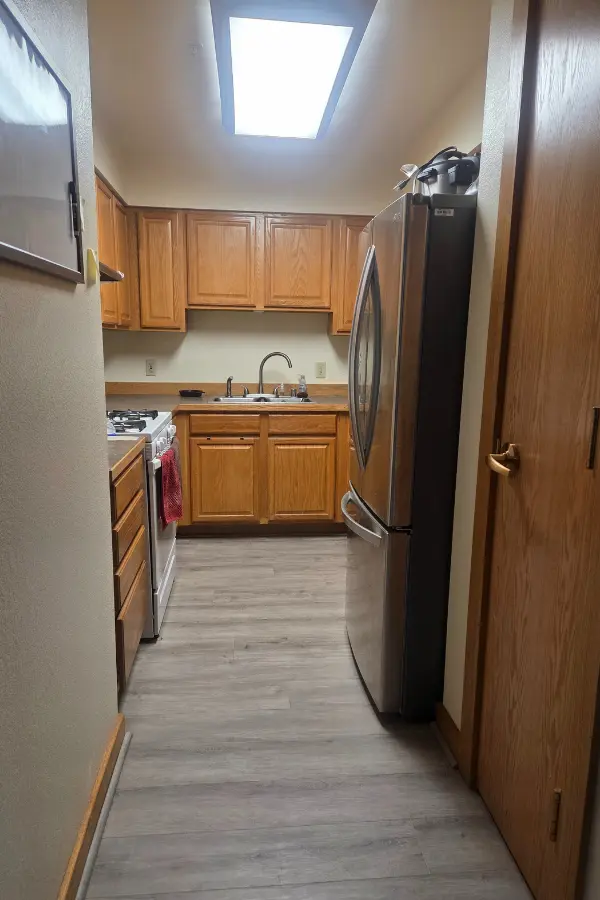
(mY aCTUAL kITCHEN AS OF 2026)
A realistic small-apartment pantry in a nutshell: Take inventory of what you actually use, condense multi-purpose staples instead of single-use boxes, reduce fridge and freezer dependence with dehydrating or freeze drying, and use travel-friendly storage like mylar bags instead of glass. Start with one change at a time, not a full pantry overhaul.
Who This Pantry System Is (and Isn’t) For
This pantry system is for renters, apartment dwellers, seasonal workers, RVers, military families, and anyone who moves frequently or lives with limited storage.
It is not for large homesteads, bulk freezer storage, or people who want a set-it-and-forget-it food system. This approach prioritizes flexibility, portability, and foods you actually eat.
What a Realistic Pantry System Actually Means
Building a pantry that’s functional and works for you in the season of life you are in right now is what a realistic pantry system actually means. What works for someone else may not work for you. You will need to assess the space you have, what you use on a daily basis and make it work for you, not against you!
Step One: Take Inventory of What You Actually Use
Here is how to achieve a functional pantry system that works for you. First think about the space you do have in a different way. Here are a few questions to ask yourself to get more clarity.
- Do you use everything that you have in your kitchen? Now I’m not just talking about food. I honestly can’t tell you the number of times that I have gone through everything in my kitchen and boxed up cups, thermoses, plates, bowls, tupperware, appliances and kitchen tools that I no longer use. As life evolves, you change, your location changes or home changes… your kitchen much change with it. Don’t keep adding to your kitchen and think you need more space without removing the things you no longer use. Start there! Remove anything that is just collecting dust. Give it away, sell it, or store it for later. This will free up a lot more kitchen space then you will ever imagine.
- What foods have you been holding onto that you MIGHT use one day? I have seen people (even in my own family) who store food for a rainy day, that rainy day shows up and they don’t use it. Why? Because you’re looking for security in food that you will never eat. It just clutters up your space to make it look like you have a lot of food. When you strip that away what do you have left? It may be less or more then you thought but understanding what you will and won’t use is a huge step that will help you start designing your ideal pantry.
Step Two: Design a Pantry That Works With Your Space
Now that you know what you do and don’t use… how much more room do you have? If you have lots of empty space, DON’T fill it yet! If you still don’t have a lot of space to work with, that’s okay because we are going to condense it even more!
Step Three: Condense Where You Can
What is in your pantry that can be condensed down? Here are some examples!
- Cream of soups – If you have a pile of cream soup cans in the pantry, think about how much room you can save by making a dry mix that can be used for cream of mushroom, Cream of Broccoli, Cream of Chicken… all from one container instead of 3 different cans that can only be used once. Here is a recipe you can replace those big bulky cans!
- Tomato paste – This is one of those things that can be used for multiple different purposes. It can be turned into a sloppy joe sauce, pizza sauce, pasta sauce, etc. Instead if purchasing all those items, get one item that has multiple purposes. I will be making a post for making all these items with just tomato paste in the near future.
- Pre-packaged Mixes – Do you have pre-packaged food like pancake mix, biscuit mixes, or cornbread mix that can only be used once? Instead of having 5 boxes of each item, try making those convenient foods with ingredients you already have in your pantry. Having multi-use items in your pantry like, flour, sugar, baking soda saves a lot of space because all those items can be turned into many other things while pancake mix can only be used for pancake mix.
Reduce Fridge & Freezer Dependence
I have always lived in small places and the fridge/freezer space has always been a struggle. I started looking into ways to preserve our perishable foods. Canning was never an option for me because I am constantly moving around and having food sealed in glass was not travel friendly. So I started dehydrating food and then eventually switched over to freeze drying so it’s easier to transport the food I have preserved. This has reduced our fridge and freezer usage tremendously!
Want all the pros and cons to dehydrating vs. Freeze drying? I discuss the differences to help you decide which one is better for you and your specific lifestyle. This is the Freeze Dryer I use, and the Dehydrator I use.
Freeze drying is not required to build a functional pantry in a small apartment. It’s simply one tool I personally use because of how often we move.
Still Don’t Have Much Storage Space?
Look around your whole house.. Where can you get creative? A pantry is not the only place where you can store food. Here are some more places that I have personally stored food before…
- Closets
- Under the furniture
- Storage areas
- Cabinets in living room (if close by)
- Areas where you can place a removable cabinet
As I write this post, my husband and I live in a very small apartment. I have my everyday foods in the kitchen, like spices. Then I have my freeze-dried foods in a pantry right outside the kitchen. The foods we have stocked up in bulk are in a completely different room where I could find space.
No matter where you put your food, make sure it flows. The things you use on a daily basis needs to be easily assessable. The items you don’t use super often can be tucked away somewhere that can be gotten to when needed. The best advice I can give you is, do what works for you!
What to Stock (A Starter List That Makes Sense)
Here is a basic list to get you started. Remember to start with things you will actually use and items that can used for multiple purposes!
- Wheat – Used for flour, bread, pasta, pancakes, cakes, etc.
- Rice – Can be made into instant rice and a rice flour.
- Oats – Can be turned into oat flour, quick oats, oatmeal, cookies, etc.
- Legumes – Lentils, Chickpeas, Black Beans, Kidney Beans, Split Peas.
- Nuts/Seeds – Almonds, Walnuts, Peanuts (can be turned into peanut butter), Chia Seeds, Pumpkin Seeds, etc.
- Fats (for Cooking) – Coconut Oil, Avocado Oil, Ghee, Lard, Tallow.
- Flavor Builders – Salt, Pepper, Garlic, Onion, Paprika, Basil, Parsley, Bouillon.
- Baking Basics – Sugar, Cornstarch, Baking Soda, Cream of Tartar, Yeast, Molasses, Vanilla Extract, Milk, Eggs (these can be powdered)
- Veggies – Corn (dried can be turned into cornmeal, grits, popcorn, etc) Green beans, Tomato Paste, etc.
With these ingredients you can make so many flavorful items that don’t require a lot of pantry space.. Things like Gravy Mixes, Cream of soup, Baking Powder, Brown Sugar, Powdered Sugar, etc.
How Much to Store Without Overdoing It
This answer really depends on you and your lifestyle. There is no “one size fits all” answer. Things that will determine you answer will depend on these questions…
- How often are you able or wanting to go to the grocery store?
- How long do you want your food to last before you are required to go shopping again?
- How many people are you feeding?
- How much space did you have?
There are so many variables to this question that only you can answer but I have written a post on how to walk you through this process step-by-step to give you an idea on how much to stock, so it fits your lifestyle. Visit that blog post here.
If you want a pantry system that works in real life, small spaces, moving, seasonal living, my From-Scratch Pantry Starter Guide walks you through what to store, how much to keep, and how to build a pantry that actually fits your lifestyle
How to Maintain a Pantry That Moves With You
Maintaining a pantry that moves with you takes a different kind of mindset. You can’t build your pantry like a homestead because it will be hard to pack up and move that much food. You don’t want to use big bulky jars unless they are easy to pack and won’t break. Avoid relying on freezers and the fridge to avoid waste when it’s time to move, again.
Think about all ways you can create a travel friendly pantry. Instead of glass jars, use mylar bags. If you still want to stock up in bulk, store your food filled mylar bags in plastic totes labeled with the contents in the tote so it’s easy to restock your kitchen pantry but ready to be moved to the new location with little effort on your part. You can also use food grade buckets. Those are easy to pack!
Common Mistakes People Make
These are the mistakes I have made, and I don’t want you to make the same mistakes.
- Buying in bulk and then having no place to put it.
- Using glass jars and then spend way too much time packaging them up so they won’t break.
- Relying on a fridge or freezer – I lost everything in my fridge when we lost power. Then had to figure out how to move a deep freezer full of food 1,300 miles without the food spoiling.
- Keeping food we would never eat and kitchen tools I would never use.
I hope you can avoid the mistakes that I have made!
Start Where You Are
I want you to know, you are not behind. You are exactly where you need to be. You don’t have to start over from scratch! Start where you are, start small, but start. Starting is better than perfection. It’s taken me years to get to where I am because I started with one thing. I did not replace my entire pantry all at once. Do what you can, when you can and give yourself grace for everything you haven’t gotten to yet.
A Simple Starting Checklist
- Remove any kitchen tools you no longer use.
- Remove any food that is just collecting dust.
- What foods can be condensed or made with ingredients you already have?
- Where else can you store food if you don’t have a big enough pantry?
- What homemade recipe do you want to test first?
- What is one item you are going to replace with a homemade version when you need to get more? Don’t do them all at once!
With love and adventure,
Mindy