

It is actually really easy to dehydrate ginger and preserve it for long-term. It’s even easier to make tea with it or blend it into a seasoning. Does any of your recipes call for Ginger Powder? Well, you’re about to learn how to make it at home with just one ingredient. Let’s get started!
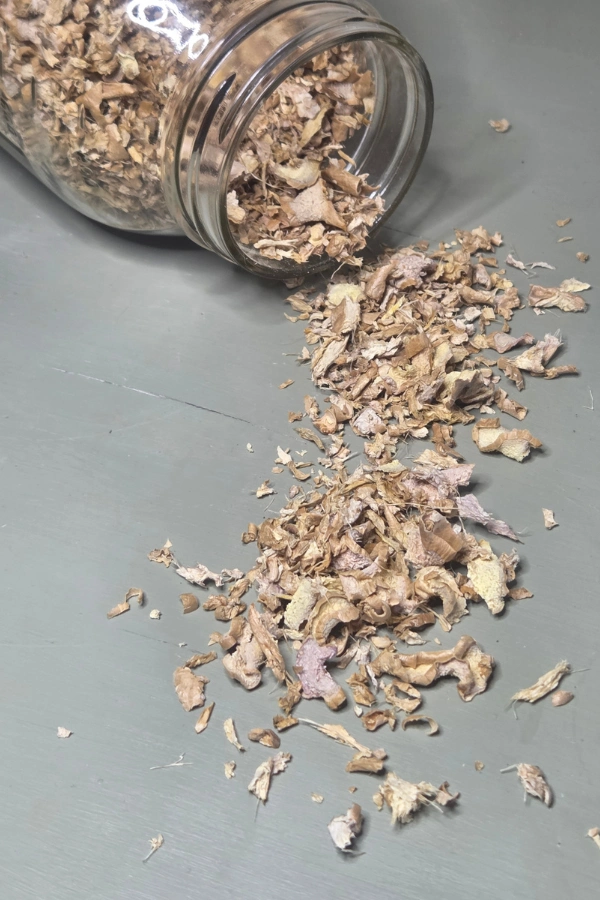
Why Dehydrate Ginger
Dehydrating Ginger is a great way to preserve it for the long term, make room in the fridge, reduce waste and make your own Ginger powder.
Ginger is one of the easier foods to dehydrate because there is very little prep involved. You just chop it up in a food processor and dehydrate. You can also use a grater or shop by hand. Super Easy!
I mostly use dehydrated ginger for making Ginger Tea during the cold and flu season. As soon as someone gets sick, I whip up a nice warm cup of ginger tea, and they are usually better then next day. You can find my Ginger Tea Recipe HERE.
There is no running to the store because you don’t have any ginger, disappointment when you find out your ginger has gone bad. Just go to the pantry, grab your dehydrated Ginger and make what you need to make. SIMPLE!
Want help building your ‘from Scratch’ Pantry? I have created a free guide to help you build your pantry without the overwhelming feeling of not knowing where to start. Get the FREE ‘From Scratch’ Pantry Guide and get started today.
The Recipe
This recipe is going to be super quick so don’t blink!
Eguipment
For this recipe you can use simple equipment like a knife/grater, or you can whip it out super-fast by using a food processor. This is the food processor I use, and it works GREAT!
You can also get the basic version of a dehydrator to get your starter, like this one or if you are going to be dehydrating a lot, I suggest getting a bigger dehydrator like this one.
Ingredients
- Fresh Ginger
Yep, that’s it! Nothing super complicated here. Just simple, natural ingredients!
Instructions
- If you prefer to peel your ginger, you can do that now, but it is not necessary. If you are not going to peel your ginger (I don’t) then move onto step two.
- Chop your ginger into small pieces. This can be done with a knife, a grater, or a food processor. I prefer to use to food processor because I can get it done very quickly. If you do not have a food processor, you can use anything that will get the ginger into small pieces.
- Now dump your chopped ginger onto your dehydrating trays. I like to use a small mesh lining, so the small ginger pieces don’t fall through the holes. If you are using a round dehydrator, these are the liners I use. If you have a square dehydrator, these are the liners I use.
- Set your Dehydrator to 135 Degrees.
- This should only take 3-4 hours but it really depends on how think your ginger pieces are, the brand of dehydrator you have, what elevation you are at, and how much humidity is in the air.
- When your pieces of ginger have no more moisture left in them, then they are done.
- Remove them from the dehydrator and store them in an airtight container.
How to Store Dehydrated Ginger
Storing it is simple. Keep as much air off of it as possible.
- You can store it in an airtight container with a gasket seal so you can get to it and seal it easily. Like this one.
- You can also vacuum seal them like you would a stake to keep the air off of them. If you are a visual person, this is what it looks like.
- You can also vacuum seal them on a mason jar by using a vacuum sealer like this one.
- A Mylar Bag is also a great option. Like these ones. I use mylar bags a lot when I am traveling and don’t want to risk breaking any glass.
Each one of these options are great ways to store Dehydrated Ginger. However, if you are planning on storing it for more than a month, I highly suggest adding an oxygen absorber (like these) to your container to help remove excess oxygen. This helps keep the ginger fresh for years if it’s sealed properly.
Want Help Building Your Pantry?
Building a from scratch pantry can be very overwhelming when you are just starting out. which is why I created a FREE ‘From Scratch’ Pantry Guide, so you don’t have to do it alone. I’ll help walk you through it to make is as easy as possible.
📌Pin For Later!


Dehydrated Ginger
It is actually really easy to dehydrate ginger and preserve it for long-term. It's even easier to make tea with it or blend it into a seasoning.
Ingredients
- Fresh Ginger
Instructions
- If you prefer to peel your ginger, you can do that now, but it is not necessary. If you are not going to peel your ginger (I don't) then move onto step two.
- Chop your ginger into small pieces. This can be done with a knife, a grater, or a food processor. I prefer to use to food processor because I can get it done very quickly. If you do not have a food processor, you can use anything that will get the ginger into small pieces. The bigger the pieces, the longer it will take to dehydrate.
- Now load your dehydrator trays with your chopped ginger. I like to use a mesh lining or parchment paper works too, so the small ginger pieces don't fall through the holes.
- Set your Dehydrator to 135 Degrees.
- This should only take 3-4 hours, but it really depends on how thick your ginger pieces are, the brand of dehydrator you have, what elevation you are at, and how much humidity is in the air.
- When your pieces of ginger have no more moisture left in them, then they are done.
- Remove them from the dehydrator and store them in an airtight container.
Notes
Ways to Use Dehydrated Ginger
- Make Ginger Powder
- Make Ginger Tea ---> Here is a Recipe.
Recommended Dehydrators
- If you are just getting started or need a cheap way to get started, this is the dehydrator I suggest. This is the mesh that does with it as well (Mesh lining)
- If you want to upgrade because you will be doing a lot more dehydrating, this is the dehydrator I suggest. This is also the mesh lining that does with it. (Mesh Lining)
Storage Suggestions
- Short-Term Storage. You can store it in an airtight container with a gasket seal so you can get to it and seal it easily Like this one.
- For Long-term storage. You can also vacuum seal them like you would a stake to keep the air off of them. If you are a visual person, this is what it looks like.
- For Long-Term Storage. You can also vacuum seal them on a mason jar by using a vacuum sealer like this one.
- For Long-Term Storage. A Mylar Bag is also a great option. Like these ones. I use mylar bags a lot when I am traveling and don't want to risk breaking any glass.
- If you are planning on storing it for more than a month, I highly suggest adding an oxygen absorber (like these) to your container to help remove excess oxygen. This helps keep the ginger fresh for years if it's sealed properly.