

I still remember standing in the grocery store aisle before one of our longer road trips, staring at shelf after shelf of non-perishables trying to make the whole thing make sense.
We had six months ahead of us. No permanent kitchen. No reliable way to keep a cooler stocked. I went back and forth between the pancake mixes, the trail mixes, the tuna packets, the canned soups. Everything had ingredients I could not pronounce. I kept thinking: this is what people actually eat out there?
I wanted food that was going to fuel us. We were going to be hiking and exploring every single day. I needed real nutrition, not just something to fill a gap. I looked at everything on those shelves and could not find a single option I felt genuinely good about.
Those six months on the road, I never felt great about what I was feeding us. Some nights I would warm up a can of soup knowing it was full of preservatives and barely any protein, but I was too tired after a long day on the trail to do better. The nights I had more energy, we would stop at a store, pick up fresh protein, cook rice, warm up canned vegetables. Those meals were good. But they did not happen often because cooking everything on a two-burner camp stove took time and effort we did not always have left.
The whole trip something kept nagging at me. I was either eating food I did not feel good about, or working way too hard to eat food I did. There had to be a better way.
There was. It just took me a while to find it.
Now I have a Harvest Right freeze dryer and a freezer full of real food I made myself that goes anywhere we go. Getting there took some trial and error. Not every food freeze dries the same way. Some come out perfect. Some are a waste of a tray. A few things I learned the hard way.
Here is what I know now.
What Makes a Food Good for Freeze Drying?
The process works by freezing food solid and then pulling the moisture out through a vacuum. Foods that are mostly water, like fruits, vegetables, and cooked proteins, work beautifully. Foods that are mostly fat, like butter, chocolate, and oils, do not lose moisture the same way and can go rancid faster even after processing.
Understanding that one principle saves a lot of tray space.
The sweet spot for freeze drying is high moisture, low fat. That category covers most of the food you actually want to eat on an adventure.
The Best Foods to Freeze Dry at Home
Fruits
FrFruits are where most people start and for good reason. They come out incredible.
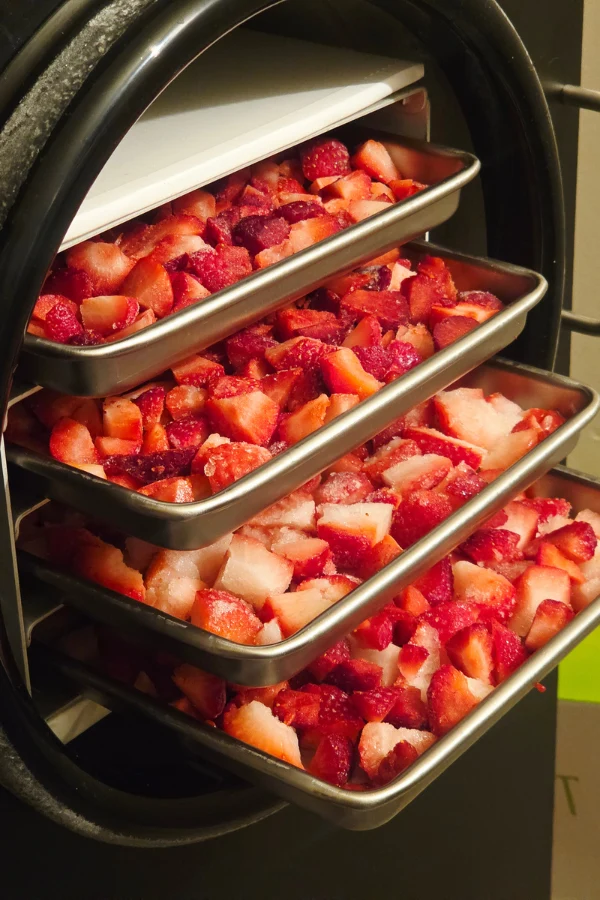
Strawberries, blueberries, raspberries, peaches, mangos, and bananas all freeze dry into something that tastes like concentrated sunshine. A freeze dried strawberry often has more flavor than a fresh one. They make excellent trail snacks on their own, and they rehydrate well if you want to use them in cooking.
Best fruits to freeze dry:
- Strawberries (eat as a snack or crumble into homemade instant oatmeal)
- Blueberries (perfect for trail mix or adding to anything on the road)
- Banana slices (crunchy and sweet, better than any store-bought chip)
- Peaches (seal in mylar bags and they are good for decades)
- Apples (slice thin, freeze dry, and use all winter)
- Raspberries
- Mangos
- Pineapple chunks
One thing to know: high-sugar fruits like whole grapes can be tricky. Cut them into quarters before freeze drying for better results. Pure juices like lemon juice and watermelon juice do not work well unless paired with the pulp.
Vegetables
Vegetables might be the most practical category for anyone building a real food system for travel or emergencies. Cooked or raw, most vegetables freeze dry beautifully and rehydrate quickly in hot water.
Best vegetables to freeze dry:
- Corn (comes out sweet and crunchy, great as a snack or in soups)
- Peas
- Bell peppers (dice and freeze dry in bulk, use them in everything)
- Green beans
- Broccoli
- Zucchini (great for summer abundance, slice thin)
- Onions (yes, they smell intense during the process, open a window)
- Spinach (crumble into soups and stews for nutrition anywhere)
- Mushrooms
- Carrots
- Celery
Blanching harder vegetables like broccoli and green beans before freeze drying gives faster, more even results. Buying frozen vegetables is also a great shortcut since they are already prepped, cleaned, and portioned.
Cooked Meats
This is where freeze drying starts to feel like a superpower.
Freeze dried cooked chicken, ground beef, and pulled pork rehydrate in minutes with hot water and taste genuinely good. Not survival food good. Actually good.
This is how I build our road food now. Cook a big batch of ground beef with homemade taco seasoning, freeze dry it, pack it in mylar bags, and we have taco meat anywhere. Add hot water, wait five minutes, done.
Best meats to freeze dry:
- Cooked ground beef (season it before drying for the best flavor)
- Cooked chicken (shredded works best)
- Pulled pork
- Cooked sausage crumbles
- Cooked bacon
A note on raw proteins: most raw meat should be cooked first for safe long-term storage. The exceptions are raw shrimp, which has low fat content and freeze dries well, and raw eggs. For eggs, crack them into a bowl, blend the yolks and whites together, freeze dry, and powder in a blender. The egg powder rehydrates into something you can cook like a normal raw egg or use in any baking recipe that calls for eggs. For most other raw meats, cook them first. High-fat cuts like prime rib or dark chicken thighs do not preserve as long because of the fat content. Lean proteins are your best bet.
Full Meals
This is what changed everything for me.
You can freeze dry complete homemade meals. Soups, stews, chili, casseroles, scrambled eggs, pasta dishes, rice and beans. All of it. Make it at home, freeze dry it, vacuum seal it in mylar bags, and you have a real meal ready to go anywhere. Just add hot water.
Meals that work especially well:
- Chicken noodle soup
- Beef stew
- Chili (keep the fat content lower for best results)
- Scrambled eggs with vegetables
- Rice dishes
- Pasta with tomato-based sauces
- Beans and lentil soups
The rule here is the same as with meat: lower fat rehydrates better and stores longer. Cream-based soups are trickier but still doable in smaller batches.
If you want to build a complete system for freeze dried meals on the road, I have a full guide here: How to Make Freeze Dried Camping Meals at Home
Dairy and Eggs
Eggs freeze dry better than almost anything, and you have two options. You can crack them raw Eggs freeze dry better than almost anything else in this category and the shelf life is extraordinary. You have two options: crack them raw onto trays and powder them after drying, or scramble them first. Either way you are looking at a 25-year shelf life and eggs that rehydrate in minutes. I always have some in the kit.
Best dairy products to freeze dry:
- Shredded cheese (freeze dries fast and rehydrates back into real cheese)
- Cottage cheese
- Sour cream (lower fat versions work better)
- Yogurt (spread thin on trays or pour into silicone molds)
- Milk (powder it after freeze drying for shelf-stable milk powder)
Heavy cream and butter have too much fat to freeze dry well for long-term storage. Stick to the lower-fat dairy options.
Herbs and Seasonings
One of the most underrated things you can do with a freeze dryer.
Fresh basil, cilantro, parsley, dill, and chives freeze dry in a fraction of the time it takes other foods and come out with flavor that blows store-bought dried herbs completely out of the water. Grow herbs in the summer, freeze dry in bulk, and you have fresh-tasting seasonings that last for years. In a tent, in the middle of nowhere, wherever you are.
Freeze Drying Time Chart (Approximate)
Times vary by machine, batch size, altitude, and moisture content of the food. These are general estimates for a Harvest Right home freeze dryer.
| Food | Prep | Approximate Freeze Dry Time |
|---|---|---|
| Strawberries (sliced) | Slice 1/4 inch | 24 to 36 hours |
| Blueberries (whole) | Pierce skin or halve | 24 to 36 hours |
| Banana slices | Slice 1/4 inch | 20 to 28 hours |
| Apple slices | Slice thin | 20 to 28 hours |
| Corn (cooked) | Ready to load | 20 to 24 hours |
| Peas (frozen) | Ready to load | 18 to 22 hours |
| Bell peppers (diced) | Dice, no prep needed | 18 to 22 hours |
| Broccoli | Blanch first | 20 to 26 hours |
| Onions (diced) | Dice | 18 to 22 hours |
| Spinach | Ready to load | 16 to 20 hours |
| Ground beef (cooked) | Cook and drain fat | 24 to 36 hours |
| Chicken (cooked, shredded) | Cook and shred | 24 to 36 hours |
| Eggs (raw, blended) | Blend yolks and whites | 20 to 28 hours |
| Shredded cheese | Ready to load | 16 to 22 hours |
| Full meals (soups, stews) | Cook first | 30 to 48 hours |
| Fresh herbs | Ready to load | 8 to 14 hours |
Always run your machine until the drying cycle is fully complete and the food is completely brittle before removing trays.
What NOT to Freeze Dry
Just as important as knowing what works is knowing what does not.
Foods to avoid:
- Butter and oils (too much fat, goes rancid during processing)
- Honey and jam (pure sugar, will not process correctly)
- Peanut butter (extremely high fat)
- Alcohol
- Carbonated beverages
- Pure fruit juices without pulp
- Whole grapes (slice into quarters first if you want to try them)
You can include small amounts of high-fat or high-sugar ingredients inside a meal or recipe. A chili with a small amount of oil is fine. A tray of straight oil is not. It is the concentration that matters.
A note on candy: you can technically freeze dry candy using the candy setting on the machine. I have never personally done it because I would rather use that tray space on real food. But it is possible.
How to Store Freeze Dried Food
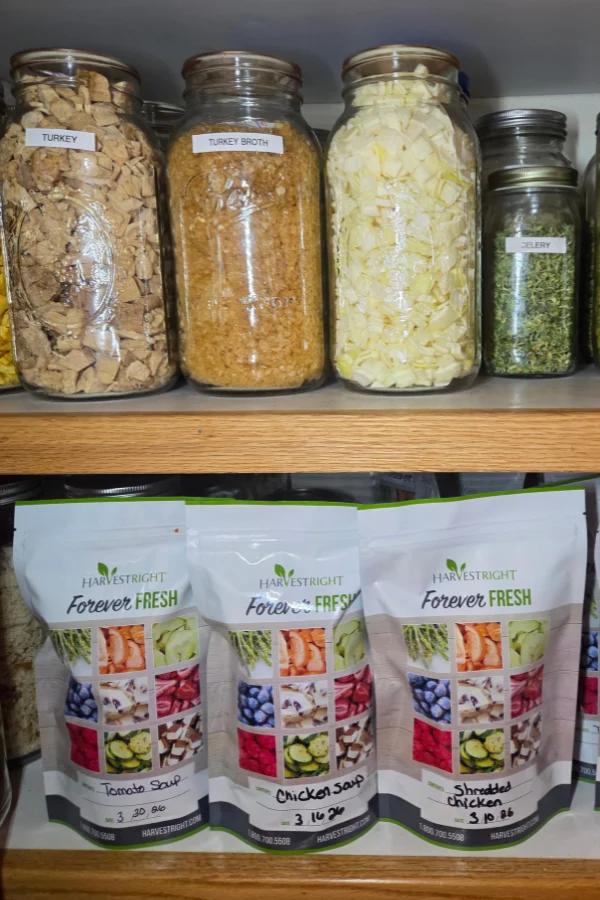
Freeze dried food is only as good as how you store it. This is one area where I learned the hard way.
I came from dehydrating, where you could put something in a jar, put the lid on, and it would last for months without much fuss. Freeze drying is not that way. As soon as food comes out of the machine it needs to be vacuum sealed with an oxygen absorber immediately. I have had batches go bad because I did not do this fast enough. Once freeze dried food is exposed to air and moisture it starts to degrade quickly. The work you put into filling those trays is wasted if the storage is not right.
If you need to open a sealed bag to use some of what is inside, take out what you need, reseal immediately with a fresh oxygen absorber, and get it back under vacuum before you walk away.
For short-term use (1 to 2 years): glass mason jars with oxygen absorbers and a vacuum sealer lid attachment work well and are easy to get in and out of.
For long-term storage (10 to 25 years): mylar bags with oxygen absorbers, heat sealed, and stored in a cool dark place. This is the method for anything you are building as a true long-term supply.
Label everything with the date, contents, and whether it has been oxygen-absorbed. Future you will thank current you.
How Long Does Freeze Dried Food Last?
| Storage Method | Estimated Shelf Life |
|---|---|
| Open air (no seal) | Hours to days |
| Mason jar, no oxygen absorber | 1 to 2 years |
| Mason jar with oxygen absorber | 2 to 5 years |
| Mylar bag with oxygen absorber | 10 to 25 years |
| Freeze dried and frozen | 25+ years |
Shelf life depends on the food, storage temperature, and how well the container is sealed. Cooler and darker storage always extends life. A basement or interior pantry is better than a garage that gets hot in summer.
Tips I Wish Someone Had Told Me Sooner
Freeze drying the same foods on repeat is efficient, but the real power is bulk processing seasonal produce when it is cheap and abundant. Farmers markets in August. A friend’s garden overflow. Whatever is on sale at the warehouse store. That is how you build a pantry that goes anywhere without spending a fortune.
Start with fruits if you are new to this. They are forgiving, they come out beautiful, and they will make you want to keep going.
Do not open the machine early. It is tempting when you are 20 hours in and curious, but every time you open the chamber you let in moisture and reset the process. Let the cycle run fully.
Freeze your food solid before loading trays whenever possible. Pre-freezing reduces total cycle time and gives more consistent results.
Keep a freeze drying log. Write down what you loaded, how long the cycle took, and how the results came out. After a few batches you will have a real reference for your specific machine and your altitude.
Frequently Asked Questions
- What is the best freeze dryer for home use? I use and recommend the Harvest Right Home Freeze Dryer. It is a serious investment but it is also the piece of equipment that made eating well on the road genuinely possible for us. They make several sizes depending on how much you plan to process.
- Can you freeze dry raw meat? Most raw meat should be cooked first for food safety and best long-term storage results. The exceptions are raw shrimp and raw eggs, which both freeze dry well due to their low fat content. For everything else, cook first, drain excess fat, and then freeze dry.
- How do you know when food is fully freeze dried? The food should be completely brittle and lightweight. It should snap cleanly rather than bend. There should be no soft spots, no moisture when you press the center of a thick piece, and no cold spots when you remove a tray. If you are unsure, run the machine for a few more hours. Under-dried food will spoil in storage.
- Does freeze dried food taste good? Yes, genuinely. Freeze dried fruits often taste more intense than fresh because the water is gone but the flavor compounds remain. Cooked meats and full meals rehydrate into something very close to how they tasted when you first made them. It is not survival food. It is real food with a very long shelf life.
- Can you freeze dry food without a machine? Not effectively. The freeze drying process requires a vacuum chamber that pulls moisture out at very low temperatures. There is no reliable DIY equivalent that achieves the same result or shelf life. A home freeze dryer is the only practical option for true freeze dried food.
- What foods freeze dry the fastest? Fresh herbs are the fastest, often done in 8 to 14 hours. Thin sliced fruits and pre-frozen vegetables are next. Full meals and dense proteins take the longest, sometimes 36 to 48 hours for a full cycle.
Free Resource
If you are heading into any kind of adventure and you want a real system for eating well on the road, grab my free Adventure Ready Guide. It covers how to prep and pack real food for any adventure so you are never standing in that grocery store aisle again wondering what to grab.
Closing
I think about that grocery store aisle sometimes. The way I stood there for probably an hour reading labels I could not understand, trying to build six months of real nutrition out of whatever was in front of me. I had no idea what I was looking for. I just knew that none of it was quite right.
Freeze drying is the answer I did not have yet. It is not about prepping for the end of the world, not even really about saving money, though it does. It is about having real food, food I made, food I trust, ready to go wherever we go.
If you are heading into any kind of adventure and you have ever stood in that aisle thinking there must be a better way, there is. This is it.
What is the first food you want to freeze dry? Drop it in the comments below. I might already have a tip for you.
With love and adventure,