

On my very first trip living out of a vehicle, I had to stop the car just to get a drink out of the back seat.
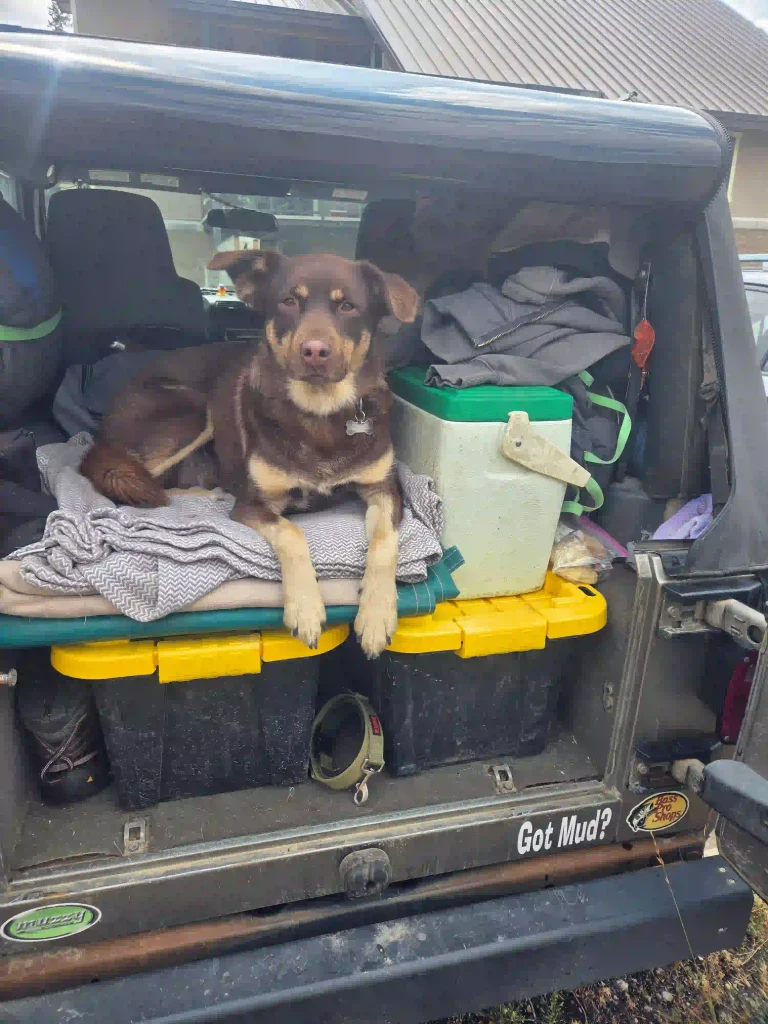
It was a car and a tent, and I had no system at all. If it fit, it went. Everything got tossed into a tote or piled into the back, and whatever I needed was always at the very bottom. So I unpacked the whole car to find one thing. Then I did it again the next time.
The cooler was its own mess. Cold food went in there, and I spent that trip wringing water out of food that got soaked and running back to the store for more ice. I had way more stuff than I needed, and somehow I still forgot important things.
Since then, Curtis and I have lived in a 5th wheel, a tiny FEMA trailer, and a school bus we built ourselves. We also spent a whole summer living out of a tent and a 4×6 trailer pulled behind our car. Every one of those spaces taught me something about RV pantry organization, and most of it I learned the hard way.
This isn’t another list of cute organizers. It’s what actually worked, what didn’t, and the step I wish someone had told me to take first.
RV Pantry Organization: What You Actually Need to Know
Good RV pantry organization starts with deciding what you actually need, not with buying organizers. Once you know exactly what you will eat and use, you can pick containers that fit your space, keep things from sliding while you drive, and put the things you use every day where you can reach them.
Quick answer:
- Make a specific list first: how long you’ll be gone, how many meals you need, and whether you’ll cook from scratch.
- Use shelves and containers with a lip or sides so nothing falls out or mixes together when you drive.
- Store bulk basics like flour, sugar, and oats in sealed buckets instead of loose bags to save space and keep bugs out.
- Pack premade meals, like homemade instant oatmeal and freeze-dried meals, to cut down on weight and bulk.
- Label everything on the outside so you never have to open a tote to find out what’s in it.
What Four Small Spaces Taught Me About Organizing an RV Pantry
The 5th wheel: too busy adventuring to think about storage
When I moved into a 5th wheel with Curtis, we spent so much time out adventuring that storage barely crossed our minds. The dishes stacked up. The dirty clothes overflowed. The desk filled up with random knick-knacks that barely got used and mostly got forgotten about. Like any house, it needed a good purge.
The pantry was full of easy grab-and-go food. Boxes and packets from the store with the cooking instructions printed on the side and ingredient lists that were mostly preservatives. Canned soups and random one-use items were our go-to, because after a long day of hiking, fishing, or exploring, the last thing we wanted to do was cook from scratch. We wanted something we could throw in the microwave with as little effort as possible.
It took a couple more moves before I started making my own convenience foods instead.
The FEMA trailer: surviving the in-between
Then we bought a school bus, sold the 5th wheel, and moved into a small FEMA trailer that was even smaller than the 5th wheel. We were working full time, building the bus, and living in that trailer all at once.
We did a purge when we moved out of the 5th wheel, which helped a lot. But until the bus was finished, everything we owned lived in the spare bedroom. It was not ideal, but we made it work.
The bus: where it finally came together
Once the bus was done, I got a lot more organized. It didn’t happen overnight. I had to figure out what worked and what didn’t for that specific space.
The biggest shift was sorting everything by how often we used it. Anything we needed but didn’t use every day, like backpacking gear, the tackle box, and fishing poles, went under the bed. That same rule is what finally made the kitchen and pantry work.
In the kitchen, every dish had a spot. We kept things in order with dividers like these, and you can also get adjustable ones like these.
Plates and bowls went on the bottom with cups on top. Pots went underneath with bowls on top. Everything had a spot.
The pantry was five shelves next to the sink, and this is where it got a little trickier. The bus is where we started cooking more meals from scratch, so we had a lot of canned food, and this can organizer is what kept it in order. Flour, sugar, and oats went into 3-gallon buckets. One bucket of flour instead of three loose bags saved a ton of space, and it kept the bugs out.
Our kitchen utensils went into small baskets like these and some plastic ones, and our spoons, forks, and knives stayed separated in this style of utensil organizer.
The summer in a 4×6 trailer: a whole new lesson
One year we parked the bus and spent the whole summer, June through September, traveling with nothing but the car, a tent, and a 4×6 trailer.
I tried to fit everything from the bus into that tiny trailer, and it filled up faster than I could blink. Everything in the bus was stuff we had to have. Or so I thought.
We brought all our clothes and only used half of them before we went to the laundromat. The food was an even bigger problem.
I was trying to cook real, from-scratch meals on a two-burner stove, but I had to unpack everything to get to what I needed. As soon as I was done cooking, it was all a mess again, and I had to reorganize it before the next meal.
The Food I Carried Everywhere and Never Ate
There were cans of food I was saving for a rainy day that traveled with me from the camper, to the FEMA trailer, to the bus. When I finally did another purge, I threw them out.
After I got rid of everything I never actually used, I had a ton of space left over for the things that mattered. That’s the biggest lesson every one of these spaces taught me. Figure out what you actually need, and only take those things. Most of us bring what we think we need, and then we never use it.
How much food should you bring on a long road trip?
Only as much as you’ll realistically eat, and the only way to know that is to plan it yourself. Don’t Google it.
Before our summer in the 4×6 trailer, Google told me I needed 100 pounds of rice. That’s roughly a cup of rice every single day for about 225 days. Our trip ran June through September. Curtis and I would never have eaten all of that, and it would have eaten up space and weight the whole way.
So here’s my honest suggestion, because everyone’s needs are different and there is no one organizer that’s right for everyone. Start by making a list of everything you actually need, and get really specific with it.
For your pantry, ask yourself:
- How long will you be gone?
- Will you be cooking from scratch, or buying ready-made meals?
- How many meals do you actually need for this trip?
The same questions work for clothes and gear too.
Once you have all of that figured out, then look at how much space you have and find organizers that fit your space and the things you’re taking. Not the other way around.
If figuring out what you actually eat feels like a lot, it’s usually not a skill problem. It’s a systems problem. I put together a free guide that walks through exactly how I figure out what we really eat and how much of it we need, so the ingredients are always there without hauling around extra. It’s called the From-Scratch Pantry Starter Guide, and you can grab it below.
How I’d Pack That 4×6 Trailer All Over Again
If I did that summer again tomorrow, the food would look completely different.
First, I’d bring premade meals. On that trip I packed powdered milk, oats, brown sugar, chia seeds, and dried fruit separately just to make oatmeal every morning. Now I make homemade instant oatmeal packets instead, which take up a whole lot less space than every ingredient packed on its own. I’d do the same thing with dinner and bring freeze-dried premade meals. After a long day of exploring, cooking was the last thing I wanted to do anyway.
No more big bags of rice. No more canned food. Both take up a ton of space and weight. Even if I had to buy store-bought freeze-dried food, I would have saved so much room.
How do you organize a small camper pantry?
Organize it by meal, not by ingredient. Give each meal its own labeled tote with everything you need for it, so you grab one tote and you’re done.
This is the system I’d use now. One tote labeled Breakfast holds all the coffee-making stuff and the breakfast meals, like the instant oatmeal. In the morning, I grab that one tote and everything I need is right there. The evening works the same way, with a tote that holds everything I need for dinner.
Shelves or pull-out drawers would help too, but the real key is totes that fit just the items in that category. No more unpacking the whole trailer to find one thing, and no more reorganizing everything after every meal.
Then label the outside of every tote. You shouldn’t have to open a tote to figure out which one it is. It will save you so much time.
Last, audit yourself. Once you’ve been out for a while, look at what you haven’t touched. Is there anything you really didn’t need? Take it out. This part is trial and error, and that’s okay. You don’t have to get it right the first time. I definitely didn’t.
Keeping Your RV Pantry From Sliding, Bouncing, and Breaking
How do you keep food from falling out of RV cabinets?
Give everything a lip. In the bus, every cabinet had a small lip along the front, so even if a door swung open while we were driving, nothing inside could fall out.
We did the same thing inside the cabinets. We used containers and organizers that already had a lip or sides built in, so nothing got mixed together. The spoons never ended up in with the forks, because each one had its own container with sides to keep it there.
Rubber bands on your glass jars
If you’re in a camper and want to make your own dry mixes for the kitchen, glass jars are great. I like these glass containers for dry mixes like instant oatmeal. The catch is that glass bouncing against glass while you drive is how jars break.
My fix is simple. Put a rubber band around each jar. The rubber band absorbs the shock of glass hitting glass and keeps them from breaking. It’s one of those little tricks I picked up along the way.
Mylar bags when you want to skip glass
On our smaller trips, we skipped glass altogether. Mylar bags work really well for that, and they store easily in a tote or a sealed container to keep everything organized.
How to store freeze-dried food long term on the road
For freeze-dried food, always use an oxygen absorber, whether it’s going into glass jars or mylar bags. These are the oxygen absorbers I use, and I like these jars for individual freeze-dried ingredients.
One note from my own kitchen: I only use oxygen absorbers with my freeze-dried food. My instant oatmeal jars get a rubber band, not an absorber.
The Biggest Space Saver in My Pantry Now
After carrying a ton of weight around in food, I invested in a Harvest Right freeze dryer, and it has saved me so much room.
Now, for a weekend of camping, I grab a few freeze-dried meals and put them in a tote that’s easy to get to. That’s it. There are no other ingredients I need to bring along.
For our next long road trip, the kind that lasts for months, I’m planning to bring freeze-dried corn instead of canned corn. It’s much lighter and easier to store. I can build any meal out of individual ingredients without the weight, without bulky cans, and without needing a fridge or freezer for things that don’t get used.
If you’re curious how it works, I walk through the whole process in freeze drying for beginners. Freeze drying your own meals saves a ton of space, and in a small pantry, space is everything.
Less Stuff, More Room to Actually Live
Remember that first trip? Pulling over to dig a drink out of the back seat. Wringing water out of soggy food. Unpacking the entire car for one thing I needed.
The fix was never a fancier organizer. It was knowing what we actually use, getting rid of what we don’t, and giving everything that’s left a home that fits. Every time we let go of something we didn’t need, there was more room for the life we actually wanted to be living.
Everyone is going to have different things, a different space, and a different rig. What works for you will depend on what you’re working with and what you’re taking along. Start with your list, figure out your space, and let the rest be trial and error.
With love and adventure,
Mindy
What’s the one food you keep hauling around in your camper, bus, or car that you never actually eat? Tell me in the comments. I’ll bet I’ve carried the same thing around too.