
I’m sitting here getting a little emotional trying to write this.
Not because it was a disaster. Not because everything went perfectly either. But because it was everything I’d always imagined it could be, and somehow more. There were more good moments than bad, and even the bad ones, the ones that had me genuinely frustrated in the moment, are some of my favorite memories now that they’re past tense.
That feels like the best way I know to describe this kind of life.
This trip wasn’t something Curtis and I planned months in advance. We didn’t save up specifically for it or put in for vacation time. It started because we quit our jobs in Colorado, ended up back in Arizona visiting family, and when June arrived and the temperatures hit 100 degrees, we looked at each other and decided we were not spending a summer in the desert heat while living in a school bus. So we did what we always do. We figured it out as we went.
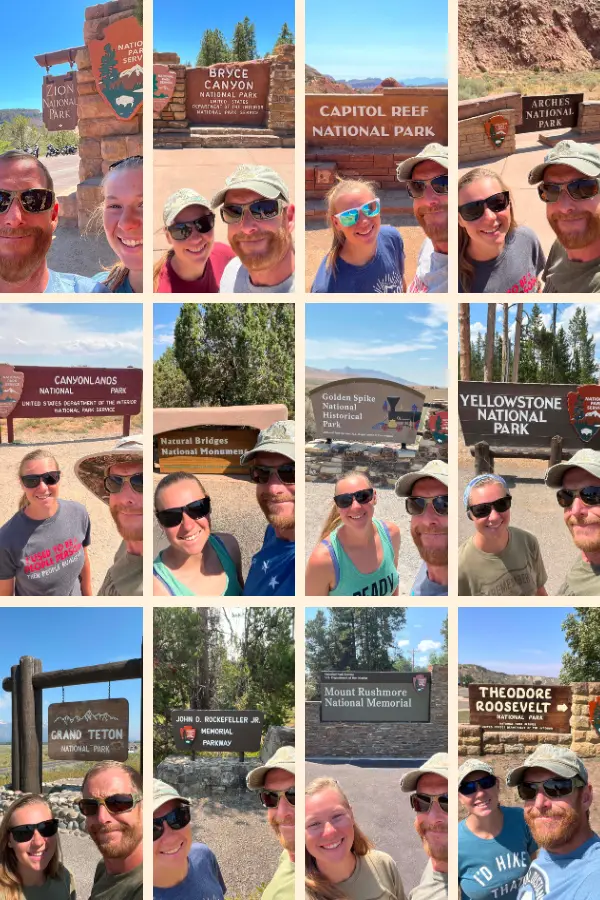
What followed was six months, 16 national parks, more free campsites than we could count, a few expensive lessons we didn’t see coming, and a wolf that walked into our campsite like it owned the place.
This is the trip that started this blog. And these are the things I wish someone had told us before we left.
We Left With Everything We Owned and Learned to Pack Light the Hard Way
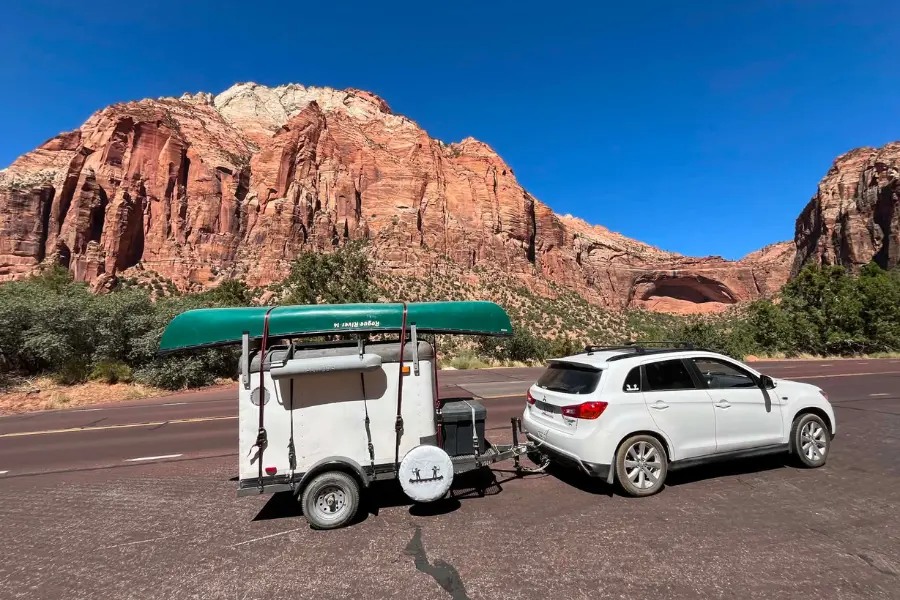
We packed for every possible scenario. Fishing tackle for species we hadn’t even decided we’d be targeting. Enough canned goods to survive a small apocalypse. Camping gear, hiking gear, the canoe, clothes for every climate. All of it crammed into a 4×6 trailer being pulled behind our car with Koda in the backseat.
The problem became obvious the first time we hit a steep mountain road.
Our first campsite was at Kolob Campground near Zion, a long, steep climb up the mountain that our car struggled to make with everything we were hauling. We made it. But we both looked at each other at the top and knew we’d overdone it. All that extra weight cost us in gas money for the entire trip.
If I could go back, I’d pack half of what we brought. The stuff you think you’ll need and never use takes up space, adds weight, and costs you more than you realize over six months of driving.
Zion Taught Us the Dog Rule on Day One
We pulled into Zion on a hot morning, left the car running with the AC on for Koda, and headed toward the trails excited to explore. Then we found out that to get to the hiking trails, you had to take a shuttle bus. Dogs weren’t allowed on the shuttle. Dogs also weren’t allowed on the hiking trails.
That was the end of Zion for us that day.
We got back in the car, drove through the part of the park you can see from the road, and made a mental note: come back without the dog someday and do it right.
This pattern repeated itself throughout the trip. A lot of national parks have strict rules about where dogs are and aren’t allowed. Some are more lenient than others. Bryce Canyon, for example, had hiking trails nearby in the national forest where Koda was welcome. We spent a whole day out there with her and it was one of the best days of the trip. But we learned quickly to check the dog policies before we got our hopes up.
If you’re traveling with a dog, do your homework before you get there. It saves a lot of disappointment. I put together a full breakdown of what you need to know before bringing your dog to a national park. The rules, the exceptions, and what we’ve learned trip after trip.
Free Camping Changed Everything
Here’s what nobody tells you about a national park road trip: the parks themselves are only a fraction of the experience. The camping is where the real living happens.
Once we figured out that there was a whole world of free camping in national forests and on BLM land surrounding most of the parks, the trip completely changed for us. We’d pull up to a park, look at the surrounding map, and find a free site nearby where we could set up and stay for up to 14 days.
Near Bryce Canyon we found a secluded free site in the national forest and stayed longer than anywhere else on the whole trip. We washed clothes, made biscuits and gravy from scratch on the camp stove, let Koda run and cool off in a nearby lake, and just existed without any urgency. That feeling, the one where you look around and realize you have nowhere you have to be and no end date in sight, is not something you find very often.
That was the whole point of the trip.
The best free sites we found were right along the Snake River between the Tetons and Yellowstone. Fire pits, bear boxes, bathrooms, completely free, right on the river. We went back and looked for those sites the next time we were in the area and almost couldn’t find an open spot. That first trip we just drove in and got lucky. If you know, you know.
Moab Was Worth Every Penny We Didn’t Plan to Spend
When we got to the Moab area to see Arches and Canyonlands, it was late afternoon and still close to 100 degrees. We drove around looking for a campsite and eventually gave up. The heat in Moab is a different kind of hot. Sticky and relentless. There was no way we were sleeping in a tent in that.
So we got a hotel room. Then we stayed three nights because we had two major national parks to cover and we knew we needed at least a full day in each.
We went out to eat every day because cooking on a camp stove in a hotel parking lot felt a little extreme, even for us. By the end of those three nights we’d spent a lot more than we’d budgeted for that stretch.
But Arches and Canyonlands were stunning. The scenic drives alone were worth it. We didn’t regret a single thing about stopping there. We just hadn’t accounted for it, and that was the lesson.
Check the temperatures before you commit to tent camping somewhere. Utah in the summer can fool you. We assumed north meant cooler. It does not always mean that.
The Wolf
I have to tell you about the wolf.
We were camped along the Snake River between the Tetons and Yellowstone. The neighbors had already warned us that a bear had walked through the campsite the day before we arrived. We were careful. Food put away, bear spray within reach, even in the tent.
We never saw the bear.
One of those mornings we’d been woken up by elk bugling down in the valley below us, which sounds like something out of a documentary and felt even more surreal in real life. We got up, made breakfast, were doing the normal camp morning routine.
I was putting food away when Curtis said, quietly but in a way that didn’t feel optional, “Put Koda in the car.”
I looked up. There was a wolf standing in the campsite next to ours.
I put Koda in the car. Curtis and I stood there completely still, watching. The wolf walked over, laid down at the edge of the campsite next to us and looked out over the valley like it was just taking in the morning. It stayed there for what felt like a long time but was probably only a few minutes. Then it stood up, started howling, and went on its way around us.
We never saw it again.
Most people only ever read about something like that. We got to stand there and watch it happen. That alone made the whole trip worth everything we spent and everything we figured out the hard way.
Yellowstone Deserves More Time Than You Think
We spent five full days in Yellowstone and still didn’t see all of it.
Part of that was because we were camped at the south entrance the whole time. Every day we’d drive from where we left off the day before, make it most of the way through, and then have to turn around and drive all the way back before dark. We never made it to the north entrance. It would have taken a full day just to get there and get back.
If I were to do it again, I would find campsites at multiple entrances and work through the park in sections instead of trying to do it all from one spot. It would save hours of driving and give you time to actually be in the park instead of passing through it.
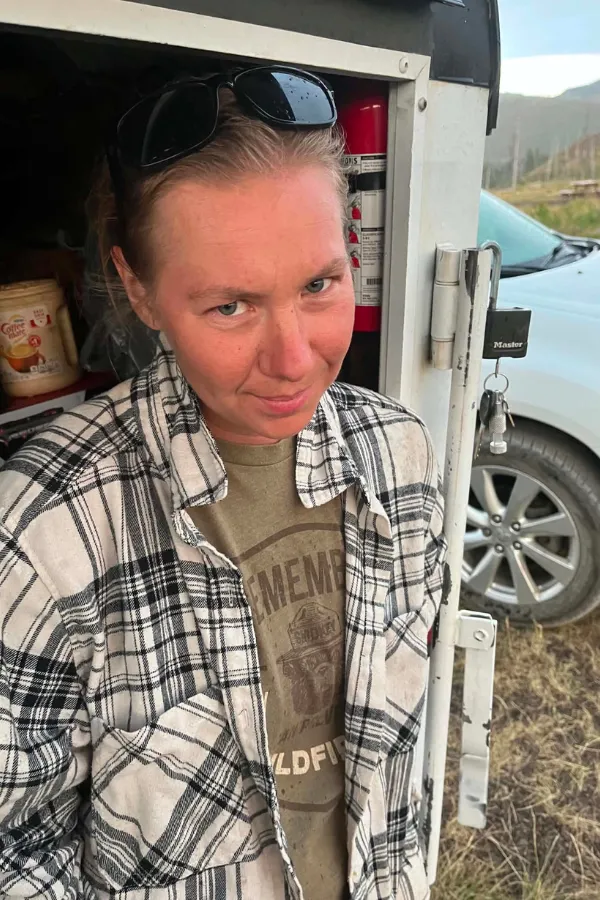
The other thing I’d do differently is have easier meals ready. Most nights I was cooking from scratch after a full day of exploring in the middle of two national parks, racing the sunset, and honestly running on empty. One night it started pouring rain while I was trying to get dinner going, then the wind came up and kept blowing out my flame. I packed everything up twice, waited out the rain in the trailer, and eventually got dinner done by headlamp while Curtis quietly took a photo of how mad I was.
I did not find that funny at the time, but I find it hilarious now.
But real talk, the food situation was the hardest part of the whole six months. Cooking from scratch every night after a long day of exploring is exhausting. Eating out every time you’re too tired to cook is expensive. I tried store-bought freeze dried eggs early in the trip and they were so grainy and wrong that I gave up on that idea immediately.
What I know now that I didn’t know then is that having my own freeze dried meals made at home would have changed everything. Real food, healthy ingredients, no preservatives, just add hot water and you’re done. It would have saved weight in the trailer, saved us money on eating out, and saved me the energy I was spending cooking from scratch every single night. I’ve since put together a full list of the best foods to freeze dry at home. It’s a good place to start if you want to actually be prepared next time. That’s the biggest thing I’d do differently. Not more planning, not a better map. Just better food.
If you want to eat real food on the road without losing your mind trying to cook after a long day, I made something for you. The Adventure Ready Guide walks you through exactly how to eat well and pack smart for any trip, whether you have a freeze dryer or not.
What the Trip Actually Cost Us
The national parks themselves were free because Curtis is a veteran, so if you or your spouse have served, the America the Beautiful Pass is yours at no charge and it covers entrance fees to every national park. Here is more information on the National Park Veteran Pass.
Most of our campsites were free.
What got us was hotels when the heat made camping impossible, eating out when I was too exhausted to cook, and gas from hauling an overloaded trailer across six months of mountain roads. Those three things were our biggest expenses by a wide margin.
Everything else was remarkably cheap.
What I’d Tell You Before You Go
Check the weather for where you’re actually going, not just the general direction. North does not automatically mean cool. Moab in July will humble you.
Look up dog policies for every park before you arrive. Some parks are surprisingly dog-friendly. Others are not, and you will find out the hard way.
Find the free camping in national forests and on BLM land surrounding the parks. That’s where the real experience lives. Use apps like Campendium or iOverlander to find sites before you get there instead of searching when you’re already tired.
If you’re doing Yellowstone, camp at more than one entrance. The park is enormous and driving back and forth costs you the best part of the day.
Plan your food before you leave. Not just what to bring, but how you’re actually going to feed yourself after a twelve-hour day of hiking and driving. The meals you can pull together in ten minutes are the ones you’ll actually make. Everything else is optimistic thinking. Ready-to-eat meals that don’t need a cooler is a good place to start.
This trip is why I started Koda Kingdom. It’s why I’m writing to you right now. I figured out a lot of hard things the expensive way so that maybe you don’t have to.
If you’re already planning your own version of this trip in your head, grab the free Adventure Ready Guide before you go. It’s everything I wish I’d had before we left. How to eat real food on the road and pack smart for any trip.
Are you planning a national park trip with your dog, or have you already done something like this? Drop a comment below and tell me where you went and what surprised you most. I genuinely want to know.
With love and adventure,
Mindy