

We pulled into the Zion parking lot on a hot June morning, left the car running so Koda would stay cool, and walked into the visitor center ready to go. Ten minutes later we walked back out knowing we weren’t going to see much of Zion at all.
That was day one of our national park road trip. We had loaded everything we owned into our little 4×6 trailer, put Koda in the back seat, and left Arizona with one goal: see as many national parks as we could before summer ended. Sixteen parks and monuments later, we had seen some of the most breathtaking places either of us had ever been.
We had also learned, the hard way, what it actually means to bring your dog along. If you’re planning a national park road trip with your dog, read this first. I wish someone had told us all of it before we pulled into Zion.
Dogs in National Parks: The Short Version
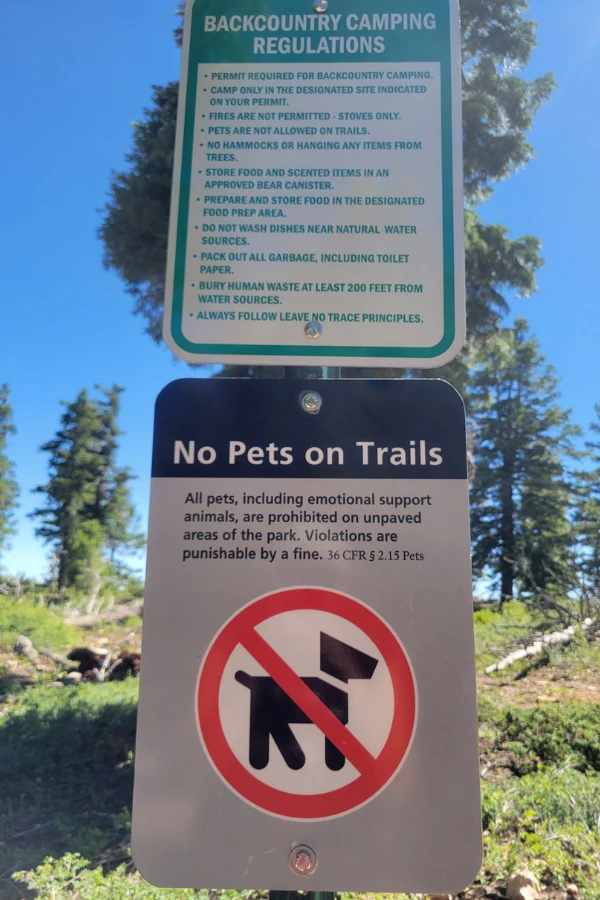
Yes, dogs are allowed in national parks, but usually only in developed areas: paved roads, parking lots, campgrounds, and picnic areas. Most parks don’t allow dogs on hiking trails, shuttles, boardwalks, or in the backcountry, and every park requires a leash no longer than six feet.
Quick answer:
- Where dogs can go: roads, parking areas, campgrounds, picnic areas, and a few paved paths
- Where they usually can’t: hiking trails, shuttles, boardwalks, visitor centers, and the backcountry
- Every park: a leash no longer than six feet, at all times
- Best workaround: the national forest and BLM land around the parks, where dogs are usually welcome on trails
Why the Rules Are So Strict
It can feel frustrating, but the rules aren’t random.
Dogs leave behind a predator scent that can linger and disrupt the animals that live there. Their waste can carry diseases that wild animals have no immunity to. Once you understand why the rules exist, they’re a little easier to accept, even when they’re frustrating in the moment.
The one rule that applies everywhere, with no exceptions: keep your dog on a leash no longer than six feet. A retractable leash technically breaks the rule once it’s extended past six feet. Six feet. Every park.
Dog Rules at the Parks We Visited
These are the parks where I can tell you what it was like with Koda. Rules can change, so check each park’s pet page before you go.
| Park | Where dogs can go | Where dogs can’t go |
|---|---|---|
| Zion | Pa’rus Trail, roads, parking areas, campgrounds, picnic areas | Shuttles and every other trail |
| Bryce Canyon | Paved surfaces, including the paved Shared Use Path from the park entrance to Inspiration Point | Unpaved trails and viewpoints |
| Capitol Reef | Developed areas: campgrounds, the picnic area, paved and dirt roads | Hiking trails and the backcountry |
| Arches | Roads, parking lots, picnic areas, Devils Garden Campground | All hiking trails |
| Canyonlands | Paved scenic drives, parking lots, Potash/Shafer Canyon road | Hiking trails, overlooks, rivers, backcountry |
| Yellowstone | Developed areas within 100 feet of roads, parking areas, and campgrounds | Boardwalks, trails, thermal areas, backcountry |
Sources: Visit Utah’s guide to the Mighty 5 with dogs and Yellowstone’s pet rules.
Our Very First Stop: Zion
Zion was the first park on our route, and honestly one of the most beautiful places I’ve ever seen. I still wish we’d gotten to experience more of it.
At the information center we found out that to really see Zion, you ride a shuttle bus to the trailheads and scenic stops. No dogs on the bus. No dogs on most trails. Dogs can only be on paved areas, and we obviously couldn’t leave the car running for hours while we hiked.
We were disappointed, but we adjusted. We did the scenic drive, which was absolutely gorgeous. If you’re visiting Zion with a dog, the scenic drive is your best option, and it’s worth doing.
My suggestion for anyone visiting Zion with a dog: either bring a camper with an AC unit that keeps them comfortable while you explore, or arrange a dog sitter for the day so you can see the park the way it deserves to be seen.
Every Park After Zion Had the Same Rules
After Zion, we stopped hoping the next park would be different and just started planning around it. Paved areas, parking lots, developed campgrounds. That’s what you have to work with in most western national parks.
It sounds limiting, and it is. But some of the most memorable parts of our whole trip happened right from the car window, or at the edge of a parking lot with Koda finally stretching her legs.
Bryce Canyon has one of the most stunning scenic drives of the entire trip. We pulled over at the stops, let Koda out on her leash to sniff around the parking areas, and took in those orange and pink formations from spots most people rush past on their way to the trailheads. Sometimes slowing down because you have a dog with you makes you actually see things.
The Moab Heat Was No Joke
The stretch around Moab, for Arches and Canyonlands, was the hottest part of our entire trip by far. I honestly can’t remember the exact temperature, but sleeping in a tent was completely out of the question. We ended up in a hotel for three nights just to get through it.
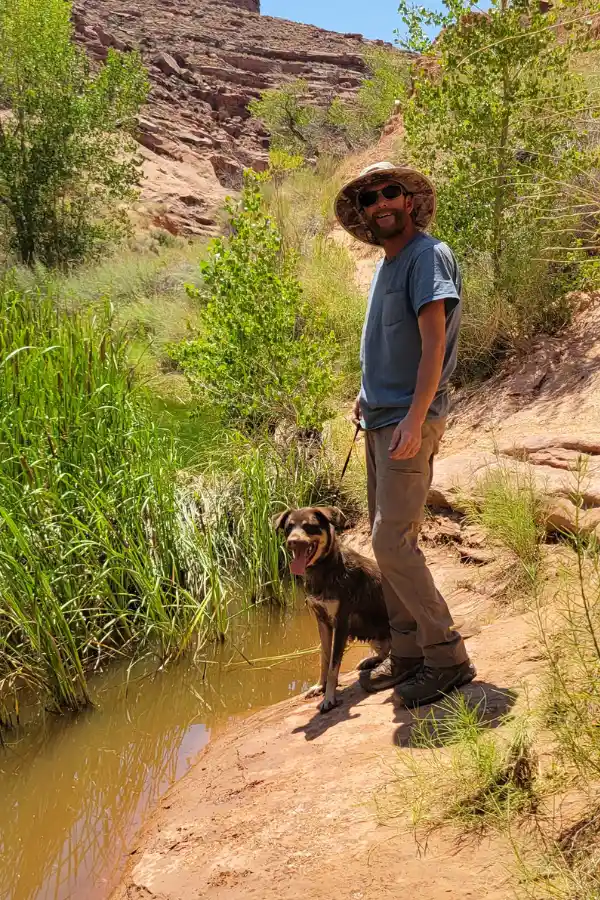
Those days were rough for Koda. She spent most of them in the car. We made a point to stop at ponds, rivers, and lakes so she could get in the water and cool down before and after each park. That made a huge difference for her.
If you’re traveling between June and September with a dog, plan water stops into your route. Not just a bowl at a picnic table, but real places where they can wade in and cool their whole body down. It matters more than you think when it’s that hot.
Can you leave your dog in the car at a national park?
Sometimes, briefly, but it’s the part I’d plan around most. Yellowstone, for example, allows short stays but recommends someone stays behind, and pets can never be left without food, water, shade, and ventilation. In summer heat, a car can turn dangerous fast, so we only did it with the AC running and never for long.
Yellowstone Is a Different Animal Entirely
Yellowstone deserves its own section, because it’s so much bigger than everything else. Dogs can only be in developed areas, within 100 feet of roads, parking areas, and campgrounds. They aren’t allowed on the boardwalks, on trails, or near the thermal features.
Because the park is so huge and so many of the famous sights sit right off the road, we actually managed pretty well. Koda stayed in the car while we walked the short boardwalks, and we were back in a few minutes. That’s how we saw Old Faithful, the hot springs, and several other geothermal features without leaving her for long.
The longer backcountry hikes are a different story. We saved those for a future trip. If you’re planning serious hiking in Yellowstone, arrange a dog sitter ahead of time. It’s worth it.
And if you’re doing any of the longer hikes, get your bear spray before you go. Bear spray sold inside the park costs a lot more than what you’ll find ahead of time. Don’t skip it. Bears are real, and they’re out there. When we camped along the Snake River between the Tetons and Yellowstone, a bear had walked through the campsite the day before we got there, and one morning a wolf walked into the site next to ours. Koda went in the car fast.
What Actually Helps When You’re Traveling With a Dog
Here’s everything we learned the hard way, so you don’t have to.
Find somewhere outside the park for your dog to actually run and hike. Near Bryce Canyon we found a hike just outside the park boundary, in the national forest, with the same red rock formations as the park itself, and dogs were completely welcome. Koda got to experience something close to what we were seeing inside, and it was one of her favorite days of the whole trip. The trail is called Chimney Rock Trail. Look for national forests, BLM land, and state parks nearby. They almost always allow dogs on trails, and they’re often just as beautiful. It’s also where you’ll find free camping; here’s how to find dispersed camping near the parks.
Take real water breaks. Not just a bowl in the parking lot. Find water your dog can get into: rivers, lakes, ponds. Let them cool down completely.
Keep a water bowl within reach. A collapsible water bowl is one of those things you’ll use every single day on a trip like this. Ours lived in the front seat and came out at every stop.
Watch your dog, because they won’t tell you. Koda loves every place that’s outdoors, rain, snow, or heat. That’s exactly why we have to pay attention for her. She doesn’t tell us when she’s too hot or too cold.
If no-dogs-on-trails will ruin the trip for you, plan for it. Find a dog sitter or doggy daycare near the park ahead of time. Some parks even have kennels. I personally couldn’t stomach leaving Koda in a kennel all day, every day, but that’s just me. You know your dog and your own comfort level.
Bring something special for the long car days. We always bring things like homemade dog treats and a blanket or dog bed that smells like home.
And pack for yourself. Feeding two people and a dog from a car and a camp stove is its own skill, and it starts before you leave, with the pantry at home. If you want the system behind ours, I put together a free guide that walks through exactly how I build it, from what to stock to how much and how to keep it rotating. It’s called the From-Scratch Pantry Starter Guide, and it’s yours below.
The BARK Ranger Program: A Fun Bonus
The National Park Service has a program called BARK Ranger. BARK stands for Bag and Bottle (bring waste bags and water), Always wear a leash, Respect wildlife and the places you visit, and Know where your dog can go. Ask about it at the visitor center at each park. Some parks give out tags for your dog’s collar. Koda is still waiting on her full collection.
Was It Worth Bringing Koda?
Every single time. Without question.
Yes, she spent more time in the car than any of us wanted. Yes, there were moments of frustration when we couldn’t do a trail we’d been looking forward to. But watching her run at a river’s edge in the middle of nowhere, stick her head out the window as we drove through landscapes that looked like another planet, or curl up next to us at camp after a long day, that’s the whole point.
She’s been on every adventure since the beginning. She isn’t a dog we leave behind. She’s Koda, and the whole kingdom belongs to her too.
If you’re heading out on a national park road trip with your dog, go. Just go prepared. Know the rules before you reach each park, plan your water stops, find the nearby trails that welcome dogs, and let go of the idea that everything will go exactly as planned. The best parts of our trip were the ones we didn’t plan at all.
With love and adventure,
Mindy
Have you taken your dog to a national park? Tell me in the comments which one was the most dog friendly, or which one surprised you. I’m keeping a list for our next trip.