

The website said it was a free campsite. I followed the directions, drove all the way out there, and pulled up to a closed gate with a sign that said No Trespassing.
Obviously, that was not a free campsite.
So I turned around and started looking again. That happened more than once when I first started traveling back in 2016. I was driving a Ford Fusion, which couldn’t go many places off road, and honestly, I didn’t even know where to look. The apps and websites I was using were so outdated that half the “free” spots on them weren’t free at all.
Some nights I gave up and slept in my car at a rest area. It was faster than running into one more dead end.
That was about ten years ago. Curtis, our dog Koda, and I have found a lot of free campsites since then, and the way we find them looks completely different now. We don’t waste hours chasing listings anymore. We check the land first, grab the right map, and pick a spot that actually works for us.
If you want to learn how to find dispersed camping without the locked gates and the rest area nights, this is everything we wish someone had told us at the start.
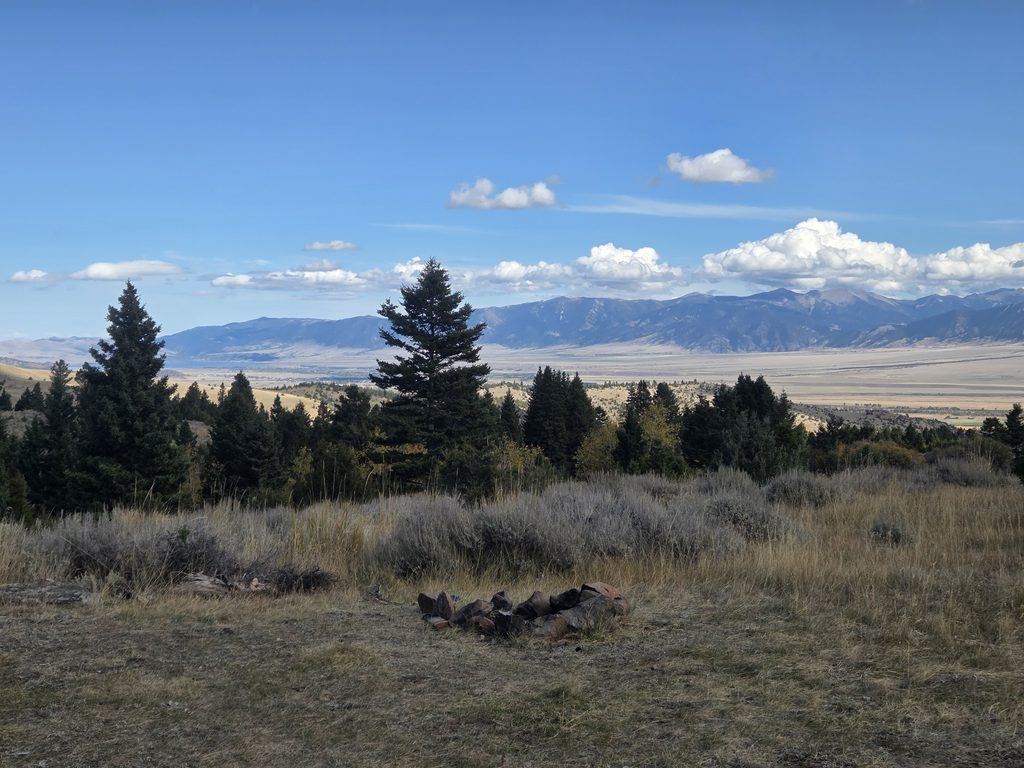
How to Find Dispersed Camping: The Short Version
To find dispersed camping, look for public land where camping outside a campground is allowed, mostly national forests and BLM land. Check who owns the land before you drive there, because old free campsite listings can send you to private property or closed roads. Then pick a spot that fits your rig and your comfort.
Quick answer:
- Use a land map app like onX Offroad to see BLM, national forest, state, and private land, plus where dispersed camping is allowed.
- Stop at a ranger station and ask for the forest service map of the area.
- Make sure the road matches what you’re driving before you commit.
- Pick a spot that’s level, has space from other campers, and isn’t getting hammered by wind.
Why Free Campsite Listings Can Waste Your Whole Day
When I started, I trusted whatever the website said. If a spot was listed as free, I believed it. That’s how I ended up at that locked gate.
Here’s what I didn’t understand back then. A listing is only as good as the last person who updated it. Land gets sold. Roads get closed. Rules change. A spot that was free years ago can be private property today, and the website has no idea.
The good news is that the information out there has gotten a lot better since then. But the lesson stuck with me. Don’t trust a listing on its own. Check the land yourself before you drive out there. That one habit is the difference between pulling into camp before dark and turning around at a gate.
Step 1: Find Out Who Owns the Land
This is the step I wish I’d known about in that Ford Fusion.
Right now we use onX Offroad. It’s an app that shows you who owns the land around you: what’s state land, what’s BLM, what’s national forest, and what’s private. It also shows where dispersed camping is allowed and where it isn’t, which is super handy.
We pay for a membership, and it lives on Curtis’s phone. When we’re heading somewhere new, we pull it up before we ever start driving toward a spot. If the land is private, we skip it. If it’s national forest or BLM and camping is allowed, we start looking closer.
Here’s the basic rule that makes this work: national forests and BLM land are where most free camping is. If you understand nothing else about dispersed camping, understand that. Once you can see where those lands are, you stop guessing.
You don’t have to use onX. Plenty of maps show land ownership. What matters is that you’re checking the actual land, not just trusting someone’s old pin on a map.
Step 2: Walk Into a Ranger Station and Ask for the Map
This one is old school, and it still works.
Every time we’ve walked into a ranger station, we’ve asked for an off road map or the forest service map of the surrounding area. Most of the time, they have one. These maps show you the roads and off road trails, and some of them even mark where dispersed camping is allowed and where it isn’t.
A paper map also works when your phone has no signal, which happens a lot out there.
One thing to know: make sure you’re at an actual ranger station. If they’re out of maps, or they hand you something that isn’t very helpful, you might be at a visitors center or somewhere that doesn’t carry the forest service maps. Ask where the nearest ranger station is and go there instead.
Step 3: Make Sure the Road Matches What You’re Driving
A free campsite doesn’t help you if you can’t get to it.
What you drive changes everything. Back in the Ford Fusion, my options were really limited. Now when we’re in the Jeep, there are a lot of places we can get to that most vehicles can’t. When we’re in our car, we’re pickier. If the road gets too rough, we turn around and go to a different campsite.
That’s not giving up. That’s just knowing your vehicle. A rough road can turn into a stuck car or a damaged one, and no free spot is worth that.
Before you head down a forest road, check what the map or app says about it, and be honest with yourself about what your vehicle can handle. If you’re not sure, have a backup spot in mind before you go.
How We Decide Whether a Free Spot Is a Yes or a Nope
Once you’re actually at a spot, there are only a few things that make us keep driving.
It’s too close to someone else. Some free sites are practically touching each other. We like our privacy, so if we’d basically be camping in someone’s front yard, we move on.
It isn’t level. If we’re in a tent and we’d be sleeping on a hill, that’s a nope. If we have a camper and no way to level it, that’s a nope too. You’ll feel a sloped spot all night long.
The weather says no. We’ve found some really cool campsites up on top of a mountain. At one of them, the wind was blowing so hard I could barely open my door. When I did get it open, I had to hold on so it wouldn’t fly all the way open. That was a nope. A beautiful spot isn’t worth it if you can’t actually stay there.
And here’s the thing to remember. There are never bad days when camping. If a spot doesn’t work out, you just move on. You’re not stuck. That’s the whole point.
If you’re wondering what our favorite kind of spot looks like, it’s anything secluded and near water. That’s always what we’re hoping for when we start looking.
Dispersed Camping With Your Dog
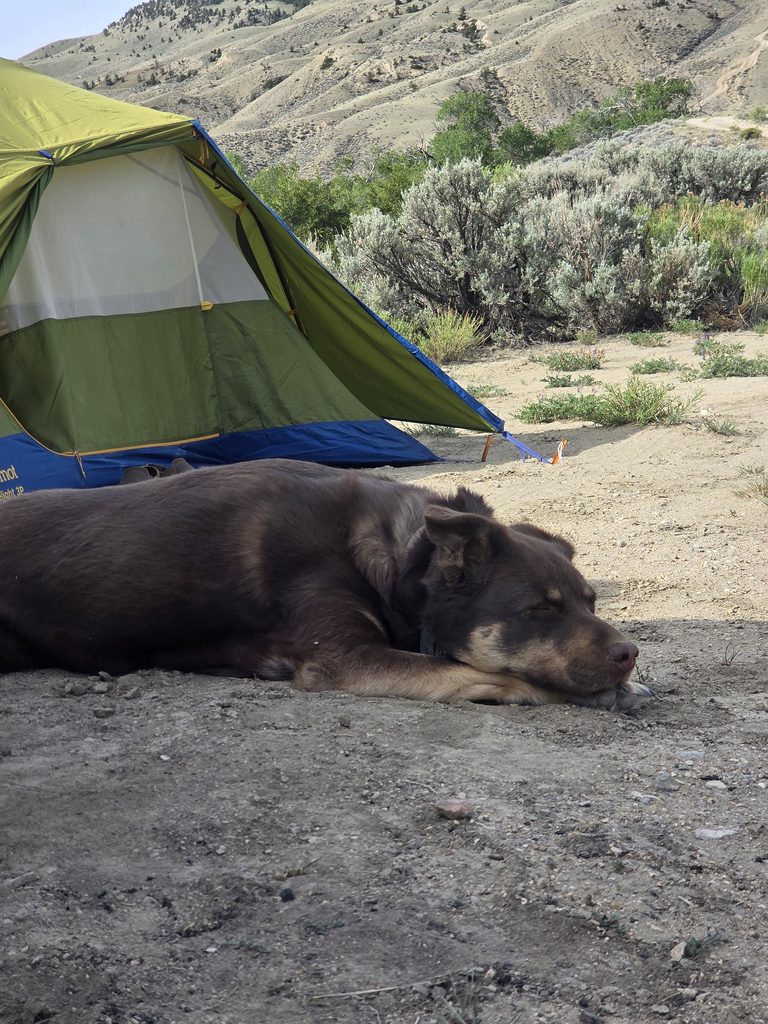
Koda goes everywhere with us, and she rarely changes where we camp. She loves every place that’s outdoors. Rain, snow, blistering heat, she doesn’t care.
But that’s exactly why we have to pay attention for her. Koda doesn’t tell us when she’s cold, hot, or uncomfortable. We have to watch for it.
Here’s what that looks like for us:
- When it’s hot, we make a point to camp near water. We also stop often near water on the drive so she has a place to cool off if she gets too hot.
- When it’s cold, we watch her at night. She’s gotten cold a few times and started shivering. I put a blanket over her, and after a while she stops shivering.
- When she’s in heat, we try to skip bear country.
Other than that, she’s right there with us at every spot. If you’re bringing your dog, the biggest thing is just keeping an eye on them, because they won’t always let you know something’s wrong.
Questions People Ask About Free Camping
Is dispersed camping free?
Yes. Dispersed camping on national forest and BLM land doesn’t come with a campsite fee. What you give up is the stuff a campground has, like bathrooms, trash cans, and water. You bring what you need and you pack it all back out.
How do I know if a free campsite is legal?
Check who owns the land before you go. A land map app like onX Offroad, or the forest service map from a ranger station, will show you whether you’re on public land and whether dispersed camping is allowed there. Signs on the ground win every time. If you pull up to a gate or a No Trespassing sign like I did, it’s not a campsite.
How long can you stay at a dispersed campsite?
There’s usually a limit. On a lot of public land it’s around 14 days before you have to move, but it changes from place to place, so check the local rules. Some areas also ask you to camp a certain distance back from lakes and streams, often 200 feet, and to use spots that have already been camped on. Here are the digital Forest Service Maps and BLM land maps. These are great recourses to have.
Free camping is only half of what makes this life work for us. The other half is food. When you’re parked down a forest road an hour from town, you can’t just run to the store, so what you packed is what you eat. That kind of trip starts long before you leave, with the pantry at home. I put together a free guide that walks through exactly how I build mine. It’s called the From-Scratch Pantry Starter Guide.
If you’re figuring out what to bring, our ready-to-eat meals that don’t need a cooler and healthy camping snacks we make from scratch are what we actually pack.
Why I Don’t Share Our Exact Spots (and What We Ask of You)
When I posted about free campsites on Facebook, one person shared a worry that stuck with me. When everyone knows about a beautiful spot, it can get crowded, and some people trash it. Then it’s not a hidden gem anymore.
They’re right. That’s why this post teaches you how to find dispersed camping instead of handing you a list of spots.
So here’s all we ask. Leave every spot better than you found it. Pack out all your trash. Respect the land so it stays open and free for the next person.
Coming soon: Curtis and I are planning an app of all the free campsites we find along our adventures. We’ll share more when it’s ready. Here is where you can follow along and get notified when it launches.
You Don’t Need to Know Everything to Start
When I was sleeping at rest areas in that Ford Fusion, I didn’t even know where to look. Now it comes down to a few simple habits: check the land, grab the map, match the road to your vehicle, and pick a spot that feels right.
And if a spot doesn’t work out, you move on. There are never bad days when camping.
[YOUR MOMENT: one or two sentences about a favorite morning or evening at a secluded spot near water, with Curtis and Koda] That’s what all of this is for. Not waiting for someday. Just going.
If you’re planning a bigger trip, here’s what we learned visiting 16 national parks in one summer.
With love and adventure,
Mindy
What’s the first thing you check before you pull into a free campsite? Or are you still working up to your first one? Tell me in the comments. I actually want to know.