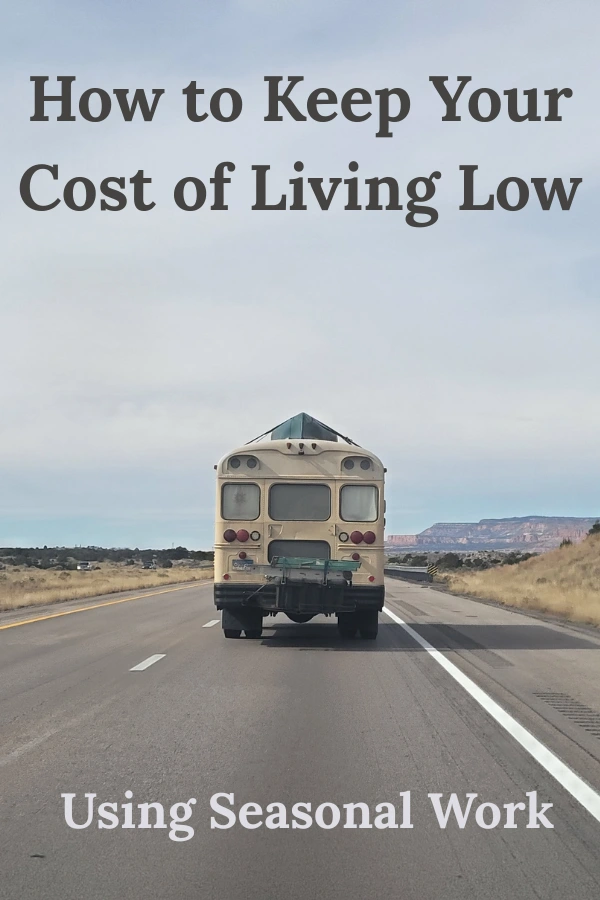

Our rent right now is $200 a month. Utilities included.
I say that to people sometimes and watch their face do a thing, like they are waiting for the punchline. There is not one. That is just what it costs to live where we live right now, because Curtis works for a company that provides housing as part of the job.
It was not always $200. At one job it was nothing, since rent came out of his check automatically before we ever saw the number. At another, we paid more out of pocket. The number moves, but one thing has stayed true across every single job we have had: utilities have always been included. Every employer we have worked for, including a state park in Nebraska that gave us a free campsite to park our camper on, has covered water, electric, and everything else that usually shows up as a separate line item.
Curtis and I have lived in six states together over the last eight years. We have worked three full-time seasonal positions with housing attached, picked up a stack of odd jobs in between, ran our own handyman business out of a truck for a while, and once just took an entire summer off and drove to sixteen national parks because we wanted to. Right now he works as one of the managers at a park inside Yellowstone, and I stay home full time building this blog so that eventually we can travel without needing to stop every six months to refill the bank account. If you want the bigger picture of how we got into seasonal work to travel in the first place, that post covers the why behind all of this.
People ask me all the time what this life actually costs. So here is the honest answer, not a spreadsheet from a digital nomad in a country with a different cost of living, but the real categories Curtis and I actually pay for, living this way, in the United States.
What Seasonal Work With Housing Actually Costs: The Short Version
Seasonal jobs with housing included can cut your single biggest living expense, rent, down to a small fraction of what most people pay, sometimes to nothing at all. What is left to budget for is everything housing does not cover: vehicle costs, food, insurance, phone, and the smaller categories people forget about until they add up.
Quick answer:
- Housing: ranges from $0 to a few hundred dollars a month, deducted from pay or billed directly, depending on the employer
- Utilities have been included at every job we have worked, even when rent itself varied
- Many employers also offer a free or low-cost campsite for staff who live in their own rig instead of employer housing
- What housing usually does NOT cover: food, gas, vehicle maintenance, phone, insurance, pet costs
- The biggest hidden cost is the gap between seasonal jobs, when housing and a steady paycheck both disappear at once
How We Actually Got Here
We met working at a state park. I was in housekeeping, Curtis was in maintenance. Neither of us had a plan beyond the next paycheck.
From there we went to South Dakota for a mountain adventure park, where I ran retail and food and beverage, and Curtis managed maintenance. Then North Dakota, where we picked up odd jobs and finally finished building out the school bus we had been slowly converting. Then Arizona, where we started our own handyman business, Curtis as the one who actually knew what he was doing, me as the extra set of hands who showed up and figured it out.
We went back to North Dakota to get married, took a few months off just fishing our way across the summer, then returned to Arizona to keep the handyman business going.
After that came Colorado, working a lake property together, me running the office and training staff, Curtis handling the grounds, forestry, and back-end operations. Then another summer completely off, sixteen national parks in a row, before landing in Arizona again so I could finally meet my niece.
I took on mobile dog grooming for a while. Curtis took on a full house remodel. Then he got the job he has now, managing inside Yellowstone, and we made the call that I would step back from outside work and build this blog full time instead, so that eventually neither of us needs a seasonal paycheck to keep moving. I have written more about what that side of the move has actually looked like in the hard truth about living inside Yellowstone, if you want the version that goes beyond the money.
Eight years, six states, three full-time positions with housing attached, and a long list of jobs in between that never made it onto a resume.
Is It Cheaper to Work a Job With Housing Included?
Almost always, yes, at least on the single biggest line item most people budget for. Housing is usually the largest expense in any monthly budget. A job that removes it, fully or partially, frees up income for everything else, even when the paycheck itself is modest. The tradeoff is usually flexibility: housing tied to a job means your living situation ends when the job does.
What Housing Actually Covers (And What It Does Not)
This is the part people get wrong the most. Housing included does not mean expenses included. Here is what has actually been covered across our different jobs, and what has always landed on us no matter where we worked.
Usually covered by employer housing:
- Rent or a housing deduction, sometimes $0, sometimes a few hundred dollars a month
- Utilities. This has been true at every job we have had, including the ones that charged us rent
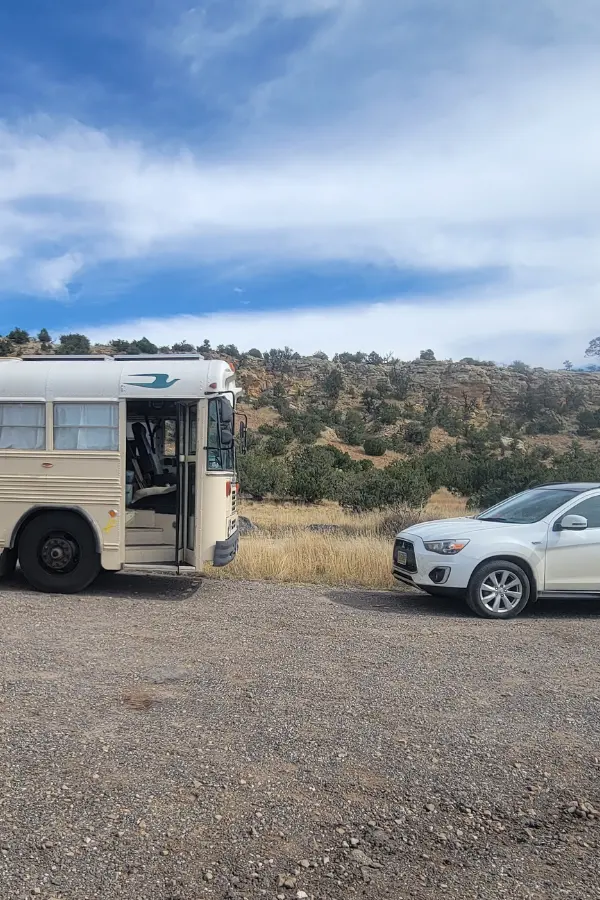
A detail most people never think to ask about: A lot of these employers, including a state park, the lake property in Colorado, and Yellowstone right now, offer a second option beyond a dorm or an apartment. If you have your own camper, trailer, or converted rig, many places will give you a free or low-cost campsite to park it on instead, often with the same utilities included. We have used both options depending on the job. It is worth asking about even if the job posting only mentions a dorm.
Almost never covered, this is on us every single time:
- Phone bill
- Vehicle registration
- Vehicle insurance
- Gas for the vehicles
- Vehicle maintenance and repairs, oil changes, tires, the unexpected stuff
- Food for us. If you want a sense of how we think about quantities and what that actually costs to stock, how much food you need to stock for six months breaks that down
- Food for Koda, plus her vet visits and flea and tick prevention
- Health insurance
- Lodging on the days we are between jobs and have nowhere provided yet
- Streaming subscriptions, small, but real
- A little set aside in savings when we can manage it
Seeing it laid out like that is honestly clarifying. Housing is the expense everyone assumes is the hard part, and it can be the easiest one to solve. Everything else on that second list is what actually requires planning, no matter how good the housing deal is.
If you want a system for building food you can actually take anywhere, not just store, but pack and go, I put together a free guide around exactly that. It covers how we eat real food on the road without a cooler, a full kitchen, or starting over every time we move.
The Real Risk Nobody Talks About
The expense that has hit us hardest over eight years is not a monthly bill. It is the gap.
Seasonal jobs end on a schedule. Sometimes the next one starts right away. Sometimes there is a stretch in between where the housing disappears, the paycheck disappears, and you are covering rent or lodging out of pocket while you figure out what comes next. That gap is where most of our actual financial stress has lived, far more than any single line item.
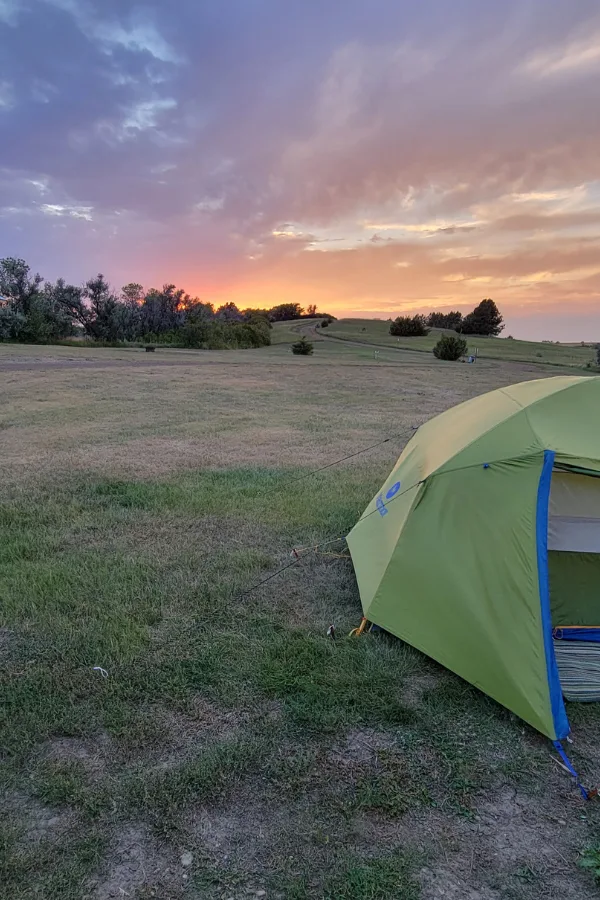
The summers we took off on purpose, fishing or driving to national parks, were not free of cost, but they were close. We stayed on dispersed land most nights, the free, undeveloped spots on public land where you can park and camp with no fee at all. The only time money left our pocket for a place to sleep was when we could not find a dispersed spot before dark and had to pay for a campsite, or on the rare night we just wanted a hotel and a real shower. Food, gas, and the odd paid night were the actual cost of those months. Lodging itself was barely a line item. I wrote a full breakdown of one of those trips in what we learned visiting 16 national parks in a summer, if you want to see what that actually looked like day to day.
How Much Money Do You Need to Live a Nomadic Lifestyle?
It depends entirely on whether your housing is covered. With housing included, a couple can often get by month to month on far less than a typical household, since the biggest expense is partially or fully gone. Without housing covered, the math changes completely and starts looking more like any other cost of living. The honest answer is that the number is less important than having a cushion for the gap between jobs. That is where most of the real expense shows up.
What I Would Tell Someone Just Starting This
Ask about the campsite option, not just the dorm. If you have your own rig, do not assume a job posting that mentions employee dorms means that is your only choice. Ask directly. We have found a campsite for our own home on wheels at almost every place we have worked, and it has meant living in our own space instead of a shared one, often for the same cost or less.
Go through every expense you actually have, line by line. Not a guess, the real list. Figure out what is genuinely necessary and what you could cut if you needed to. We have done this ourselves more than once, sitting down and writing out exactly what leaves our account every month. That number becomes your baseline. It tells you what you need to earn during a working season just to break even, and it tells you what you need to have saved before that job ends and the next one has not started yet. Food is usually one of the biggest categories in that list. Making more of it from scratch is one of the easiest ways to bring that number down. I broke down the real numbers in store-bought versus homemade dry mixes if you want to see where that savings actually comes from.
Build a cushion before you need it. The gap between jobs is not an edge case, it is part of the structure of this life. Plan for it like it is coming, because eventually it will.
And once you know that baseline number, revisit it. Seasons change, gas prices change, the next job might not include the same things this one does. The number is not a one-time exercise. It is something we go back to every time our situation shifts.
This life has never been about avoiding expenses entirely. It has been about figuring out which ones we could remove and building real plans around the ones we could not. Eight years and six states later, that is still the work.
With love and adventure,
Mindy
If you have ever considered seasonal work with housing, what is holding you back? Tell me in the comments. I have probably worried about the exact same thing.