

Cake flour is one of those specialty items that sits in the baking aisle costing more than all-purpose flour, for something you can actually make at home with two ingredients you probably already have. Once I learned how simple the swap was, I stopped buying it entirely.
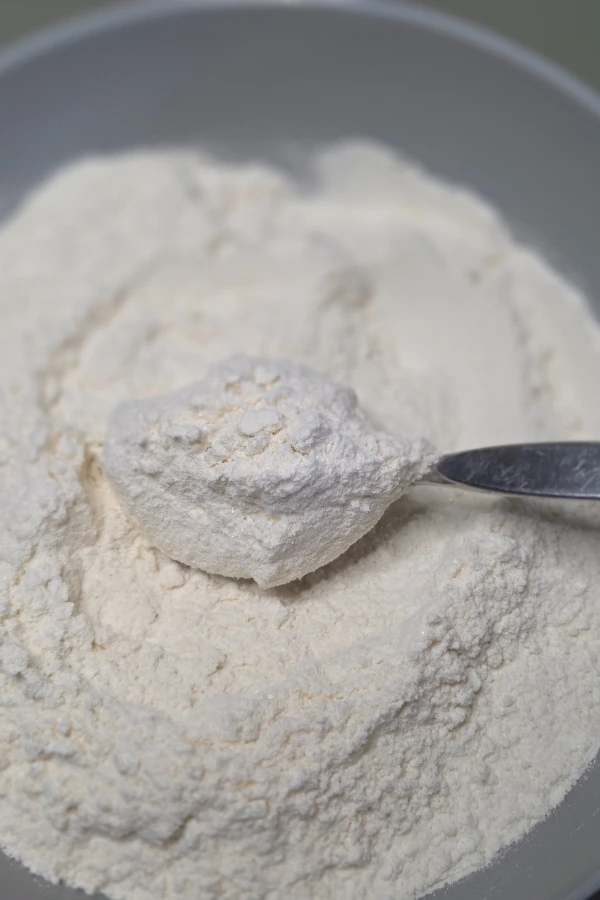
Cake flour substitute in a nutshell: For every 1 cup of cake flour a recipe calls for, remove 2 tablespoons of all-purpose flour and replace it with 2 tablespoons of cornstarch or arrowroot. Sift together twice to fully combine. That’s the entire recipe, and it performs almost identically to store-bought.
Why This Actually Works
Cake flour and all-purpose flour aren’t just different names for the same thing, they have genuinely different protein content, and that’s what makes cakes made with cake flour so much lighter.
All-purpose flour runs about 10-12% protein. Cake flour is lower, usually 5-9%. Protein is what forms gluten when flour meets liquid, and more gluten means more structure, which is exactly what you want in bread and exactly what you don’t want in a delicate cake. Less protein means less gluten, which means a finer, more tender crumb.
Cornstarch is what makes the substitute work. It has no protein at all, so swapping a couple tablespoons of flour for cornstarch effectively dilutes the overall protein percentage of the mixture, mimicking real cake flour’s lighter structure without needing to buy an entirely separate bag of flour.
The Recipe
Ingredients (makes 1 cup):
- 14 tablespoons all-purpose flour (1 cup minus 2 tablespoons)
- 2 tablespoons cornstarch or arrowroot powder
Instructions:
- Add the flour and cornstarch to a bowl.
- Sift together twice. This is the step most people skip, and it’s the one that actually matters, sifting distributes the cornstarch evenly through the flour and adds a bit of air, which is part of what gives cake flour its lighter texture in the first place. Whisking alone won’t fully replicate this.
- Measure out what your recipe calls for and use exactly as you would store-bought cake flour, no other adjustments needed.
Scaling It Up
The ratio holds no matter how much you’re making. For every 1 cup of flour, remove 2 tablespoons and replace with 2 tablespoons of cornstarch.
| Cake Flour Needed | All-Purpose Flour | Cornstarch |
|---|---|---|
| 1 cup | 14 tbsp | 2 tbsp |
| 2 cups | 1¾ cups | 4 tbsp |
| 4 cups | 3½ cups | 8 tbsp |
If you bake often enough to want a bigger batch on hand, mixing several cups at once and storing it ready to go saves you from measuring this out every single time.
How to Use It
Use it exactly like store-bought cake flour, spoon and level it into your measuring cup the same way, and substitute it 1-to-1 in any recipe that calls for cake flour. There’s no adjustment needed to any other ingredient.
One thing worth knowing: this substitute works well for most cakes, but recipes using the reverse creaming method (where dry ingredients are creamed with butter before liquid is added) can behave slightly differently with a homemade substitute versus true milled cake flour. For standard creaming-method cakes, quick breads, and most everyday baking, you won’t notice a difference.
Storage
Store in an airtight container in a cool, dark place, exactly as you would regular flour. Kept sealed and away from moisture, it stays fresh for several months.
For longer-term storage, add an oxygen absorber to the container and vacuum seal it to remove as much air as possible. Less oxygen exposure means it stays fresh considerably longer.
If you like the idea of a pantry built on basics instead of specialty bags for every recipe, I put together a free guide on exactly that. It’s called the From-Scratch Pantry Starter Guide, grab it below.
Frequently Asked Questions
Can I use arrowroot instead of cornstarch? Yes, 1-to-1. Arrowroot works identically here and is a good option if you’d rather avoid corn-based products.
Does homemade cake flour taste different? Not noticeably. The cornstarch is there for texture, not flavor, so baked goods taste the same, just with a lighter crumb than if you’d used straight all-purpose flour.
Can I skip the sifting step? You can, but the texture won’t be quite as fine. Sifting twice genuinely makes a difference here, it’s worth the extra minute.
Is this the same as self-rising flour? No, different substitute entirely. Self-rising flour has baking powder and salt added for leavening. Cake flour substitute is about protein content and texture, not rise. They solve different problems.
How long does homemade cake flour last? Several months in an airtight container in a cool, dry place. Vacuum sealed with an oxygen absorber, considerably longer.
This is a small swap, but it’s the kind that adds up, one less specialty bag taking up pantry space for something two staples you already own can replicate almost exactly.
With love and adventure,
Mindy
📌Pin for Later


Cake Flour Recipe
A homemade cake flour substitute using 2 pantry staples. Sift twice for the closest match to store-bought texture.
Ingredients
- 14 Tbsp All Purpose Flour
- 2 Tbsp Cornstarch or Arrow Root
Instructions
- Add flour and cornstarch to a bowl.
- Sift together twice to fully combine and evenly distribute.
- Use 1-to-1 in place of store-bought cake flour.