

Baking powder is one of those things that always seems to run out at the worst time, mid-recipe, no store nearby, batter already mixed. That happened to me one too many times before I actually looked into what baking powder even is. Turns out it’s just baking soda and an acid, nothing that needed a factory or a specialty aisle.
Now I don’t buy it anymore. Two ingredients, a couple minutes, and I have exactly as much as I need, made fresh instead of sitting in a canister losing potency for who knows how long.
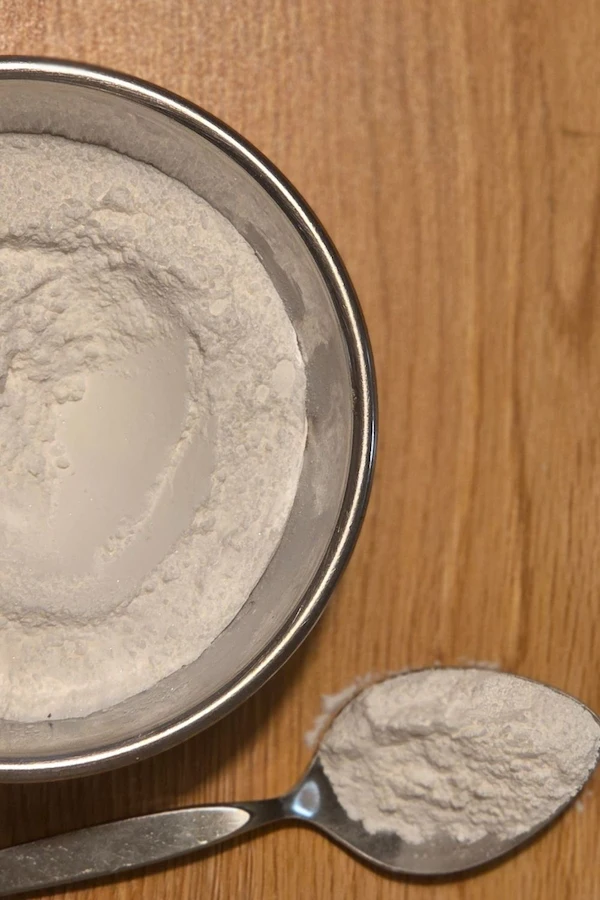
Homemade baking powder in a nutshell: Combine 1 part baking soda with 2 parts cream of tartar, plus 1 part cornstarch or arrowroot if you want it shelf-stable rather than used immediately. Mix well and store airtight. That’s the whole recipe, and it works exactly like store-bought in any recipe that calls for it.
Why Make This Instead of Buying It
Most store-bought baking powder includes added starches and stabilizers to keep it shelf-stable for years on a store shelf, along with, in some brands, sodium aluminum sulfate, which is where that faint metallic aftertaste some people notice comes from. None of that’s dangerous in normal amounts, but it’s also not necessary if you’re making a fresh batch as you need it.
Beyond ingredients, it’s one less specialty can taking up pantry space for something you can make from staples you’re probably already storing anyway. If you’re working with limited storage, that adds up the same way it does with brown sugar or any other single-purpose canister sitting mostly empty in the back of a cabinet.
The One Thing Most Recipes Don’t Tell You
Homemade baking powder is single-acting, it reacts once, as soon as it hits liquid. Store-bought is usually double-acting, meaning it reacts once when it gets wet and again when it hits heat in the oven, which gives you more forgiveness if your batter sits around before baking.
With the homemade version, get your batter or dough into the oven soon after mixing. The reaction starts working immediately, and letting it sit too long means you lose some of that rise before it ever hits the heat.
The Recipe
Ingredients:
- 1 part baking soda (the leavening agent)
- 2 parts cream of tartar (the acid that activates the baking soda)
- 1 part cornstarch or arrowroot powder, optional, keeps it shelf-stable and clump-free if you’re not using it right away
Instructions:
- Combine the baking soda, cream of tartar, and cornstarch (if using) in a small bowl.
- Stir or shake until fully combined.
- Store in an airtight container.
That’s the entire process. If you go through baking powder quickly, you can skip the cornstarch entirely and just mix a small batch fresh each time.
How to Tell If It’s Still Good
Baking powder loses potency over time, homemade or store-bought. To test it: drop 1/2 teaspoon into a small cup of hot water. Immediate bubbling and fizzing means it’s still active. Nothing happening means it’s time for a new batch.
Storage
- Without cornstarch: about 1 month in an airtight container before potency starts dropping
- With cornstarch or arrowroot: up to 6 months in a cool, dry pantry
- Keep the container tightly sealed, moisture is what kills it fastest
If you’re stocking a pantry meant to last months rather than weeks, here’s how much food to actually plan for, baking powder included.
If you like the idea of a pantry built on staples instead of single-use canisters, I put together a free guide on building exactly that. It’s called the From-Scratch Pantry Starter Guide, grab it below.
Frequently Asked Questions
Can I make this without cream of tartar? Not exactly, cream of tartar is the acid that actually activates the baking soda. Without it, you just have baking soda. Lemon juice or vinegar can work as an acid directly in a recipe, but that changes the recipe itself rather than giving you a shelf-stable powder to keep on hand.
Is homemade baking powder aluminum-free? Yes, this recipe has no aluminum, unlike some commercial brands.
Can I use arrowroot instead of cornstarch? Yes, 1-for-1, and it’s a good option if you’d rather avoid corn-based products.
Is this gluten-free? Yes, baking soda, cream of tartar, and cornstarch or arrowroot are all naturally gluten-free.
Can I make a big batch for long-term storage? Yes, but include the cornstarch or arrowroot if you’re not using it within a few weeks, without it the mixture clumps and loses effectiveness faster. For true long-term storage, some people keep the ingredients separate and mix a fresh batch as needed instead.
Final Thoughts
This one’s not glamorous, but it’s exactly the kind of small thing that adds up: one less can in the pantry, one less ingredient that goes stale before you use it all, one less thing standing between you and whatever you’re actually trying to bake. If you liked simplifying this one, Cream of Anything Soup is another pantry staple worth making the same way.
With love and adventure,
Mindy
📌Pin For Later


Homemade Baking Powder
Homemade baking powder made from pantry staples, no aluminum, no extra can taking up shelf space. Ready in 3 minutes.
Ingredients
- 1 Tbsp Baking Soda
- 2 Tbsp Cream of Tartar
- 1 Tbsp Cornstarch or Arrowroot , optional (see notes)
Instructions
- Combine all ingredients in a small bowl or jar.
- Mix thoroughly, or add to a jar and shake to combine.
- Store in an airtight container.
Notes
- Baking soda is the leavening agent. Cream of tartar is the acid that activates it. Cornstarch or arrowroot extends shelf life and prevents clumping if you're not using it right away, skip it if you go through baking powder quickly.
- This version is single-acting, unlike store-bought double-acting powder, so get your batter into the oven soon after mixing.
- Test potency any time by dropping 1/2 tsp into hot water, immediate fizzing means it's still active.
Thank you for the baking powder recipe! I am getting low on baking powder and mine is starting to clump up. I think I’ll just be making my own now, I have all the ingredients already. Never really thought to do that before, but it sure is easy enough and I’m all for avoiding GMOs!