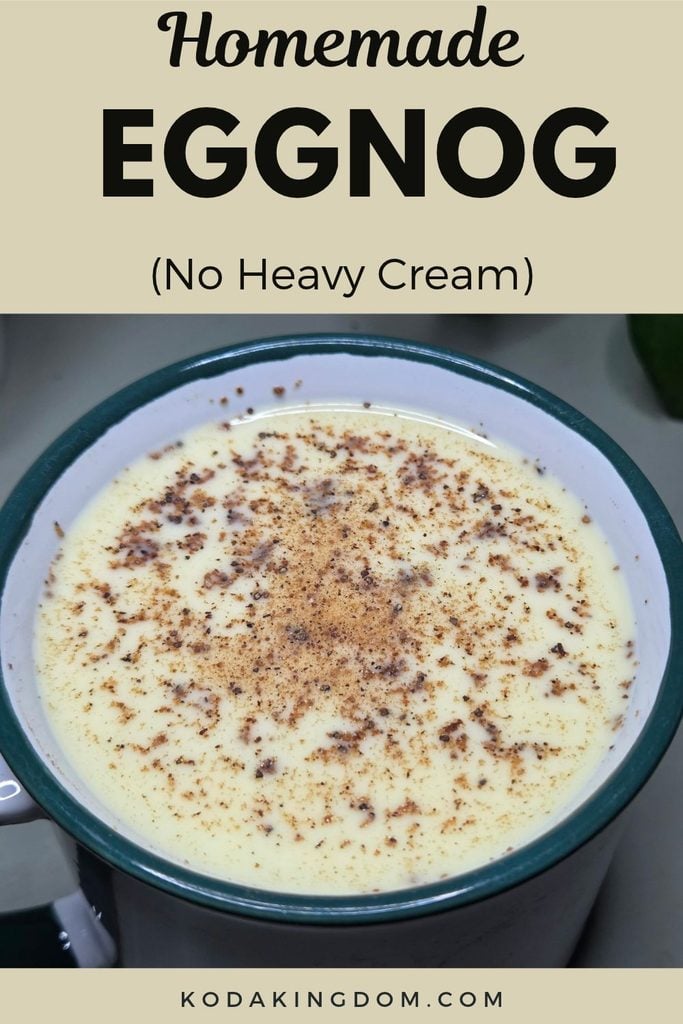

Eggnog is my favorite holiday treat. Not one of my favorites. My favorite. I honestly can’t get through a holiday without eggnog showing up somewhere.
So it says a lot that I went years without it.
I quit buying the carton when I started reading labels. The carton I used to buy had 18 ingredients, and about 13 of them weren’t things I wanted to be drinking. Mine has 5. Once I saw what was in it, I couldn’t unsee it. Then I spent years craving eggnog every December before I finally figured out how to make my own homemade eggnog with ingredients that were actually real food. Now I make it every single year.
Mine doesn’t even use heavy cream. It’s five ingredients I almost always have on hand: milk, egg yolks, sugar, nutmeg and a pinch of salt. No special trip to town. Just a saucepan and about 10 to 15 minutes.
That matters more to us than it might sound. We move a lot, and a holiday tradition that only needs pantry basics is one we get to keep no matter where December finds us.
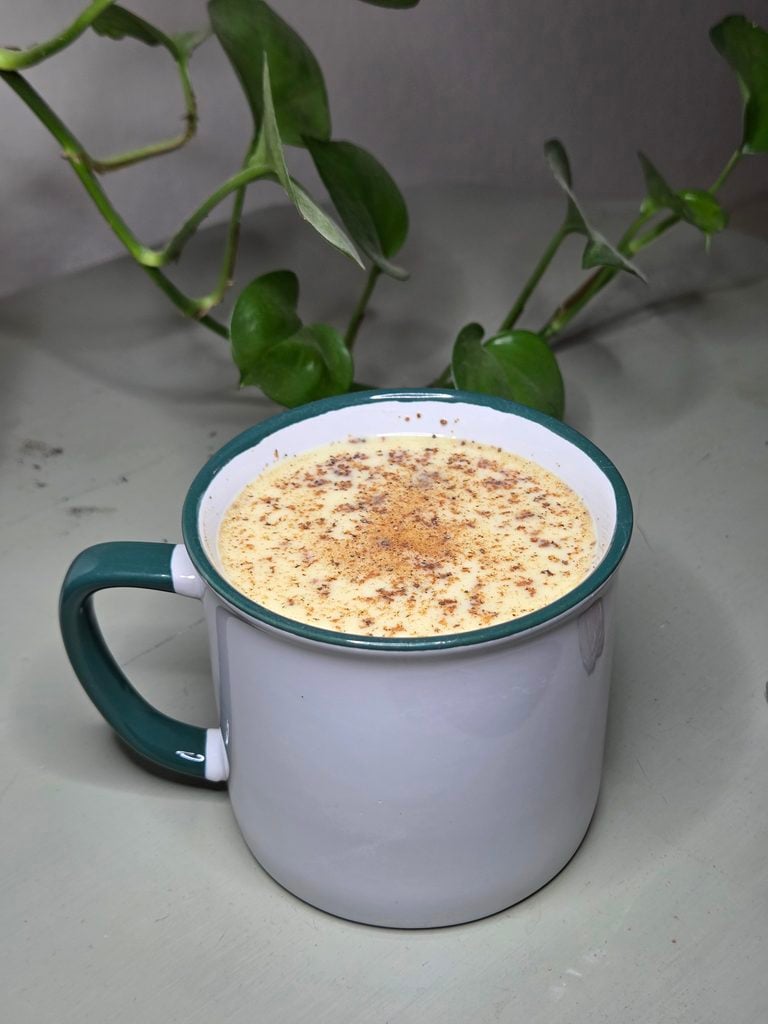
How to Make Homemade Eggnog Without Heavy Cream
Homemade eggnog without heavy cream takes 3 cups of milk, 6 egg yolks, 1/2 cup of sugar, 1/2 teaspoon of nutmeg and a pinch of salt. You whisk the yolks and sugar together, cook them with the milk until the mixture reaches 160°F, then chill it. The yolks give it the body that cream usually does.
Quick answer:
- Ingredients: milk, egg yolks, sugar, nutmeg, salt
- Time: about 10 to 15 minutes, plus time in the fridge until it’s cold, or drink it warm right away
- Safety: cook the egg base to 160°F, the temperature the FDA and USDA recommend for eggnog
- Keeps: 2 to 4 days in the fridge
- Makes: about 4 cups
Why I Stopped Buying Eggnog in a Carton
Reading labels changed a lot of things in our kitchen, and eggnog was one of the hardest to give up because I love it so much. Making it myself fixed that. Five ingredients, and I know exactly what every one of them is.
The bigger reason is the same one behind most of what I make from scratch. The fewer things I have to buy, the less our plans depend on being near a store. When the basics are already in the pantry, a holiday treat is just a saucepan away, wherever we are.
Eggnog is a good example of how that works for me. When the pantry basics are always there, a tradition like this is ready whenever I am, no shopping trip required. If keeping those basics stocked still feels chaotic, it’s usually a systems problem, not a skill problem. I put together a free guide that walks through exactly how I set up my own pantry so the ingredients I need are always there. It’s called the From-Scratch Pantry Starter Guide, and you can grab it below.
Eggnog With Just Milk (No Cream Needed)
Most eggnog recipes call for a mix of milk and heavy cream. This one skips the cream entirely, and it still works because six egg yolks do the thickening. When you cook them gently with the milk, they turn it into a light custard that coats a spoon.
I use whole milk, and it comes out tasting really good, cold or warm.
Can you make eggnog without heavy cream?
Yes. This whole recipe is built without it. The egg yolks carry the richness, so all you need is regular milk. Some cooks swap the cream for evaporated milk or sweetened condensed milk instead, which makes a thicker, sweeter version, but you don’t need either one.
Is homemade eggnog healthy?
It’s still a holiday treat, but it’s a lot closer to real food than the carton. The egg yolks are the best part: they’re one of the few foods with natural vitamin D, and they’re rich in choline and vitamin B12. The sugar is the only part I’d call a treat. If you’d rather skip white sugar, honey and maple syrup both work as swaps (see below).
Can you make eggnog with honey or maple syrup?
Yes, you don’t have to use white sugar. I’ll be honest, though: I haven’t made mine with honey or maple syrup yet. These are the swaps other cooks use, scaled to this recipe in place of the 1/2 cup sugar:
- Maple syrup: start with 1/3 cup. Taste after cooking and stir in more if you want it sweeter, up to 1/2 cup total. It adds a light maple flavor.
- Honey: start with 1/3 cup. Honey is sweeter than sugar and has a stronger, floral flavor, so taste before adding more.
Whisk either one into the egg yolks the same way you would the sugar. Expect the eggnog to come out a little darker. One safety note: honey isn’t safe for babies under 1 year old.
Is homemade eggnog safe to drink?
It is when you cook the egg base. Raw or undercooked eggs can carry Salmonella, which is why the FDA and USDA recommend heating the egg and milk mixture to 160°F before chilling it. They recommend cooking it even if you use pasteurized eggs. Michigan State University Extension has a clear walkthrough if you want the details.
The easiest way to know you’ve hit 160°F is a thermometer. Without one, the mixture should coat the back of a spoon.
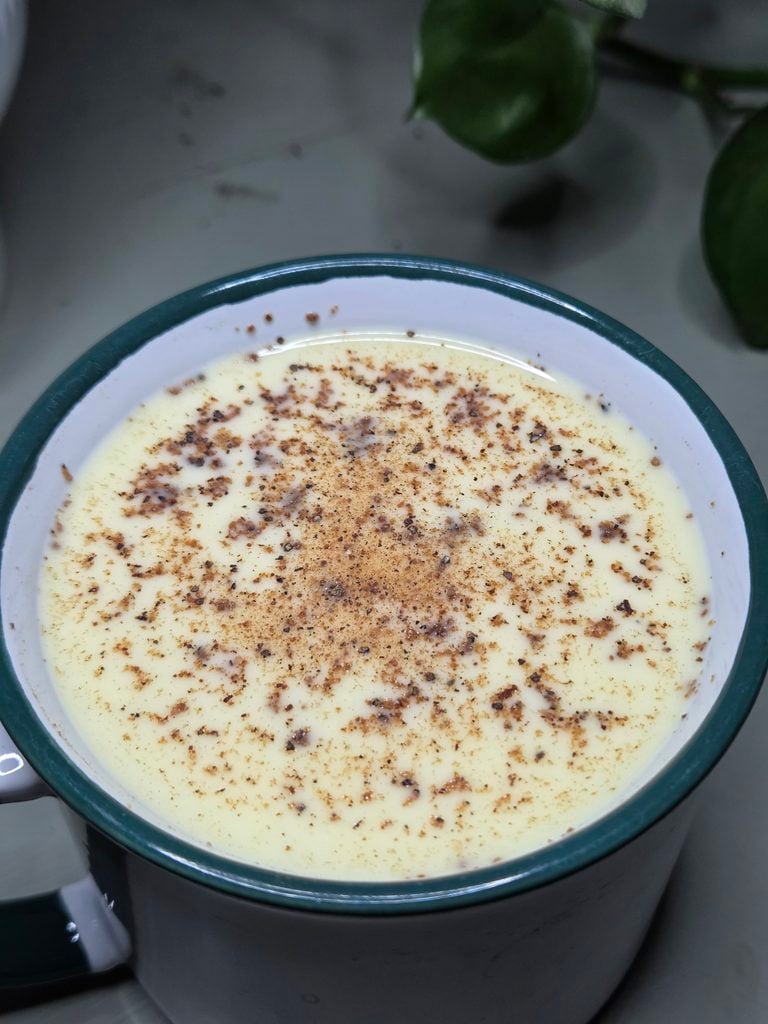
How I Make It, Step by Step
This is the cooked version, and it’s how I make it whenever I’m using regular eggs.
- Whisk the 6 egg yolks and 1/2 cup sugar together in a bowl until smooth and well combined.
- Warm the 3 cups of milk in a saucepan over medium-low heat until it steams. Don’t let it boil.
- Slowly pour about a cup of the warm milk into the yolks while you whisk. This warms the eggs gently so they don’t scramble.
- Pour everything back into the saucepan with the nutmeg and salt.
- Cook over low heat, stirring the whole time, until it reaches 160°F and coats the back of a spoon.
- Pour it into a jar, let it cool a bit, then chill it in the fridge until it’s cold. Or skip the wait and drink it warm.
Using pasteurized eggs? When I buy pasteurized eggs from the store, I skip the stove: I whisk the yolks and sugar, stir in the milk, nutmeg and salt, and chill it. The USDA says in-shell pasteurized eggs can be used safely in recipes that won’t be cooked. The FDA and USDA still call the cooked method the safest choice, so if you’re unsure, cook it. Regular eggs always need to reach 160°F.
The full recipe card with exact measurements is at the bottom of this post.
How We Drink It
I usually drink mine cold, but don’t skip it warm. I made a fresh batch this morning and drank it warm, and honestly, it’s really good that way too. Curtis is a fan as well, just not nearly as big a fan as I am. Just pour it into a mug once it’s cooked instead of chilling it first. You can top it with things like whipped cream, extra nutmeg, cinnamon, or a splash of rum or bourbon for the adults.
If you’re already making homemade hot cocoa mix this time of year, this is the other drink that makes December feel like December. And if you’re putting together gifts, eggnog needs the fridge, but the mixes in my homemade Christmas food gifts from your pantry roundup travel anywhere.
How Long Homemade Eggnog Lasts
How long does homemade eggnog last?
Homemade eggnog keeps 2 to 4 days in the fridge in a sealed jar, according to the USDA. Don’t freeze it; the USDA doesn’t recommend freezing homemade eggnog. It doesn’t say why, but the likely reason is texture, not safety. The fat and water in milk and egg yolks separate when they freeze, and homemade eggnog has none of the stabilizers carton eggnog uses to hold it together, so it tends to thaw out grainy and watery.
This isn’t a pantry item, but almost everything in it is. Sugar, nutmeg and salt sit on the shelf for months, so all you need on the day is milk and eggs. If you want to build the rest of that shelf, my list of pantry staples to always have on hand is where I’d start.
And don’t toss the six leftover egg whites. I freeze them, freeze-dry them, or bake them into something like angel food cake. If you have a freeze dryer, my post on how to freeze dry eggs covers the basics.
One Less Thing on the List
I went years without my favorite holiday treat because I didn’t like what was in the carton. Now it’s one of the easiest things I make all December.
It’s a small thing, a cup of eggnog. But it’s one more thing I don’t have to buy, and one more tradition that comes with us wherever we go. Life is happening right now, and December is short. Make the eggnog.
With love and adventure,
Mindy
Do you make eggnog from scratch, or has it always come from a carton? And the real question: cold or warm? Tell me in the comments.
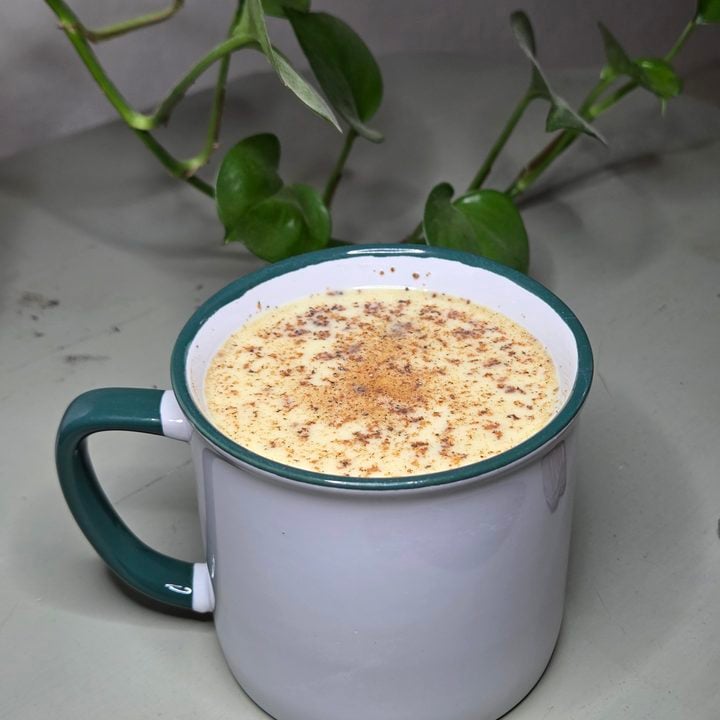
Homemade Eggnog (No Heavy Cream)
Homemade eggnog without heavy cream, made from just 5 ingredients: whole milk, egg yolks, sugar, nutmeg and a pinch of salt. It’s cooked to 160°F, ready in about 15 minutes, and good cold or warm.
Ingredients
- 1/2 cup sugar
- 6 egg yolks
- 3 cups whole milk
- 1/2 teaspoon nutmeg
- Pinch of salt
Instructions
- Whisk the egg yolks and sugar together until smooth and well combined.
- Warm the milk in a saucepan over medium-low heat until it steams. Don't let it boil.
- Slowly whisk about 1 cup of the warm milk into the yolks.
- Pour the yolk mixture back into the saucepan and add the nutmeg and salt.
- Cook over low heat, stirring constantly, until it reaches 160°F and coats the back of a spoon.
- Pour into a jar, cool slightly, then refrigerate until cold, or serve warm right away.
Notes
Storage: Keep in a sealed jar in the fridge for 2 to 4 days. Don't freeze.
Notes: Don't toss the 6 leftover egg whites. Freeze them, freeze-dry them, or bake them into something like angel food cake.
Pasteurized eggs: the USDA says in-shell pasteurized eggs can be used without cooking. Whisk everything together and chill. Cooking to 160°F is still the safest choice.
Sweetener swaps (not yet tested by me): replace the 1/2 cup sugar with 1/3 cup maple syrup (up to 1/2 cup to taste) or 1/3 cup honey. Whisk into the yolks the same way. (Honey isn't safe for babies under 1)
Nutrition Information:
Yield: 4 Serving Size: 1Amount Per Serving: Calories: 295Total Fat: 13gSaturated Fat: 6gUnsaturated Fat: 7gCholesterol: 296mgSodium: 90mgCarbohydrates: 35gFiber: 0gSugar: 34gProtein: 10g