

I did not start this life because I had it figured out.
I started it because I had a dream and I was not willing to let fear be the reason I never chased it. My aunt offered to pay me for some work around her house and she lived in Washington state. I was in Arizona. Most people would have said no. I said yes and packed my car. I had very little money in my pocket, no plan past the next few weeks, and honestly no idea what I was doing.
That drive changed me. I stopped at every scenic overlook, every tourist attraction, every stretch of water that looked like it deserved more than a glance from a moving car. Along the way, I slept in my tent when I could find a spot and, in my car, when I needed to feel safer. I did not know where I was going to sleep from one night to the next and somehow that uncertainty felt like freedom. Like a full breath I had not taken before. It was the first time in my life I understood what it felt like to be completely untethered from someone else’s schedule, someone else’s plan, someone else’s idea of what I was supposed to be doing.
That feeling is what I have been chasing ever since. And I have never stopped finding it.
What Seasonal Work to Travel Actually Means
Seasonal work to travel is exactly what it sounds like. You work for a season, you move, you figure out the next thing. You are not building a career, you are building a life. The jobs fund the movement. The movement is the point.
It is not the same as remote work, which I’ll touch on in a minute, and it is not van life influencing or being a travel blogger with a sponsorship. It is real work, sometimes hard work, often with housing included, and it is how regular people with no savings and no connections live a nomadic life without going broke.
For us, it has looked like housekeeping at a state park. Maintenance management at a cave and adventure park. Working campgrounds. Working inside Yellowstone National Park. Ranch work. And about a hundred cash jobs in between: dog grooming, dog sitting, appliance repairs, odd maintenance gigs that came from word of mouth and a conversation with a stranger at the DMV. More on that later.
This is the real version. Not the highlight reel.
How It Started: With Very Little and a Lot of Nerve
After my aunt paid me for the work I did at her house, I asked her where she thought I should go next. She pointed me toward a few places she liked and I just went. No job lined up. No real destination. Just me, some gas money, and a direction.
I made it to South Dakota before the gas fund started running seriously low. I went to Mount Rushmore because I was right there and it felt like a crime not to. Then I found a campground called Deerfield Lake that was completely free because the season had ended and nobody was running it anymore. I set up camp and did not know what came next.
The next morning I met some people at that campground. I told them what I was doing and they offered me a job on a cattle ranch in Nebraska, not far from where we were sitting. The timing was so perfect it still stops me when I think about it. I was exactly where I needed to be, at exactly the right moment, meeting exactly the right people, right when the money was running out.
I have believed for a long time that things work out like that when you put yourself in motion. You cannot meet the right people from your couch. That ranch family is one of the biggest reasons I still live this life. I am grateful for them in a way I do not have the right words for.
The Types of Jobs That Have Funded This Life
Over the years, here is what seasonal work to travel has actually looked like for us:
Cattle ranch work. Physical, humbling, and one of the most meaningful experiences I have had. The kind of work that makes you feel capable in a way that not many things do.
State park housekeeping. Before that season started, I went back to Arizona to visit family. Then I came back to Nebraska for the position. They offered me a free campsite to pitch my tent for the summer instead of the bunk house. I took it.
Adventure park and cave. Curtis was the maintenance manager. I ran retail and food and beverage. This is also where we got Koda. She came to work with me every single day for the first few months we had her, she has never missed an adventure since and she has never had a babysitter. She goes everywhere with us.
Campground work. When the school bus started overheating and we needed a more stable situation, we looked specifically for jobs that came with housing. We got hired at a campground and they gave us a cabin that overlooked the lake. We were there for a full year, saved up, and then took an entire summer off.
Yellowstone National Park. We got hired on and they gave us an apartment to live in. Working inside a national park is its own kind of surreal. You wake up and the park is just there.
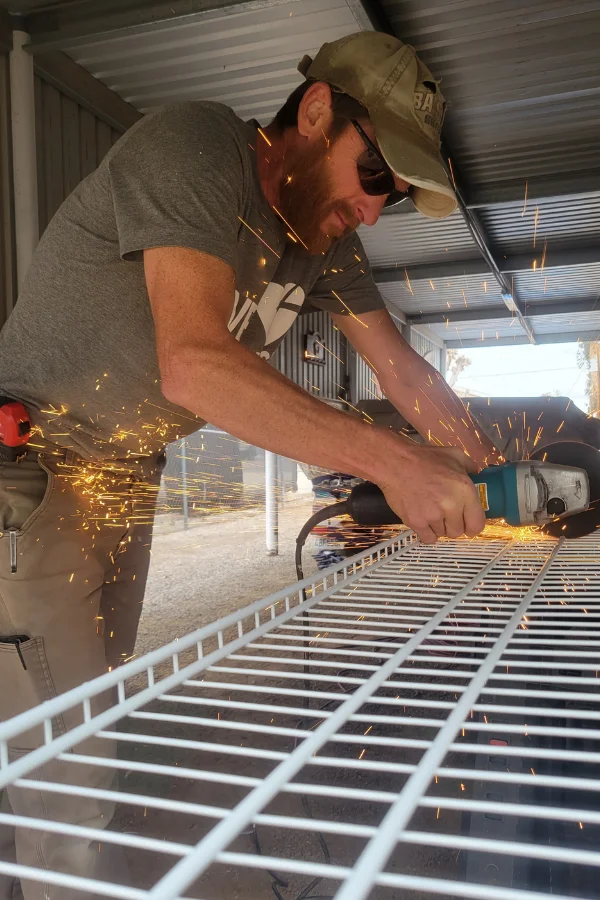
Cash jobs. This is honestly where a lot of the in-between got funded. Curtis is good at maintenance and that skill has opened more doors than any job board ever has. Someone at the DMV asked what we do for work. Curtis mentioned maintenance. She hired him on the spot to fix her washing machine. A neighbor got a call from someone looking for dog grooming help and thought of me. The dog grooming client asked if we knew anyone who dog sits. I raised my hand. Every good job led to another referral. It snowballs faster than you’d think when you actually do good work and people like you.
What Housing Looks Like
This is the question I get most often and I think it surprises people.
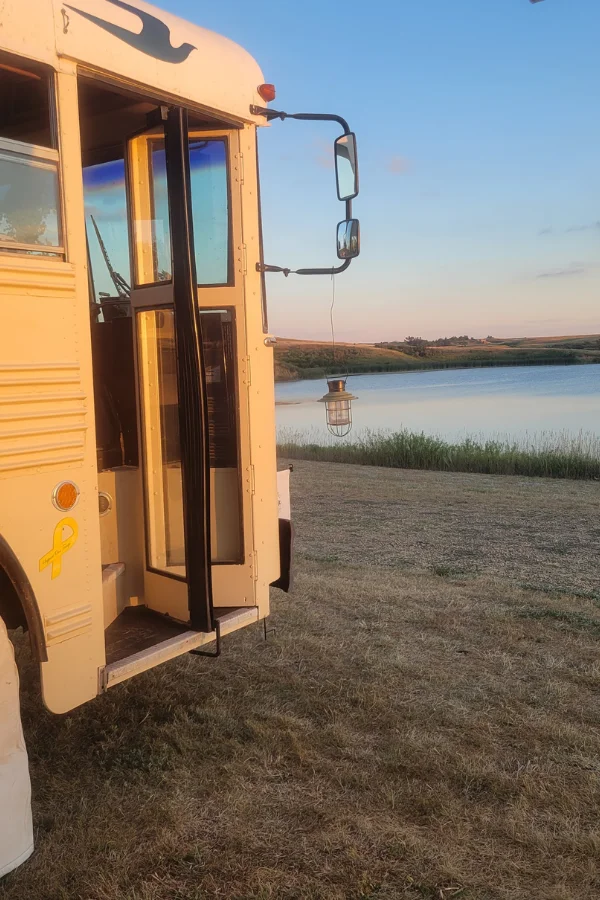
Housing is almost always part of the deal when you are doing seasonal work. Campgrounds, national parks, ranches, state parks: most of them have some kind of housing option because they need people who are actually going to show up and stay. We have lived in a mobile home, a cabin on a lake, a national park apartment, a free campsite with just our tent, and a school bus we built ourselves. The bus is parked with family for now while we figure out the overheating problem, but it’s still ours. It’s the place we built with our own hands, and that matters.
When we are looking for work, we decide what area we want to be in and what kind of work we want to do, then we apply to places that offer housing or we ask about it during the interview. It is a real thing you can ask about. Most places that rely on seasonal workers have already thought about this. Before you say yes to one, here are the questions I always ask about seasonal job housing.
The Part Nobody Talks About
There was a summer at that state park in Nebraska that tested me in a way I did not see coming. The person I had been counting on took the car and left. No car. No plan. Contract running until November. No idea how I was going to get to the next place.
But here is what happened instead.
A coworker helped me get a hotel room for a few nights. My housekeeping manager got me moved into a cabin. The family from the cattle ranch cosigned so I could get a car. Complete strangers in a place I had lived for less than a year showed up for me in ways that people I had known my whole life had not.
I think about that a lot. You hear people say that the nomadic lifestyle is lonely or risky. And yes, sometimes it is hard. Sometimes things fall apart in ways you did not plan for. But being in motion means you are always meeting people, always building something new, always landing somewhere unexpected that turns out to be exactly right. I left that summer having gotten rid of someone who never had my best interest, a car to my name, and a group of friends I still think about. And I met Curtis there too. He started as a friend and became my adventure buddy and eventually my husband. That is the part nobody puts on a job listing.
What About Remote Work?
A lot of people living nomadically work remotely, and that’s a completely valid path. For a long time, it just wasn’t ours.
- I could never figure out which remote opportunities were real and which were a waste of time, and the ones that were real still meant being on someone else’s schedule.
- I wanted something that could move and shift with us, something we could pick up and put down depending on where we were and what we were doing.
That’s started to change. Alongside this blog, I now do freelance work for a few clients, work I can do from anywhere with a signal and fit around wherever we are. The goal is still the same: income that goes wherever we go, without having to ask permission. And as I figure it out, I’ll show you how too.
One thing that made every move easier was figuring out how to eat well without starting over each season. I built a simple pantry system that travels with us, and it’s all in my free From-Scratch Pantry Starter Guide. You can grab it right here.
How We Actually Find Work
There is not one website. There is not a secret app. Here is what actually works:
We decide what area we want to be in. We decide what kind of work we want to do. Then we look for employers in that area who hire seasonally: campgrounds, national parks, ranches, adventure companies, state parks. We either apply to places that list housing or we ask about it. We have also found a lot of work through Facebook groups for the local area, word of mouth, and just talking to people. When you tell people what you do, they almost always know someone who needs something. You just have to be willing to have the conversation.
Useful places to look: CoolWorks, Work Kamper Jobs, the National Park Service seasonal jobs page, and local Facebook community groups wherever you are heading.
The other thing that helps is being willing to do a good job at whatever you take on, even if it is small. One good cash job leads to three referrals. One referral leads to a season of work. One season of work leads to the next thing. It really does build that way. And if you’re wondering how the money actually works out, here’s how we keep our cost of living low with seasonal work.
What It Takes: Honestly
This lifestyle takes courage. Sometimes a lot of it. You have to be willing to change your plans on a dime. Sometimes the job does not pan out, sometimes the weather is awful and sometimes you cannot get to where you wanted to go. Your plans have to be moldable. That is not a downside, that is the skill.
You do not have to have money to start. I started with almost none. You do not have to have connections. I made them on the road. You do not have to have everything figured out before you go. You figure it out as you go, which is both the terrifying part and the best part.
What you do need is a willingness to fall on your face and get back up. A willingness to ask for help from people you just met. A willingness to do the work, even when it is not glamorous, because the life on the other side of that work is worth every bit of it. If you want a peek at what the adventure side of this life looks like, read about what we learned hitting 16 national parks in a single summer and you will get the idea pretty fast.
I have worked for family, done housekeeping, ranch work, maintenance, retail, food and beverage management, dog grooming, dog sitting, campground work, and national park work. I have picked up jobs so small they barely count. But every single one of them paid our way and got us to where we are right now. And where we are right now is exactly where I want to be.
Final Thoughts
This lifestyle is not for everyone. I know that. But if it is for you, if you feel it somewhere you cannot quite explain when you read something like this, I want you to know it is real. It is possible. And you do not have to wait until you are ready, because ready is not a feeling that shows up first. Ready comes after you start moving.
Go. Figure the rest out on the way.
With love and adventure,
Mindy
Have you ever done seasonal work to fund travel, or is this something you’ve been thinking about? I would genuinely love to know where you are in this. Drop it in the comments.