

My husband does not like ginger. At all. So I do not make this as often as I used to, and for a while that felt like a reason to let the skill go entirely.
Then I realized the ginger bug itself was never really the point. It is a starter, the same idea as a sourdough starter, except instead of bread it gives you naturally fizzy soda. Once you know how to keep one alive, you can ferment almost any fruit into a bubbly drink. Strawberry, blueberry, peach, whatever is in season or sitting in the freezer. Ginger just happens to be the easiest, most reliable starter to learn on, which is exactly why almost every fermentation resource out there starts you off with it too.
So even though I am the only one in this house who drinks the ginger version these days, I am glad I learned it. It is the one skill that unlocked all the others.
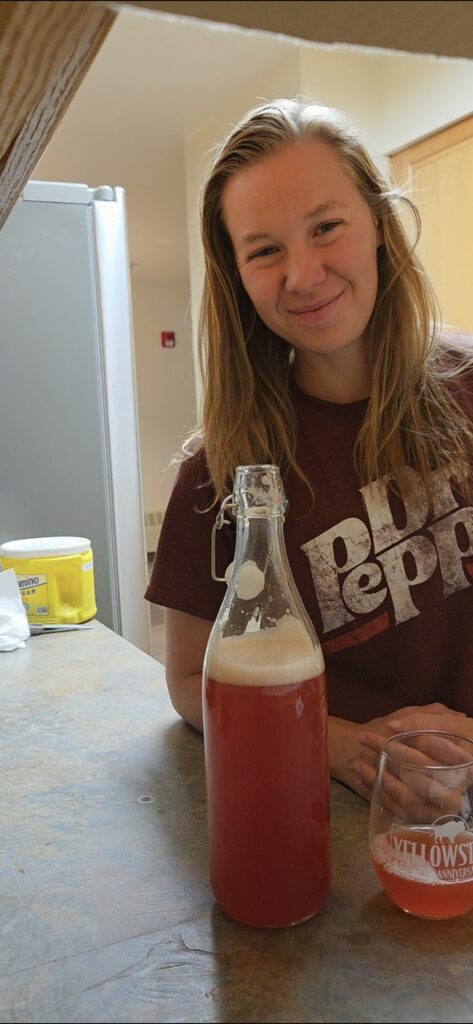
Ginger bug soda in a nutshell: A ginger bug is a wild-fermented starter made from ginger, sugar, and water, fed daily for about a week until it’s bubbly and active. Once it’s ready, mix it with any sweetened fruit juice or puree, bottle it in a sealed jar, and let it ferment 2 to 5 more days. The result is a naturally carbonated, probiotic-rich soda with no artificial anything.
What Is a Ginger Bug, Actually?
A ginger bug is a starter culture made by feeding fresh ginger and sugar with water every day until wild yeast and bacteria naturally present on the ginger’s skin wake up and start multiplying. That’s it, no packets, no starter culture ordered online, just ginger, sugar, water, and time.
Once it’s active, it works the same way a sourdough starter works for bread: you use a portion of it to kickstart fermentation in something else, in this case, a sweetened fruit liquid, and it turns that liquid into a lightly alcoholic (well under 1%), naturally carbonated soda loaded with probiotics.
Why This Is Worth Learning, Even If You Only Make It Once
Store-bought soda has nothing going for it nutritionally, and most of us already know that. But that’s not really why I’d tell you to learn this.
The real reason is that a ginger bug is the gateway to fermenting basically any fruit into a fizzy drink. Once you understand how the starter works, strawberry season becomes strawberry soda. An overripe peach becomes peach soda instead of compost. It’s one skill that keeps paying off long after the ginger part stops being the star of the show.
Making the Ginger Bug Starter
What you’ll need:
- Fresh ginger root, organic if you can get it (more on why below)
- Cane sugar (avoid raw honey or artificial sweeteners, the wild yeast needs real sugar to feed on)
- Filtered or dechlorinated water
- A clean glass jar
- A coffee filter or breathable cloth and a rubber band
Why organic ginger matters: Conventionally grown ginger is often irradiated, which kills off the wild yeast and bacteria living on the skin, the exact thing that makes this whole recipe work. Use organic if at all possible, don’t peel it, and don’t scrub it, you want those surface microbes intact.
Why filtered water matters: Tap water often contains chlorine, which is designed to kill bacteria, including the beneficial kind you’re trying to grow here. If you don’t have a filter, leave a bowl of tap water out uncovered overnight and the chlorine will dissipate on its own.
Instructions
- Finely grate or chop 2 inches of ginger, skin on, and add it to your jar.
- Add 1 tablespoon of sugar and 2 tablespoons of filtered water. Stir well.
- Cover with a coffee filter and rubber band, or a loosely set lid, it needs airflow.
- Set it somewhere warm, out of direct sunlight.
- Every day for 5 to 7 days, add another tablespoon of chopped ginger and another tablespoon of sugar, and stir.
- Around day 5, you should start seeing small bubbles rising when you stir it. That’s your sign it’s coming alive.
- Once it’s consistently bubbly and smells yeasty and gingery (not sour or off), it’s ready to use.
How to tell it’s ready, using your senses:
- Look: small bubbles rise to the surface when you stir it
- Smell: sharp, gingery, a little yeasty, similar to bread dough
- Taste: tangy and mildly sweet, a bit like ginger lemonade
- Sound: if you put your ear close to the jar right after stirring, you can actually hear it fizzing faintly
Is This Safe? What’s Normal vs. What’s Not
Fermentation can feel intimidating the first time, so here’s what’s actually normal and what means start over.
Normal, don’t worry about it:
- A layer of white, filmy residue on top (this is likely kahm yeast, harmless, just stir it back in or skim it off)
- A strong, sour, yeasty smell
- Bubbling, fizzing, or slight movement when the jar is disturbed
Not normal, discard and start over:
- Fuzzy mold in any color, black, green, pink, or orange
- A smell that’s rotten or genuinely foul rather than just sour
- Any pink or orange fuzzy growth, which can indicate harmful bacteria, not just yeast
When in doubt, trust your nose. If something smells wrong instead of just strongly fermented, don’t taste it, just start a fresh batch. Ginger bugs are cheap and fast to restart.
Keeping Your Ginger Bug Alive Long-Term
Once your bug is active, you don’t have to keep feeding it on the counter every day forever.
To store it: move it to the fridge with the lid on. Cold slows the fermentation way down.
To keep it alive: pull it out once a week, feed it another tablespoon of ginger and sugar, let it sit out for 12 to 24 hours, then return it to the fridge. Treat it like a pet that only needs feeding once a week and it’ll keep going indefinitely, the same way a sourdough starter does.
Turning the Bug Into Soda: Strawberry Version
Ingredients:
- 2 cups strawberries, fresh or frozen
- 1/2 cup sugar
- 4 cups filtered water
- 1/4 cup active ginger bug (strained)
Instructions
- Add the strawberries, sugar, and water to a saucepan. Bring to a boil, then reduce heat and simmer 20 minutes.
- Mash the strawberries with a potato masher to release the juice.
- Strain the liquid into a bowl, discarding the pulp. Let it cool completely. This part matters! Adding the ginger bug to hot liquid will kill the live cultures.
- Once fully cooled, stir in the 1/4 cup of strained, active ginger bug.
- Transfer to a swing-top bottle or a mason jar with a loose-fitting lid. Let it sit at room temperature until you see bubbles starting to form.
- Seal the lid tightly and let it continue fermenting 2 to 5 more days.
- Burp the bottle once a day, open it briefly to release pressure, then reseal. This step actually matters. I left a batch sealed for a couple of extra days once and it sprayed the ceiling when I finally opened it.
- Once it’s as fizzy as you want, move it to the fridge. Cold slows the fermentation and locks in the carbonation level.
Other Fruits Worth Trying
Once you’ve got the hang of strawberry, the same method works with almost anything:
- Blueberry or mixed berry
- Peach or nectarine, great for using up ones that are a little too soft to eat fresh
- Pineapple
- Watermelon, in summer when there’s always too much of it
- Grape
The ratio stays roughly the same, sweetened fruit liquid plus 1/4 cup active ginger bug per quart, cooled completely before combining. Simmer time and sugar amounts will vary a little by fruit, softer fruits need less cook time, but the fermentation process itself doesn’t change.
If learning skills like this, the ones that actually make you less dependent on the store, is your kind of thing, I put together a free guide on building a from-scratch pantry system. It’s called the From-Scratch Pantry Starter Guide, grab it below.
Frequently Asked Questions
Is ginger bug soda alcoholic? Technically, yes, but barely. Wild fermentation naturally produces a small amount of alcohol as a byproduct, generally well under 1% ABV when made and stored the way this recipe describes. That’s roughly in line with what you’d find in kombucha or a very ripe piece of fruit, not something that will affect you.
Can I use store-bought juice instead of making my own fruit syrup? Yes, as long as it’s not pasteurized with preservatives added, those can prevent fermentation from happening at all. Look for juice that’s refrigerated in the store rather than shelf-stable, shelf-stable juice is usually treated in ways that kill the fermentation process before it starts.
How long does the finished soda last? Once refrigerated, it’ll keep for a few weeks, though the carbonation is at its best in the first week or two. It won’t spoil the way fresh food does, since the fermentation itself is a preservation method, but it will slowly keep fermenting and get more sour over time.
My soda didn’t ferment at all after a few days. What went wrong? The two most common culprits: your ginger bug wasn’t fully active yet when you used it (it should be visibly bubbly first), or your juice contained preservatives that stopped fermentation before it could start. Double-check both before troubleshooting further.
Do I have to use ginger, or can I start with something else? Ginger is the standard starter because it’s reliable and the wild yeast on its skin is easy to activate. Some people have success with turmeric root using the exact same method, but ginger is the one I’d actually recommend starting with.
Conclusion
I still make this one every so often, even with a houseful of one ginger-hater and one dog who couldn’t care less either way. Not because we need the soda, but because it’s satisfying to keep a skill alive that took real trial and error to learn in the first place.
If you make a batch, tell me what fruit you used. I’m always looking for the next flavor to try.
With love and adventure,
Mindy

Healthy Ginger Bug Soda
This healthy ginger bug soda recipe is filled with probiotics and ingredients that are essential to our health. Forget all those artificial sweetened, no good for your, soda's.
Ingredients
Ginger Bug
- 2 inches fresh organic ginger , chopped or grated, skin on (plus 1 tbsp more added daily)
- 1 tbsp cane sugar , (plus 1 tbsp more added daily)
- 2 tbsp filtered water
Strawberry Soda
- 2 cups strawberries , fresh or frozen
- 1/2 cup sugar
- 4 cups filtered water
- 1/4 cup active ginger bug , strained
Instructions
- Combine the ginger, sugar, and water in a jar. Cover loosely with a coffee filter and rubber band.
- Place somewhere warm, out of direct sunlight.
- Feed with 1 tablespoon each of ginger and sugar daily for 5 to 7 days, until visibly bubbly and smelling yeasty.
- Simmer the strawberries, sugar, and water for 20 minutes. Mash and strain, discard the pulp.
- Let the liquid cool completely.
- Stir in the strained ginger bug.
- Bottle with a loose lid until bubbles form, then seal tightly and ferment 2 to 5 days, burping daily.
- Refrigerate once carbonated to your liking.
To make the ginger bug:
To make the soda:
Notes
- Burp the bottle daily during secondary fermentation, or it can build enough pressure to spray when opened. Speaking from experience.
- A white filmy layer is normal (kahm yeast). Fuzzy mold in any color means start over.
- Swap strawberries for almost any fruit using the same ratio, 1/4 cup active ginger bug per quart of cooled, sweetened fruit liquid.
Nutrition Information:
Yield: 4 Serving Size: 1Amount Per Serving: Calories: 21Total Fat: 0gUnsaturated Fat: 0gSodium: 15mgCarbohydrates: 5gFiber: 1gSugar: 4gProtein: 0g